
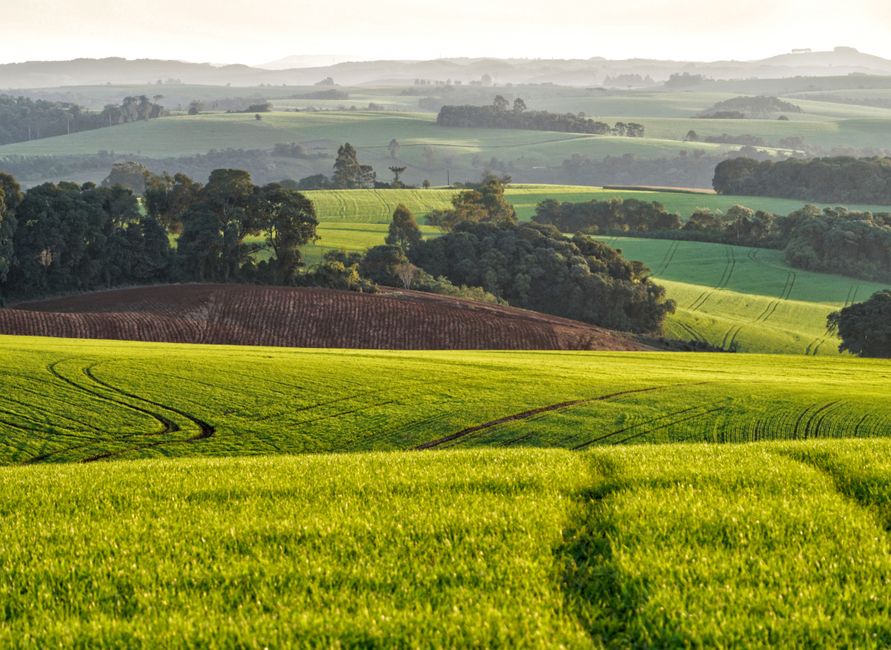
Brazil’s bioinput sector sold US$68.5 million in products overseas from January through September 2026, a 31.1% jump from the same period in 2025, according to CropData. But the country wants to be known for more than the food it ships abroad. Ana Repezza, president of CropLife Brasil, a civil association representing 53 agribusiness companies, says the aim goes beyond sales figures.
“The goal is to open markets for Brazilian bioinputs, but also position Brazil as a country that produces its own technology for tropical agriculture,” Repezza said. She called strengthening that image “as important as generating business and promoting exports.”
Export Momentum and Domestic Demand
Argentina led the list of export destinations, followed by Colombia, Paraguay, the Netherlands and the United States. Those figures show where Brazilian firms are finding buyers. The domestic market is growing too. It generated about US$358.5 million in the first half of 2026, 9.6% more than in the same period of 2025.
Farmers are using the products more widely. The area treated with bioinputs reached 46 million hectares, an increase of 18.3% compared with the first half of 2025. That’s a lot of acreage choosing an alternative to conventional inputs. The growth came without a government mandate pushing it there.
Regulators have kept pace with the industry. Brazil granted a record 162 new bioinput registrations in 2025 and had 1,016 active registrations in 2026. Farmers mainly use the products to protect crops from pests, stimulate plant growth and improve soil nutrition.
Why Tropical Farming Matters
Repezza argues that Brazil’s climate is the real reason the sector has taken off. Tropical agriculture requires integrated management, bringing together different technologies to handle weather conditions and pest pressure. Farmers can’t rely on a single fix.
“Those are technologies necessary to guarantee the productivity levels we have in tropical agriculture,” she said. “So, the great value of the inputs lies in their complementarity with other technologies, raising productivity even further.”
The foundation for this work runs deep. Brazil has conducted bioinput research for 70 years, led by the state-owned Brazilian Agricultural Research Corporation. Private companies have added investment more recently, and that shift matters. As extreme climate events have grown more frequent, the case for private capital pouring into practical solutions has grown with them. Repezza said the productivity gains are “fundamental to guaranteeing food security, not only in Brazil, but in the world.”
Reaching New Markets
Repezza pointed to Africa, Latin America and other tropical regions, including parts of the United States, as promising destinations. In Europe, she named Spain, Portugal, Italy and Greece, where some crops and seasons share climate conditions with Brazil.
ApexBrasil and CropLife created Renera in 2025 to help companies reach those markets. The project, described as a first-of-its-kind bioinput initiative, was conceived as a “bridge between the science that already works in the field and the markets that need it.” It connects Brazilian firms with potential partners abroad through trade fairs, commercial missions, business meetings and visits by foreign buyers. Its stated goal is to improve competitiveness and win recognition for the technologies on quality, scale and scientific backing.
Repezza, a former business director at ApexBrasil, framed the shift in simple terms. “Brazil is ceasing to be only an exporter of food and becoming an exporter of technology to produce it. And that export has even greater added value.” She added that linking Brazil’s reputation as a food power to its own technology strengthens its sustainability profile, an attribute international consumers increasingly prize.
Why This Matters: Brazil has built its farm economy on land and output, but the bioinput figures point to a different source of strength. Exports climbed 31.1% in the first nine months of 2026, and the domestic market grew 9.6% in the first half. Those figures suggest private firms are finding paying customers without relying on subsidies. The 162 new registrations in 2025 show regulators approving products at a steady clip, a factor for investors weighing whether Brazil is a reliable place to build a business. Repezza argues that homegrown technology can carry more value per unit than raw commodities, and that the market, not a government plan, will decide whether that bet pays off. Whether Brazil can hold onto that position depends on firms continuing to win customers abroad on the strength of their science rather than preferential treatment. If they do, Brazil’s farm sector gains a product competitors can’t simply replicate by growing more acres.
- brazil
- bioinputs
- croplife brasil
- sustainable agriculture
- agricultural technology
- apexbrasil
- food security
- agricultural exports