
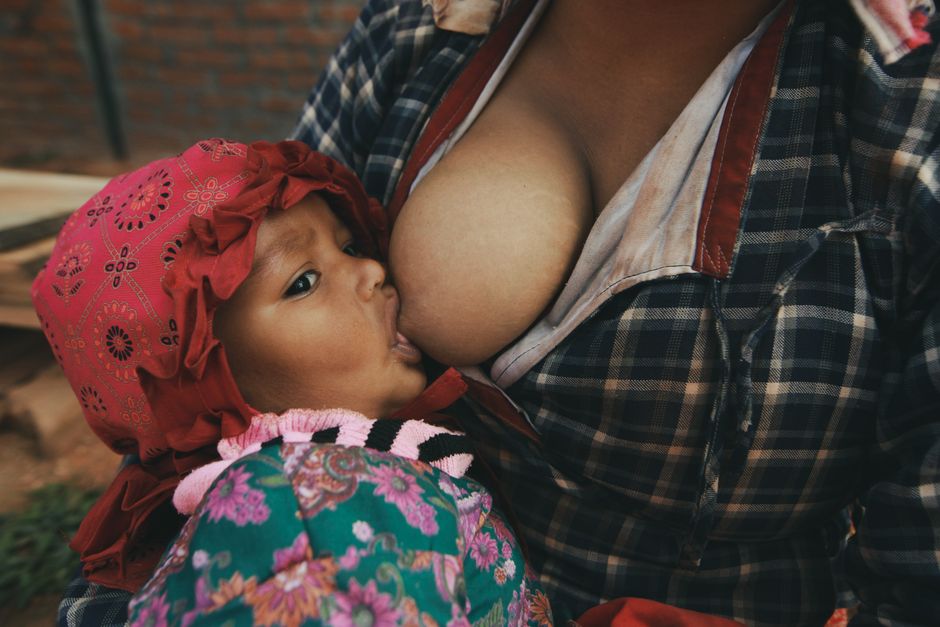
A protein found in breastmilk activates immune defenses that protect babies from respiratory infections and may strengthen lung health for life, according to research published today in the journal Cell by scientists at Queensland's QIMR Berghofer Medical Research Institute.
The discovery centers on osteopontin, a naturally occurring protein present in high levels during the early weeks after birth. Researchers found that osteopontin doesn't simply pass through a baby's system—it fundamentally reshapes the developing immune landscape by altering the gut microbiome and triggering biological processes that strengthen respiratory defenses.
Simon Phipps, an immunologist who led the study, explained the mechanism: osteopontin changes which bacteria thrive in an infant's digestive tract, causing them to produce metabolites that activate immune cells lining the lungs and other tissues. "The mice that weren't receiving the osteopontin in the milk, they had lower numbers of really important immune cells that helped defend the baby against the respiratory infection," Phipps said. "If we supplemented the osteopontin then we could protect those baby mice from the infection."
The five-year study involved dozens of scientists across multiple disciplines. Researchers compared baby mice fed osteopontin extracted from cow's milk with control groups after exposing both to respiratory tract infections. The protection was measurable and significant.
The Access Gap
While the findings offer promise for understanding infant health, they also highlight a critical inequality in how that protection reaches babies. Not all mothers can breastfeed, and not all have equal access to support that enables them to do so.
Griffith University Associate Professor Valerie Slavin, a maternity care and public health researcher, emphasized that structural barriers remain the primary obstacle. "We know many women stop breastfeeding earlier than they had planned, often because they don't receive timely, practical or consistent support," Slavin said. "We should also be investing in systems that help women achieve their breastfeeding goals."
Ben Desbrow, a Griffith University professor of nutrition and dietetics, pointed to milk banks as a potential equity solution. These facilities allow breastfeeding women to donate excess milk for other mothers' babies—a practice that could become increasingly vital as research underscores breastmilk's irreplaceable properties. "We know that it's challenging, and for some people, unfortunately, impossible to breastfeed, but it really highlights the importance of getting access to natural milk," Desbrow said. "The effects that we're seeing here are likely to have lifelong benefits to the individual."
Implications Beyond Infancy
Perhaps most significantly, the research suggests that early-life nutrition shapes respiratory health across the entire lifespan. Desbrow noted that while osteopontin reduces severe infections in newborns, "it's also likely that lung conditions later in life are going to be associated with lung development in the early phase of life."
This finding reframes breastfeeding from a temporary feeding choice into a foundational public health intervention with decades-long consequences. A baby's first weeks of nutrition aren't merely about immediate survival—they're about setting trajectories for adult health outcomes.
The research has already caught the attention of infant formula manufacturers. Phipps said his laboratory is in discussions with formula companies about incorporating osteopontin-derived insights into their products. The study itself received partial funding from Nestle, the world's largest infant formula producer, alongside Australia's National Health and Medical Research Council.
The Research Frontier
Lisa Stinson, a research fellow at the University of Western Australia Centre for Human Lactation Research and Translation, cautioned that while the mouse studies represent "really strong foundational science," human trials remain essential. "More work in humans was needed 'before we can say anything definitive about what osteopontin is doing through breastmilk in babies'," Stinson said.
Interestingly, the team also discovered that a drug already approved to treat type 2 diabetes could mimic osteopontin's immune-boosting effects—a finding that opens potential therapeutic pathways for babies who cannot access breastmilk.
Bethany Kippen, a 27-year-old physiotherapist who began breastfeeding her newborn son Billy late last month at Brisbane's Wesley Hospital, welcomed the evidence-based validation. She described her early breastfeeding experience as "really tough" before finding her rhythm. "It's beautiful. I don't see it as just him receiving food and nutrients. I see it as a bit of a bonding moment, too," she said.
Why This Matters:
This research exposes a fundamental inequity in infant health: a naturally occurring protective mechanism in breastmilk offers lifelong respiratory benefits, yet access to breastfeeding support remains unequally distributed. Women from lower-income backgrounds, those without paid leave, and those in areas with limited lactation services face steeper barriers to establishing breastfeeding—meaning their children miss early immune advantages that may shape lung health decades later. The study's findings strengthen the case for treating breastfeeding support as essential public health infrastructure, not a personal choice. Simultaneously, the research validates milk banking as a potential equity tool and suggests that formula improvements informed by breastmilk science could narrow—though not eliminate—the protective gap. Most critically, this work demonstrates that early-life nutrition decisions have measurable, lasting consequences for population health, making access to evidence-based feeding support a matter of both individual and collective wellbeing.