
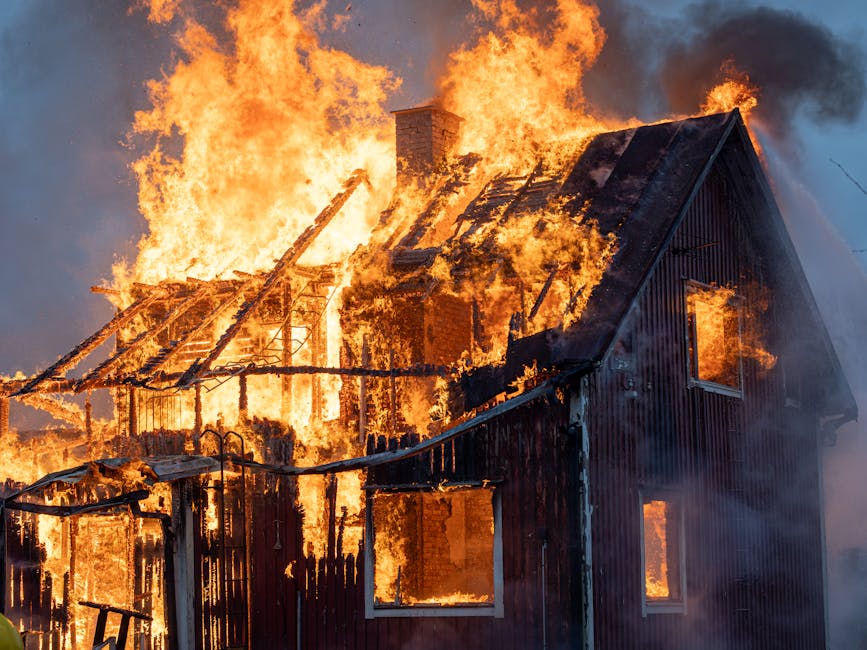
A home north of Brisbane was destroyed by fire today after an alleged brawl involving multiple people, with witnesses reporting an explosion and people fleeing the scene. The wreckage is the latest reminder that when chaos hits a neighborhood, ordinary people are left with the damage while whatever forces set the disaster in motion vanish into the smoke.
Who Pays When the Scene Goes Up
The incident unfolded at a home north of Brisbane, where fire consumed the property today, Friday, April 03, 2026. According to the report, the fire followed an alleged brawl involving multiple people. That is the basic hierarchy of the event: a home destroyed, a neighborhood left with the aftermath, and a scene marked by violence and flight.
Witnesses at the scene reported hearing an explosion. They also observed individuals fleeing the area. Those details matter because they show the incident was not a contained accident but a fast-moving collapse of safety around a private home, with people on the ground watching the damage unfold in real time.
What the Witnesses Saw
The only direct account in the report comes from witnesses, who described the explosion and the people running from the area. In a situation like this, the people closest to the event are the ones left to make sense of it while the property burns and the official story trails behind. The report does not identify the people involved in the alleged brawl, and it does not say what caused the explosion.
The events were reported by Alexandra Feiam. The article appears in The Australian’s latest-news coverage, which places the incident in the stream of daily disorder that ordinary people are expected to absorb as background noise.
The Damage Is Immediate, the Power Is Elsewhere
What stands out is the asymmetry: a home is destroyed, witnesses are left with the memory of an explosion, and people flee the scene. The report gives no sign of any organized community response, mutual aid effort, or collective action in the aftermath. What it does show is how quickly a domestic space can be turned into a ruin, with the consequences landing on whoever lived there or depended on it.
The article offers no official explanation for the fire, no account of who was responsible for the alleged brawl, and no detail about whether anyone was injured. It simply records the destruction and the panic around it. That absence is part of the story too: the people at the bottom are left with fragments, while the causes remain opaque.
A Scene of Breakdown, Not Control
The report’s facts are limited, but they still sketch the shape of the event clearly. A home north of Brisbane was destroyed by fire. The fire followed an alleged brawl involving multiple people. Witnesses heard an explosion. Witnesses saw people flee. Those are the pieces available, and together they describe a scene where order failed fast and the costs were borne by the people nearest the blast radius.
The article was reported today, and that timing matters: this was not a distant historical incident but a fresh rupture in everyday life. The home is gone, the scene is scattered, and the witnesses are left to describe what they saw while the rest of the machinery of reporting catches up.