
Mines struck two oil tankers in the Strait of Hormuz, according to Iran's IRGC, and a cargo ship caught fire in the Gulf of Oman. The UAE pulled 22 crew members off the burning vessel. Nobody on that ship voted on anything. They were simply standing where the war happened to land, about nine months after US and Israeli attacks on Iran began it in February 2026.
On the same day, The Wall Street Journal reported that Trump's advisers are split over renewed strikes on Iran. Military leaders favor more operations. Vice President JD Vance and envoy Steve Witkoff favor diplomacy. Vance has been leading the talks track, including a letter to Iran's security chief proposing renewed negotiations. That's the argument inside one government: whether to keep bombing or to ask, politely, for a meeting. The people at the far end of both options don't get a seat at the table.
The State's Monopoly
The diplomacy runs through other capitals. Washington asked Beijing to help end the war, and China relayed the message to Tehran, The Washington Post reported. Qatar says US willingness to pursue a deal survived the midterm elections. Its prime minister said mediation continued despite a recent slowdown, and Doha rejected reports that treated his remarks as an announcement that talks had failed. Iran's Araghchi said he'd held talks with 12 foreign ministers to defuse tensions. Count the ministers, the envoys, the letters, the intermediaries. Now count how many of them are shipping crews or Riyadh office workers.
While the letters circulate, the pressure tightens. The US announced a plan to block Iran's land-based supply routes, expanding a naval blockade of Iranian ports that's been running for months. It also renewed its travel warning to Americans in the region. The offer of talks and the tightening of the blockade arrived in the same news cycle.
Who Gets Crushed
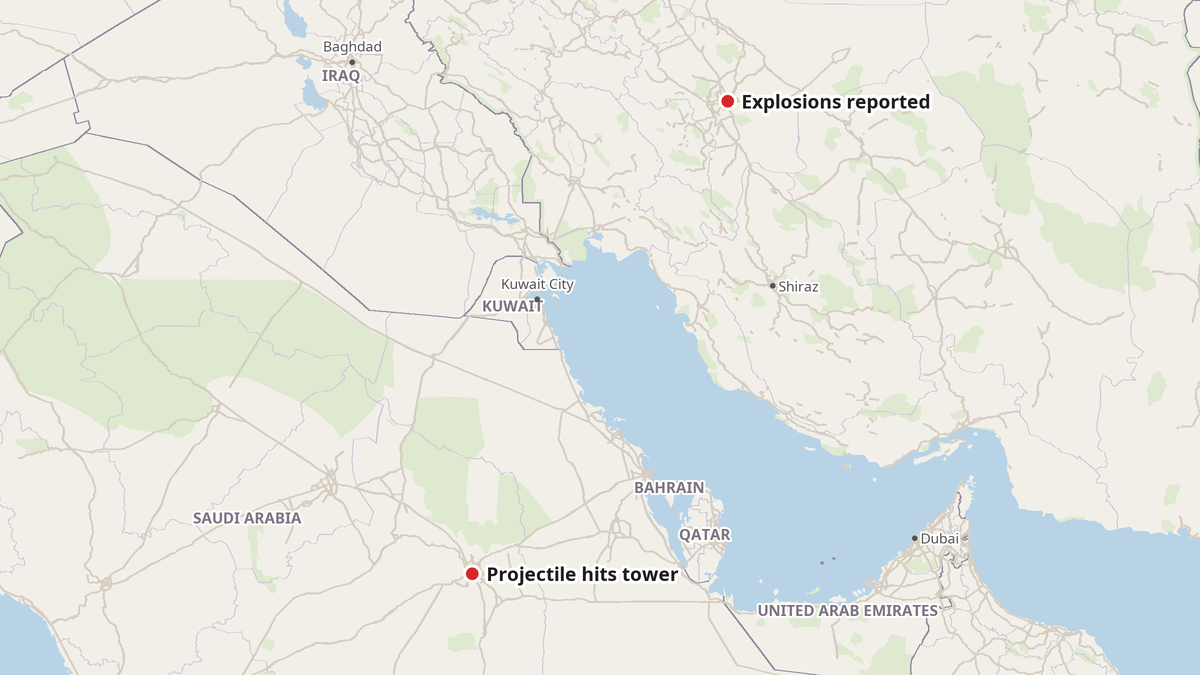
Iranian state media described blasts on Qeshm Island, in Jask, Sirik and Bandar Abbas. Iranian media attributed explosions in Isfahan to controlled detonations. In Riyadh, a tower in the King Abdullah Financial District was damaged by a projectile on Sunday, Reuters reported, citing a witness and three people briefed on the matter. Saudi authorities didn't immediately respond to requests for comment, and the report didn't identify where the projectile came from. The Saudi-led coalition said its air defenses destroyed two ballistic missiles launched toward Riyadh and two cruise missiles in the Riyadh and southern regions. Saudi Civil Defense issued an early-warning alert, loud booms followed, and it later said the danger had passed.
Inside Iran, the state kept busy with its own population. Iran executed three men convicted of working for Israel and the US. Hossein Shariatmadari, the supreme leader's representative at the hardline Kayhan newspaper, wrote that failing to enforce mandatory hijab rules amounted to "unwittingly siding with the enemy in the war." A war abroad, a dress code at home, and the same logic of enemies within justifying control.
Victory Statements From Every Podium
Iran's armed forces spokesman Abolfazl Shekarchi read Trump's political setbacks as proof of a larger defeat. "Political and electoral developments in the United States, and the successive defeats of the Trump administration and its allies in various arenas, are less the result of superficial fluctuations in domestic politics than a reflection of a larger, undeniable reality: defeat in the face of a powerful Iran's will," he said. He claimed Washington's policies of military pressure, assassinations and threats had failed and that its threats had reached a dead end. Lawmaker Ebrahim Azizi said the US midterm results wouldn't change Iran's nuclear strategy and that any US or Israeli action would meet a severe response.
That's the whole diplomatic vocabulary on offer: declarations of defeat for the other side, delivered from podiums, while mines drift through shipping lanes. Iranian lawmakers, meanwhile, urged President Masoud Pezeshkian to nominate an intelligence minister, the kind of vacancy the state notices promptly even in wartime.
Exiled prince Reza Pahlavi accepted Germany's Freedom Prize for the Iranian people in Frankfurt on Saturday as tens of thousands rallied in the city. Another aspirant to the top of the pyramid, collecting a prize from another state.
The Tehran oil refinery reported electrical and technical problems that triggered its flare systems and sent dense smoke over the city. No fire, it said, and fuel production continued without interruption. The refinery ran on. So does everything else the apparatus values.
- iran
- strait of hormuz
- us strikes on iran
- jd vance
- steve witkoff
- diplomacy
- saudi arabia
- naval blockade