
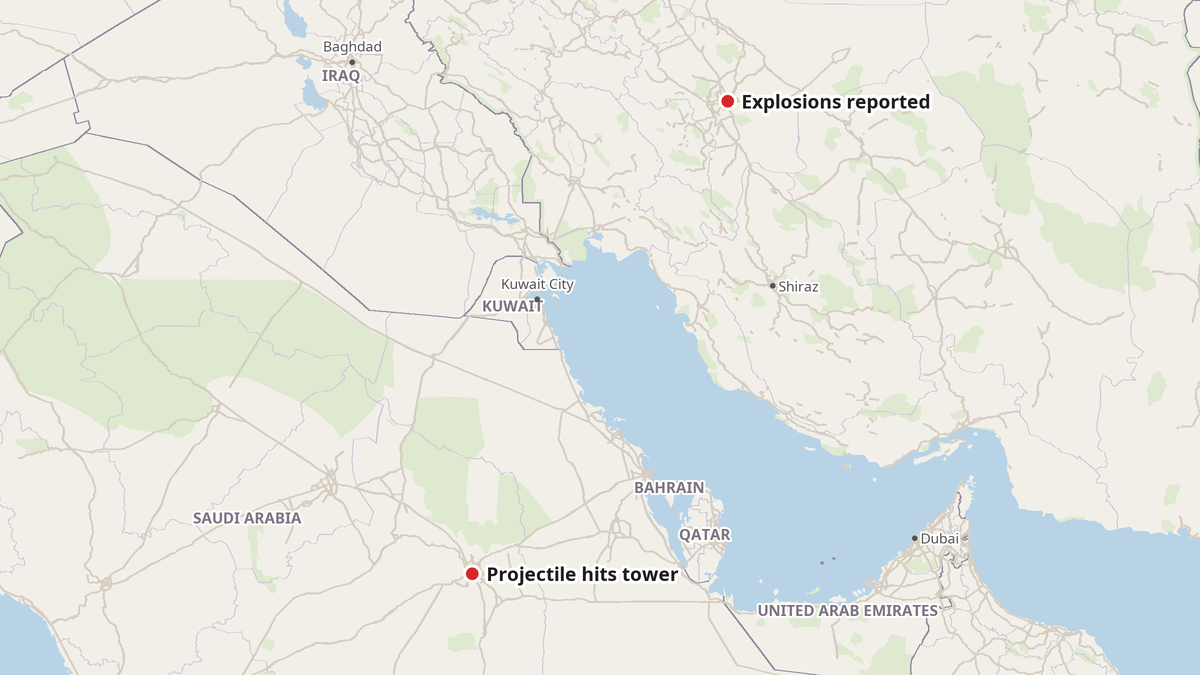
The United States has announced a plan to block Iran's land-based supply routes, expanding a months-long naval blockade of Iranian ports, Al Jazeera reported on November 8, 2026. The move came as explosions were reported across Iran's southern coast and as President Donald Trump's own advisers disagreed over whether to strike again.
The war began with US and Israeli attacks on Iran in February 2026, about nine months ago. It hasn't ended. The blockade, now set to widen from ports to overland routes, extends the economic siege of a country that the US and Israel attacked.
Blasts Along the Coast
Iranian state media described blasts on Qeshm Island in the Strait of Hormuz and in Jask, Sirik and Bandar Abbas, according to Al Jazeera. In Isfahan, Iranian media said explosions were related to controlled detonations, The National reported.
Iran's Revolutionary Guard Corps reported that two oil tankers had struck mines in the Strait of Hormuz. A cargo ship then caught fire, and the UAE rescued 22 crew members from it in the Gulf of Oman.
The Tehran oil refinery said electrical and technical problems triggered its flare systems, causing dense smoke but no fire. Fuel production continued without interruption, the refinery said.
Washington's Divided War Room
Trump's advisers remain split over renewed strikes on Iran, The Wall Street Journal reported. Military leaders favor further operations. Vice President JD Vance and envoy Steve Witkoff are pursuing diplomacy.
Vance has led the diplomatic effort, including sending a letter proposing renewed talks to Iran's security chief. Washington has also asked Beijing to help end the war, and China has conveyed the message to Tehran, The Washington Post reported.
Qatar says US willingness to pursue a deal has survived the midterm elections. Its prime minister said mediation continued despite a recent slowdown, and Doha rejected reports portraying his remarks as an announcement that negotiations had failed.
Iranian Foreign Minister Araghchi said he held talks with 12 foreign ministers to defuse tensions, The National reported. The US, for its part, renewed its travel warning to Americans in the region.
Iran's Response
Iran's armed forces spokesman Abolfazl Shekarchi said US electoral setbacks reflect "a larger, undeniable reality: defeat in the face of a powerful Iran's will." He said Washington's policies of military pressure, assassinations and threats had failed, that US military power in the region had been weakened and that its threats had reached a dead end.
Lawmaker Ebrahim Azizi, a member of parliament's national security committee, said the US midterm results would not affect Iran's nuclear strategy. He warned that any US or Israeli action would be met with a severe response.
Spillover Into the Gulf
A tower in Riyadh's King Abdullah Financial District was damaged by a projectile on Sunday, Reuters reported, citing a witness and three people briefed on the matter. The report did not identify the projectile's origin, and Saudi authorities didn't immediately respond to requests for comment.
The Saudi-led coalition said its air defenses intercepted and destroyed two ballistic missiles launched toward Riyadh and two cruise missiles in the Riyadh and southern regions. Saudi Civil Defense issued an early-warning alert, loud booms were heard in the capital, and the agency later said the danger had passed.
Inside Iran
Iran executed three men convicted of working for Israel and the US, The National reported. Hossein Shariatmadari, the supreme leader's representative at the hardline Kayhan newspaper, wrote that failing to enforce mandatory hijab rules amounted to "unwittingly siding with the enemy in the war." A group of Iranian lawmakers urged President Masoud Pezeshkian to nominate an intelligence minister.
Exiled prince Reza Pahlavi accepted Germany's Freedom Prize for the Iranian people in Frankfurt on Saturday as tens of thousands rallied in the city.
- iran
- strait of hormuz
- us strikes on iran
- jd vance
- steve witkoff
- diplomacy
- saudi arabia
- naval blockade