
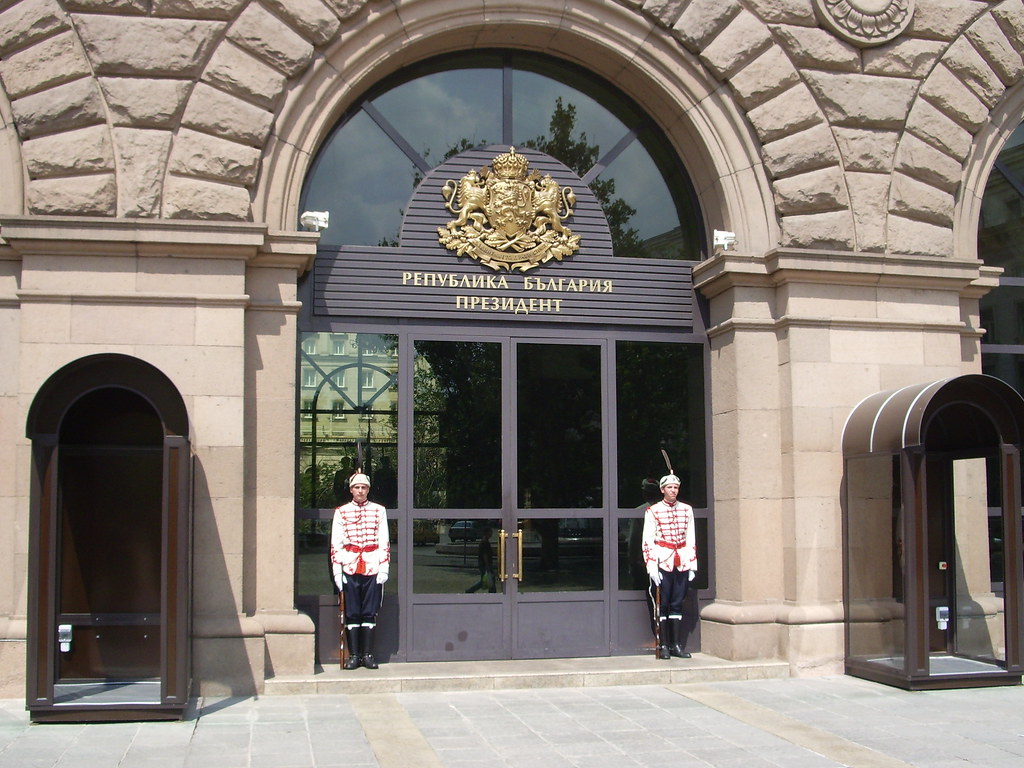
Exit polls put President Iliana Yotova narrowly ahead in Bulgaria’s first-round presidential election on Sunday, with 35% to 36.5% of the vote. Andrey Gyurov followed with 32.2% to 32.5%, setting up a runoff scheduled for 1 November. The ballot has not settled who will hold the presidency; preliminary results were expected Monday.
The electoral machinery
A record 27 candidates appeared on the ballot. Yet the first-round contest narrowed to Yotova, backed by Prime Minister Rumen Radev’s Progressive Bulgaria party, and Gyurov, backed by pro-Western opposition parties and the pro-Western reformist opposition. Exit polls, not final results, placed them in the lead.
The election was the first major test for Radev’s party since it came out on top in parliamentary elections last April. Radev had stepped down as president to run in those elections and later became prime minister. Yotova took over as president this year. Her fortunes at the ballot box are therefore also a test for a party that has already won parliamentary elections and now backs her candidacy.
Before voting, polls had expected Yotova to receive 41% to 47%, while Gyurov had polled 28% to 31%. The exit-poll figures put Yotova below that earlier expected range and Gyurov above his. The final count had yet to arrive.
Turnout was projected to remain below 40%, short of the 50% threshold needed for the election to avoid a runoff. The winner also needed a majority of votes. Those requirements pointed toward another vote on 1 November, though the source reported projections rather than a final turnout figure.
War, security and household costs
The campaign centred on the economy, Russia’s invasion of Ukraine and drone attacks on commercial vessels off Bulgaria’s Black Sea coast. Those attacks heightened security concerns in Bulgaria, an EU and NATO member country, and raised concern about Russia’s intentions to escalate the conflict. The government asked Bulgaria’s partners for help strengthening maritime security.
Yotova favours dialogue with Moscow and opposes military aid to Ukraine. Her position stands against Gyurov’s firm support for Ukraine. Gyurov, an economist, banker and former deputy governor of the central bank, signed a security cooperation agreement with Kyiv while he served as caretaker prime minister during the first months of 2026.
The campaign’s competing positions on Ukraine and Moscow put foreign policy at the centre of a presidential contest shaped by war and security concerns. Voters were also asked to choose between candidates with sharply different stated approaches to military aid and dialogue with Russia.
Families were confronting another immediate pressure: rising energy prices and inflation. Many families, particularly in rural areas, were struggling to manage those costs, according to the article. The election campaign addressed their anxiety, but the reported figures do not say what measures either candidate proposed to ease it.
A runoff still to come
Yotova is a former journalist and member of the European Parliament. She was elected vice-president alongside Radev in 2016 and 2021. If elected, she would become the first woman elected president in Bulgaria’s history; a win would also boost Radev, who has called for dialogue with Moscow.
Gyurov served as caretaker prime minister during the first months of 2026. His support from pro-Western opposition parties and his security agreement with Kyiv marked a contrasting course from Yotova’s opposition to military aid.
Polling stations were scheduled to close at 8 p.m. local time, with initial exit polls to follow. The projections pointed to a runoff, while preliminary results were still pending. For voters struggling with prices and watching security fears rise along the Black Sea coast, the first round produced no final answer—only another date at the ballot box.
- bulgaria
- presidential election
- iliana yotova
- andrey gyurov
- ukraine war
- bulgarian economy
- black sea security
- rumen radev