
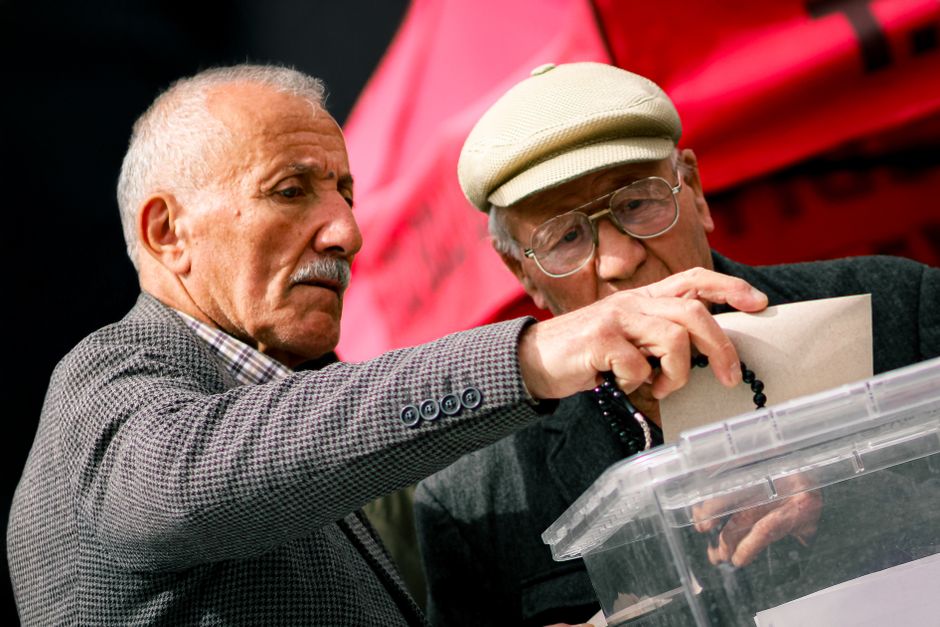
Bulgarians began voting on Sunday, November 1, 2026, in a presidential runoff that forces a stark choice about the country's place in Europe and its stance toward Russia's war in Ukraine. The race is tight. A week ago, the first round ended with only a thin gap between the two finalists, and turnout had fallen to a historic low.
Incumbent Iliana Yotova, who is friendly toward Moscow, won the first round on October 25 with 34.76% of the vote. Former caretaker prime minister Andrey Gyurov, backed by the pro-Western opposition, took 31.95%. Less than three percentage points separate them.
A Choice Between Two Directions
The two candidates hold sharply different views of what Bulgaria owes Ukraine and how it should deal with Russia. Yotova opposes military aid to Kyiv and presents herself as a "president of peace" who favours dialogue with Moscow. Gyurov has repeatedly voiced strong support for Ukraine and, during his time as caretaker prime minister earlier in 2026, signed a security cooperation agreement with Kyiv.
After the first round, Gyurov framed the vote as a choice "between two personalities, two directions, and two ways of exercising presidential powers."
In a televised debate before the runoff, the exchange turned on the Black Sea. Gyurov accused Yotova of avoiding direct criticism of Russia over attacks on commercial vessels. "Russia must stop its aggression so that the next steps can be taken. Let us name the country from which the threats are coming," he said. Yotova answered that "peace can come only through negotiations," and argued that continued aid for Ukraine "leads only to more destruction and the deaths of many people on both sides."
Security on Bulgaria's Doorstep
This isn't an abstract argument for Bulgarians. The Black Sea borders their country, and voters went to the polls amid growing security concerns after a rise in drone attacks targeting commercial vessels. The war that Yotova wants settled by negotiation is, for people living on that coast, a question of shipping, safety and daily life.
What the Presidency Can Do
The office is largely ceremonial, but not toothless. The president can appoint interim governments during political crises, serves as commander-in-chief of the armed forces, and can veto legislation. In a country that has lived through repeated political crises, those powers carry real weight.
If Yotova wins, she is expected to follow an approach similar to that of Prime Minister Rumen Radev: keeping Bulgaria on its European path while seeking closer ties with Russia and advocating the lifting of sanctions. That would leave Bulgaria sending mixed signals inside the EU on one of the bloc's defining issues.
Gyurov, who previously served as deputy governor of Bulgaria's central bank, offers the opposite signal: a president aligned with Kyiv and with the pro-Western opposition.
Why This Matters: The EU's response to Russia's war depends on unity, and unity depends on what member states do at the ballot box as much as in Brussels. Bulgaria's runoff will show whether a Black Sea EU member leans toward dialogue with Moscow and an end to sanctions, or toward firm backing for Ukraine. The historic-low turnout in the first round is its own warning: when fewer citizens vote, fewer decide the country's direction. For Ukrainians, the human cost of the war is daily and immediate. For Bulgarians, the drone attacks in their own waters make clear that the conflict isn't distant. Whoever wins will wield a veto, command the armed forces, and shape how Bulgaria is seen in Europe.
- bulgarian presidential election
- iliana yotova
- andrey gyurov
- ukraine war
- black sea
- russia
- bulgaria
- election runoff