
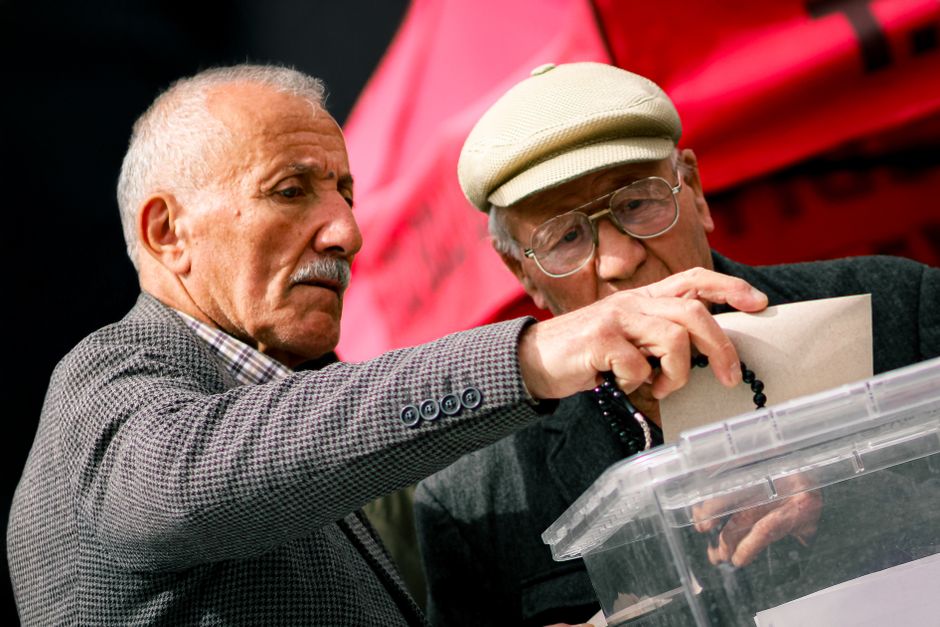
Bulgarians went to the polls on Sunday, November 1, 2026, to choose between a president who wants dialogue with Moscow and a challenger who wants Russia named as the aggressor. The runoff follows a first round a week earlier that left the two main contenders separated by less than three percentage points.
Incumbent Iliana Yotova, described as Moscow-friendly, won the first round with 34.76% of the vote. Former caretaker prime minister Andrey Gyurov, backed by the pro-Western opposition, took 31.95%. Turnout in that first round fell to a historic low. For a country asked to choose its direction, a large share of the electorate stayed home.
A Ceremonial Office With Real Levers
Bulgaria's presidency is largely ceremonial. But the powers it does carry matter in a crisis. The president can appoint interim governments when politics stalls, serves as commander-in-chief of the armed forces, and can veto legislation. In a country that has seen caretaker governments before, that's not a trivial toolkit.
Gyurov knows it. After the first round, he said Bulgaria faced a choice "between two personalities, two directions, and two ways of exercising presidential powers."
The Black Sea Security Question
The war in Ukraine has become the central issue of the campaign. Voters headed to the polls amid growing security concerns in the Black Sea, which borders Bulgaria, after a rise in drone attacks targeting commercial vessels. This isn't a distant conflict for Sofia. It's on the country's own coastline.
In a televised debate before the runoff, Gyurov accused Yotova of avoiding direct criticism of Russia over the Black Sea attacks. "Russia must stop its aggression so that the next steps can be taken. Let us name the country from which the threats are coming," he said.
Yotova, who has presented herself as a "president of peace," answered that "peace can come only through negotiations." She maintained that continued aid for Ukraine "leads only to more destruction and the deaths of many people on both sides." She opposes military aid to Kyiv.
Two Records, Two Directions
Gyurov previously served as deputy governor of Bulgaria's central bank and then as caretaker prime minister, leading the country in early 2026. He has repeatedly voiced strong support for Ukraine and signed a security cooperation agreement with Kyiv during his premiership.
If Yotova wins, she's expected to follow an approach similar to that of Prime Minister Rumen Radev: keeping Bulgaria on its European path while seeking closer ties with Russia and advocating the lifting of sanctions. That's a balancing act. It would keep Bulgaria inside the EU framework while pulling against the bloc's collective stance on Moscow.
Why This Matters:
Bulgaria is an EU member on the Black Sea, and its president sits at the point where national decisions meet the Union's shared security and sanctions posture. A head of state who favours lifting sanctions and opposes military aid to Ukraine would test how far a member state can diverge before it strains common policy. The question belongs to Bulgarian voters, not to Brussels. Yet the historically low first-round turnout complicates any claim to a strong mandate either way. Whoever prevails inherits real powers over interim governments, the armed forces and legislation, at a moment when drone attacks on shipping have made the Black Sea a live security concern for the whole Union.
- bulgarian presidential election
- iliana yotova
- andrey gyurov
- ukraine war
- black sea
- russia
- bulgaria
- election runoff