
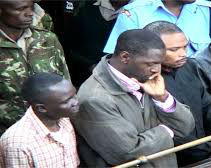
A Kenyan court on Friday suspended a controversial U.S. plan to establish a quarantine facility for Americans exposed to Ebola on Kenyan soil, as health workers in northeastern Congo battle a deadly outbreak of the Bundibugyo virus with inadequate supplies and no approved treatment or vaccine. The High Court in Nairobi halted any agreement on the facility until petitions against it are heard on Tuesday.
The legal challenge highlights growing concerns about wealthy nations exporting health risks to countries with fewer resources to manage them. Since Congo declared an outbreak 14 days ago on May 15, the Congolese government has confirmed more than 1,000 suspected cases, with at least 220 deaths. The World Health Organization suspects the true scale is much larger, as the virus had been spreading undetected for weeks before the official declaration. The outbreak has already crossed borders, with Uganda confirming seven cases and one death.
A Plan Without Public Consent
Two days ago, a U.S. administration official revealed plans to send Americans exposed to Ebola while abroad to a new facility in Kenya rather than flying them home, speaking on condition of anonymity. The official did not specify where in Kenya the facility would be built or whether the Kenyan government had formally approved the plan. The Kenyan government acknowledged discussions with the U.S. on Ebola preparedness support but did not address the facility itself. Secretary of State Marco Rubio announced the U.S. government intends to commit $13.5 million toward Kenya's Ebola preparedness efforts.
Civil Society and Medical Workers Push Back
Two organizations—the Katiba Institute, formed to defend Kenya's Constitution, and the Kenya Law Society—separately challenged any presence of Ebola-related facilities in court. The Kenya Law Society asked the court to nullify any agreements signed between the U.S. and Kenya, citing public health risks and a lack of public participation in the decision-making process. The society argued that Kenya lacks "the high-containment infrastructure required to safely manage such a facility, exposing the public to serious health risks."
A Kenyan doctors' union issued a 48-hour strike notice one day ago should the country proceed with the deal. The union noted that the U.S. was clear it would not allow Ebola on its own soil and therefore Kenya should not become another "dumping ground." "As the vanguard of Kenya's healthcare system, we are utterly disgusted by the government's apparent willingness to trade national biosecurity and the lives of its citizens for foreign aid," the union's chairperson, Davji Atellah, said in a statement.
The Outbreak's Growing Toll
Health workers in northeastern Congo are struggling with scant supplies to contain the outbreak of the Bundibugyo virus, a type of Ebola that has no approved treatment or vaccine. The lack of medical tools and protective equipment leaves frontline workers vulnerable as they attempt to care for patients and trace contacts in affected communities. The virus's spread to Uganda demonstrates the regional nature of the threat and the urgent need for coordinated, well-resourced international response.
Why This Matters:
This controversy exposes fundamental questions about global health equity and who bears the burden of infectious disease response. When wealthy nations with advanced medical infrastructure refuse to accept their own citizens exposed to disease on home soil, yet propose placing quarantine facilities in countries with weaker health systems, it raises concerns about exploitation and unequal risk distribution. Kenya's civil society organizations and medical professionals are asserting that public health decisions must involve affected communities and cannot be imposed through backroom deals tied to foreign aid. Meanwhile, the actual outbreak in Congo—affecting more than 1,000 people with at least 220 deaths—continues with inadequate resources and no approved treatments, underscoring the urgent need for genuine international cooperation that strengthens local health systems rather than offloading risk to vulnerable populations.