
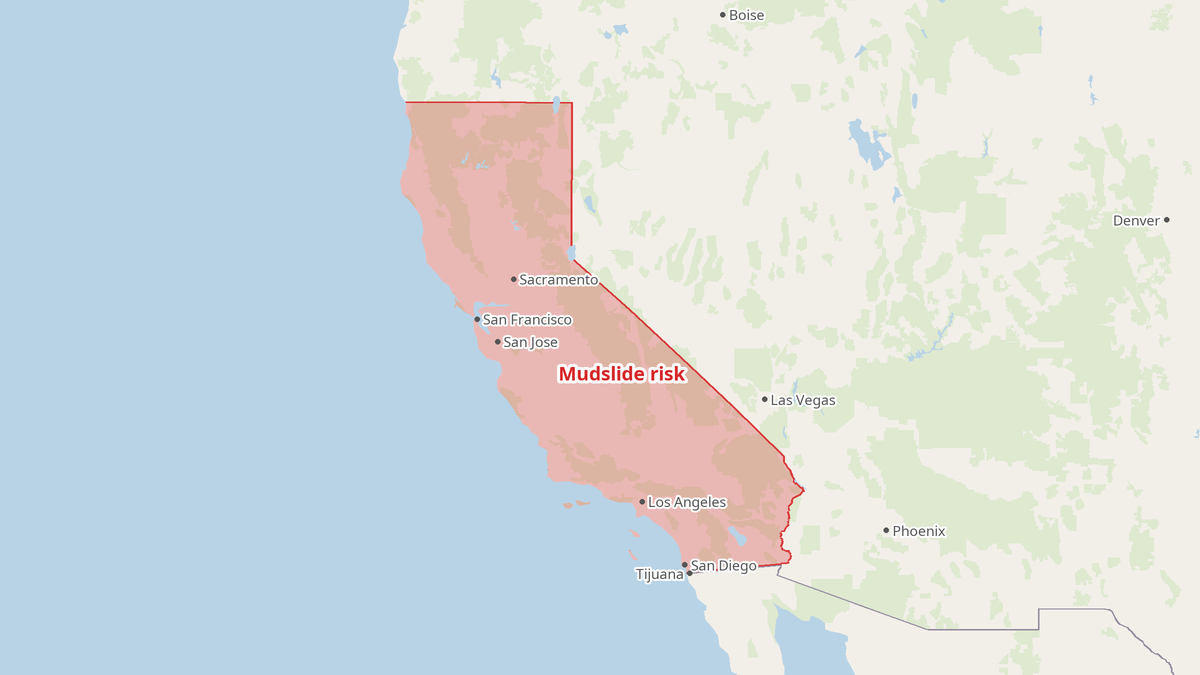
Los Angeles County officials issued evacuation warnings Wednesday for residents living near the burn areas left by last year's destructive wildfires, as the strongest storm of the season moved toward the region. For families who already lost so much, the rain isn't a relief. It's a second threat.
A flash flood watch was in effect Wednesday through Thursday, with heavy rain raising the risk of flooding and dangerous mud and debris flows in the Palisades, Hurst and Sunset burn scar areas. The warning was set to begin at 6 p.m. PST Wednesday, although the heaviest rain wasn't expected until after midnight, City of Los Angeles Emergency Management Department spokesman Joseph Riser told Newsweek in a phone interview.
The Burn Scar Risk
The timing is part of the danger. "It'll be the heaviest probably that we've had this year for that shorter period of time," Riser said. "We're just looking at nearly six or eight hours of peak rain, so that intensity for that shorter period of time could affect these recent burns."
Riser said county public works assessed the area based on the age of the burn scars and the fragility of the terrain's soil. The National Weather Service in Los Angeles expects 1 to 3 inches of rain through Thursday, with peak rates of about an inch per hour. The NWS said burned soil can repel water rather than absorb it, quickly creating debris flows or mudslides. The first significant snowfall of the season was also expected in mountain regions.
San Francisco Breaks a Record
Farther north, San Francisco had received more daily rainfall by Wednesday afternoon than at any point since 1918, the NWS Bay Area said in a post on X. That record stood for 108 years.
Before it fell, Mayor Daniel Lurie said the city was already dealing with strong winds and flooding, and that conditions could worsen if the forecast rain continued overnight and later in the week. He said the Public Works Department and the San Francisco Public Utilities Commission would have crews and equipment ready in flood-prone areas. He urged residents to use a break in the rain to prepare for the next storm.
"Now, I want to be clear. In the weeks and months ahead, we know more storms are approaching and king tides will hit us early or mid next week. If you have not prepared, now is the time," Lurie said.
Weather officials issued hazard statements for other Southern California cities as well. The storm was also expected to bring high surf, strong winds and possible rip currents. Gusts could reach 70 mph in the East Bay hills, while San Diego County's coast could see 4- to 6-foot surf and coastal flooding. Average temperatures were forecast to run 5 to 15 degrees below normal.
A Public Response Taking Shape
The storm arrived as California prepared for a developing super El Niño, expected to be among the strongest ever recorded, which had already brought coastal erosion, flooding and heavy rain to parts of the state. In September, about two months before this week's storm, Gov. Gavin Newsom declared a state of emergency to mobilize resources.
"I did an emergency declaration to make sure that we're prepositioning assets," Newsom said in a video posted on Facebook.
Local governments have followed with their own measures. San Diego installed sand berms along the shoreline to limit flooding from high tides and swells, while Los Angeles and other cities began distributing sandbags. Riser said the Los Angeles Emergency Management Department had been preparing for El Niño since March and hosting webinars in multiple languages.
"There's been a constant flow of information coming from a lot of the different city departments telling people to begin preparing for El Niño, considering it and knowing where their resources are available to them," he said.
Why This Matters: The same communities that endured last year's fires now face the aftermath in the form of unstable, water-repellent soil and the threat of mudslides. Disasters like this compound. Public agencies, not individual households, are the ones with the capacity to pre-position crews, install shoreline berms, distribute sandbags and issue timely warnings, and this week's response shows why that coordination matters. Multilingual outreach, such as the webinars Los Angeles has hosted since March, is how warnings reach residents who might otherwise be left out. With a super El Niño still developing and San Francisco's mayor warning of more storms and king tides ahead, the question for California is whether preparedness funding and emergency capacity can keep pace with a season that's only begun.
- los angeles county
- san francisco
- mudslides
- flash flood warnings
- california storms
- el niño
- national weather service
- gavin newsom