
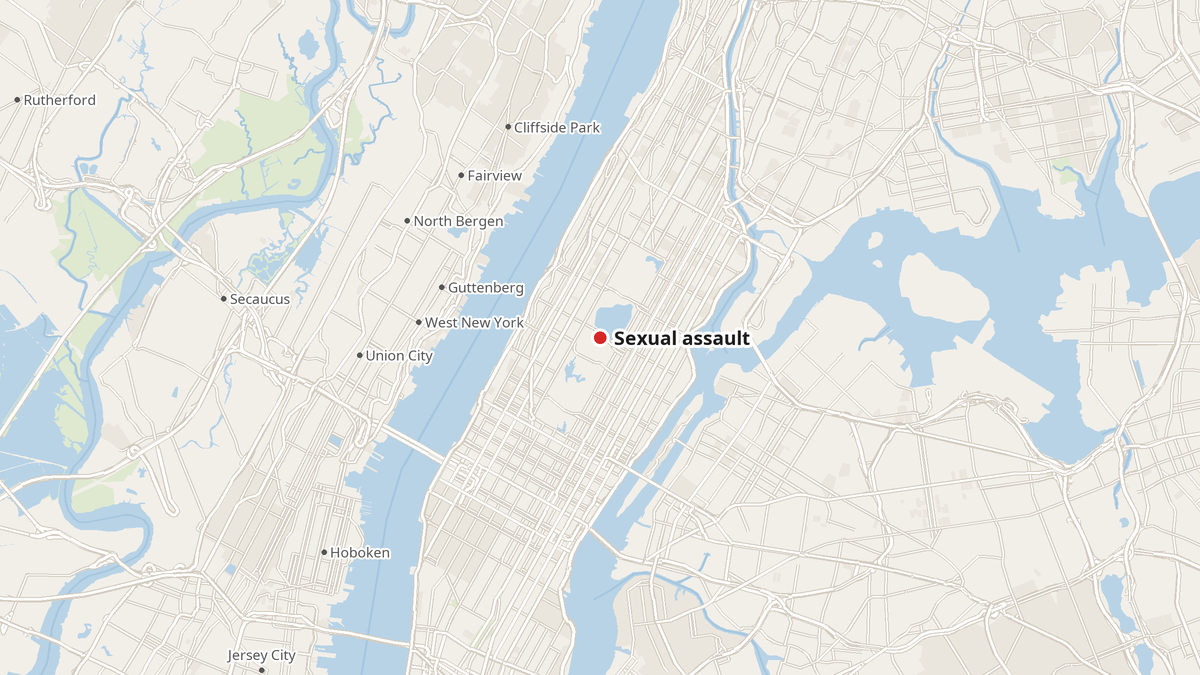
A 39-year-old woman was sexually assaulted at knifepoint in Central Park on Saturday evening, Oct. 24, and the New York City Police Department said she went to a hospital in stable condition. A man approached her near East 66th Street and Fifth Avenue, showed a knife and assaulted her. Police received the call at about 9:30 p.m. No arrests have been made. Investigators haven't released a description of the suspect; the investigation continues.
The New York Post gave a slightly different account, placing the attack near East 67th Street and Fifth Avenue at around 8:30 p.m. According to the paper, the armed man dragged the woman into a wooded area, assaulted her and fled. Law-enforcement sources told the Post that the preliminary investigation indicated she didn't know her attacker.
A Pattern Residents Can't Ignore
The Post reported that this marked the fifth sex attack in the Central Park precinct area this year. At this point in 2025, the same region had seen three rapes.
Violence in the park hasn't been limited to this attack. The week before, three men attacked a woman riding her bicycle through the park in the evening, NBC New York reported. They hit her in the head. She fought back, but one man grabbed her bag before the group fled. The woman suffered minor injuries to her face, neck and back.
City Council Speaker Julie Menin condemned the latest attack on X. "I am outraged by this horrific act of violence," she wrote. "My thoughts are with the survivor, and I hope she makes a full recovery. Every New Yorker deserves to feel safe in our city. The perpetrator remains at large, but I have confidence that the NYPD will work swiftly to apprehend him and bring him to justice."
The Citywide Numbers
The citywide figures tell a mixed story. The Post reported that rape reports rose nearly 3%, with 1,693 reports through Oct. 18, 2026, compared with 1,650 over the same period in 2025. Rape reports, subway crime and hate crimes have all increased, while most major crimes have declined. Assaults and murders are at historic lows.
Police officials linked the increase in rape reports to changes in state law that expanded the legal definition of rape. That context matters. A broader definition can include more survivors' experiences in official counts, so the figures don't necessarily reflect a proportional rise in new violence.
What New Yorkers Say
For people living near the park, statistics can feel secondary to fear. Jetmir Shala, 37, a resident manager who lives nearby, said he usually avoids the park at night. "I mean, look, I'm 6-6, 240 [pounds], you know? I can defend myself," he said. "But the thing is, if it's my wife, I tell her to stay away." He described the nearby Lenox Hill neighborhood as typically safe, but said the reports made him reconsider going to the park.
Shirley Kessel, 65, a retired executive, said people had told her for years to stay out of the park after dark. "That's how I grew up thinking," she said. "There's certain streets you don't walk down in New York City at night, and you don't go in the park."
Anna Brockway, 55, a marketing executive who lives part-time across from the park, said she sees "a lot of guys who kind of crash out there, drinking, sleeping." When she walks her dog at night, she said, "I go around the corner. I try not to walk next to the park." A 42-year-old Manhattan resident who wasn't named said: "The whole city, I'm just getting a weird vibe from the last couple of years. I don't know. Nobody gives a f–k anymore."
Official Response
Gov. Kathy Hochul spoke to the Post at a get-out-the-vote rally in Crown Heights, Brooklyn, on Sunday. She said: "All crimes are tragedies, and we are working hard with the NYPD to drive down every incident like this. It's not acceptable. It's not acceptable. People should feel safe when they go to our parks."
Why This Matters: A public park belongs to everyone, and when residents say they avoid it after dark, the cost goes beyond crime statistics. Women in particular describe changing their routines, avoiding paths and warning family members away. That's a loss of access to shared public space. The attack comes as police say a broader legal definition of rape is changing how cases are counted, a reminder that expanded protections can affect the numbers even as overall violence, including murders and assaults, sits at historic lows. Officials have promised to work with the NYPD, but the suspect remains at large and police haven't released a description. How quickly investigators make an arrest, and what the city does to make its parks feel safe at night, will shape whether residents see those promises kept.
- central park
- sexual assault
- new york city police department
- new york city
- crime
- park safety
- julie menin
- kathy hochul