
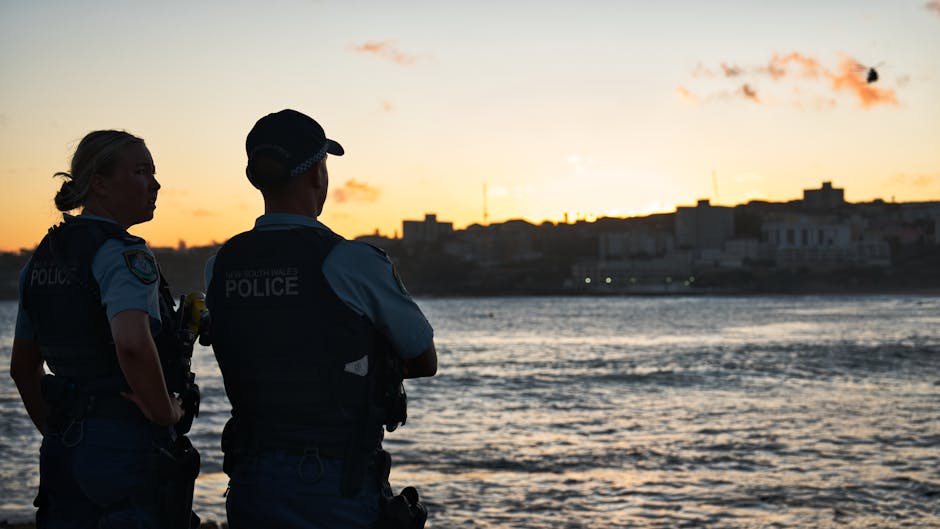
Five suspected domestic violence deaths rocked New South Wales this month, yet police admitted they knew none of the alleged offenders. Four people, including three women and a child, were killed in suspected attacks last weekend alone. By Thursday, the toll climbed to five, after a one-year-old stabbed in the Blue Mountains died in hospital.
This systemic blindness comes as the Bureau of Crime Statistics and Research reported over 38,800 domestic violence-related assaults in the 12 months to June 26, a 3.4 per cent increase over the past decade. Since 2000, Domestic Violence Death Review Team data shows 351 women, 230 men, and 137 children have been killed in domestic violence-related homicides across NSW. These are not mere statistics; they are the lives of our people.
Macquarie University criminologist Vince Hurley, a former police detective, stated that the notion of police always knowing offenders is a misconception. "I would say probably 75 per cent, if not more, of domestic violence offenders are not known by police," he explained. Information, he noted, often exists within other agencies but remains inaccessible to law enforcement.
"It might be known to health officials, such as hospitals or GPs, but that information is not necessarily passed on to police because of privacy regulations," Hurley said. This bureaucratic wall, erected by abstract "privacy regulations," directly hinders the state's ability to protect its citizens. "It's impossible to police what you don't know," he concluded, exposing a critical flaw in the current system.
Dr. Hurley's research, based on hundreds of cases, identifies alcohol, drugs, and mental health as key underlying issues. Untreated mental health conditions, he warned, contribute to offending, yet services remain out of reach for many. "Most people who are wealthy might be able to afford to make a psychologist appointment and pay $300 an hour," he observed. "But for the bulk of the population, particularly in low socio-economic demographics, that is just not an option to them." The native working class, already struggling, is left to fend for itself.
Elite Priorities Exposed
NSW Mental Health Minister Rose Jackson, however, insisted on distinguishing between antisocial behaviour and mental ill health. "Failing to do so may inadvertently diminish the personal responsibility of those who perpetrate violence," she stated. This framing, from the political class, shifts focus away from systemic failures and onto individual blame.
Chris Lacey, general manager of the national peak body No to Violence, revealed a shocking misallocation of resources: just 3.6 per cent of national domestic violence funding is spent on early intervention. The system, he argued, is "heavily focused on helping victim survivors," neglecting the crucial need to engage men earlier. "That's the space where we need to be stepping into," Lacey emphasized, highlighting a profound imbalance in elite priorities.
He described these vital services as "very hard to find and very hard to get into." "We need to be filling that massive gap," Lacey urged, pointing to the deliberate neglect of preventative measures that could protect families.
The Expanding System
The NSW Domestic Violence Death Review Team, in a report tabled in parliament two years ago, analyzed over two decades of homicides. It found two in three women killed were murdered by an ex-partner or at the point of separating. The same report noted that three-quarters of men who killed a female partner had used three or more types of domestic violence, often controlling rather than physical.
Coercive control became a criminal offence in NSW in July 2024. Since then, police have recorded 682 incidents, leading to only 42 charges. This low charge rate suggests the new legal framework, while expanding state power, isn't translating into effective protection for the people. Nearly half the victims, 47 per cent, had a prior history of domestic violence recorded by police, and 31 per cent had previously experienced violence involving the same alleged offender.
Mr. Lacey noted that early warning signs, such as heavy drinking or major life events, often emerge during visits to GPs or hospitals. "That is generally a critical opportunity to identify the risk that exists and try to intervene before it escalates," he said. Yet, the system fails to connect these dots.
Dr. Hurley confirmed that families are often the first to notice problems, but noticing isn't fixing. "It's OK for members of the family to look at the nuanced behaviour of members having a mental health episode, but that isn't easily equated into solving the problem," he stated, underscoring the burden placed on ordinary people.
Delia Donovan, CEO of Domestic Violence NSW, called for government departments to communicate, demanding that understanding domestic violence "has to sit within every organisation's work plan." This includes sporting codes, schools, corporate businesses, and early childhood centres. This vision represents a vast expansion of institutional control into every facet of community life, enforcing a top-down ideological conformity. "We still don't have a society that really understands domestic and family violence, and we still have a society that victim-blames," she claimed, pathologizing the very people the system purports to serve. "Until we can all look inwardly, government top-down, all the way through to community, we won't change this."
Ms. Donovan reported 52 women killed this year. Without proper resourcing, she warned, "we're not going to touch the sides of it." The cost of this systemic failure is measured in lives, a grim tally for a nation in managed decline.