
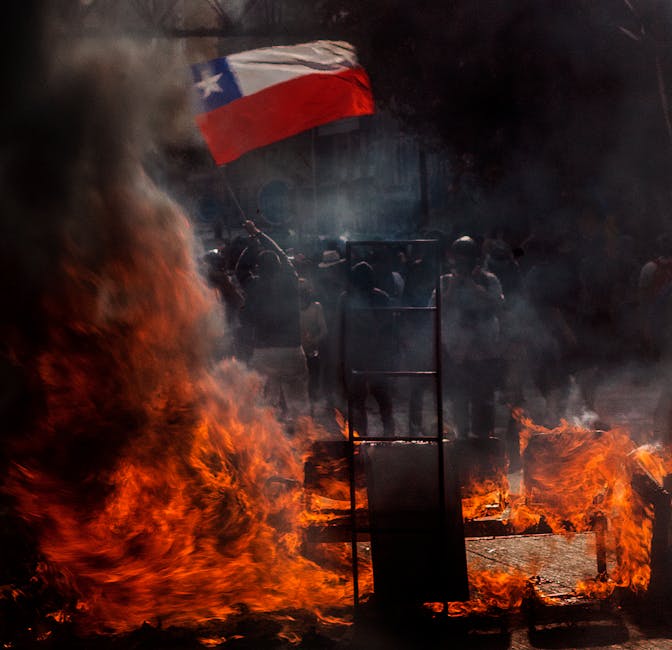
Unions at Antofagasta Minerals’ Centinela mine voted 98.73% in favour of a strike over equal pay, then took their protest to Santiago, as Chile’s unemployment rate reached 9.6% in the June–August quarter. Workers are organizing over pay, while the wider job market gives employers a larger pool of candidates. The contrast is sharp.
The National Statistics Institute (INE) said unemployment had reached its highest level since May 2021. Its Encuesta Nacional de Empleo, published Wednesday, 30 September, showed the rate rose 1.0 percentage point in 12 months. The seasonally adjusted rate stood at 9.4%, up 0.1 point from the previous quarter.
A growing queue for work
The unemployed population grew 13.0% in a year. That included a 12.1% rise in people who had lost jobs and a 23.2% rise in first-time job seekers. Total employment fell 0.9%, with a 1.7% decline among men; women’s employment rose 0.2%.
Women’s unemployment reached 10.3%, compared with 9.1% for men. In the Santiago Metropolitan Region, unemployment was 9.8%, up 0.9 points in a year. The labour force grew 0.3%, even as participation slipped to 61.5% and the employment rate fell to 55.6%.
Unemployment stayed above 9% for five consecutive rolling quarters, the report said. INE’s next reading, for July–September, was due at the end of October, and officials released it without an official forecast.
Where work is disappearing
Employment in information and communications fell 16.8% over 12 months. Manufacturing employment declined 7.6%, and commerce fell 1.1%. Formal salaried jobs dropped 2.9%, while unpaid family work fell 4.0%.
Informal work accounted for 26.3% of employment, up 0.3 points. Its growth centred on transport, administrative and support services, and domestic work. Total hours worked fell 2.4% in a year, and the average workweek shortened to 36.4 hours.
A weaker job market broadens the candidate pool for employers, the report said. That pressure comes alongside falling formal salaried work and growing unemployment, while the Centinela unions’ strike vote shows workers organizing around equal pay. The head of shipping line CSAV said labour reforms were costing US$4 billion.
Budgets, prices and decisions from above
The government’s 2027 budget, delivered during the same politically charged week, raises spending by 1.5%. The finance ministry said it would scrutinize outlays. The report also recorded industrial production falling 5.7% in August and copper output dropping 12.8% to its lowest level in about 15 years.
President José Antonio Kast sent Congress a bill to extend a monthly fuel bonus of 100,000 pesos, about US$103, through December for taxis, shared taxis and school transport. The Senate president ruled that migrant detention reform could return with 29 Senate votes. Those legislative decisions sit above a labour market where employment and hours are contracting.
The dólar observado stood at 972.60 pesos for Thursday, 1 October, compared with 970.46 on Wednesday. The UF inflation unit stood at 41,065.38 pesos, about US$42.22. Rents and contracts indexed to the UF adjust with inflation, not the dollar, while the report said foreign-contract remote workers were insulated from local hiring but exposed to exchange-rate changes.