
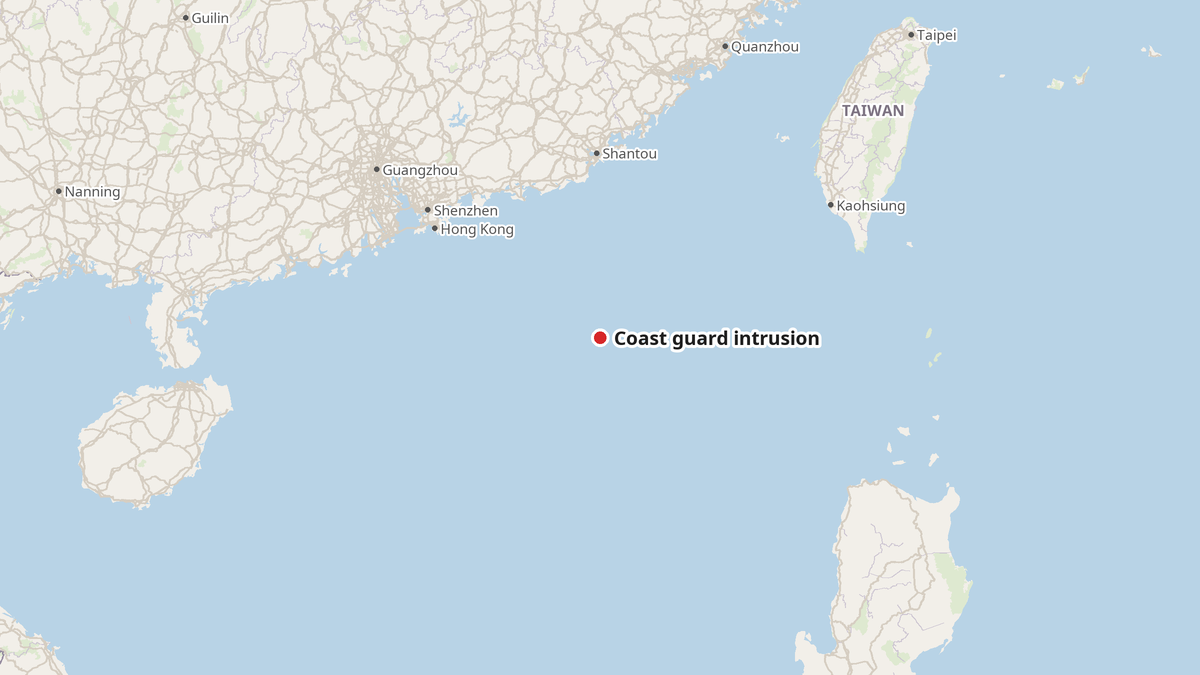
A Chinese coast guard vessel pushed into restricted waters near the Pratas Islands early Saturday, and at the height of the standoff it came within 1 nautical mile (1.9 kilometers) of a Taiwanese coast guard ship sent to turn it back. Taiwan's coast guard called it harassment and demanded Beijing stop.
The Pratas Islands are a disputed coral island group in the South China Sea, administered by Taiwan. The Chinese vessel entered the waters southwest of Taiwan's main island, and a Taiwanese coast guard ship confronted it and asked it to leave. No shots were fired. But two armed government ships sitting a mile apart in contested water leave little room for error.
A Pattern, Not an Accident
Taiwan's coast guard said the incident was the 13th such intrusion near the Pratas Islands this year, involving 16 vessels. That's not a stray navigational mistake. It's a steady drumbeat.
Taipei called on Beijing "to immediately cease these pointless acts of harassment." Beijing sees it differently. It says the waters it patrols fall under its jurisdiction, a claim that Taiwan, which administers the islands, plainly rejects.
Beijing's Position
China's coast guard framed its activity in the language of routine administration. On Saturday it said it had sent a group of vessels to conduct a "routine law enforcement patrol" in waters east of Taiwan. Its statement added: "The China Coast Guard will continue to intensify its law enforcement patrols in waters under its jurisdiction, firmly upholding the nation's territorial sovereignty and maritime rights and interests."
The word "intensify" matters. Beijing isn't signaling restraint. It's promising more.
The backdrop is well established. China claims democratically ruled Taiwan as its own breakaway province and has not ruled out using force to annex it. Beijing sends warships and military jets near the island almost daily. It has also stepped up coast guard patrols in recent months, particularly east of Taiwan, which has raised alarm in Taipei.
Allies Take Notice
The concern isn't confined to Taiwan. In June, France, Germany and Britain issued a rare joint statement expressing alarm over Chinese activities east of Taiwan, saying they endangered regional stability. European governments seldom wade into Taiwan Strait disputes, so the statement stood out.
The tactic deserves attention. A coast guard is a civilian-flagged force. Sending it, rather than warships, lets Beijing apply pressure while describing its actions as law enforcement rather than military coercion. It also blurs the line between policing and pressure, making it harder for Taiwan and its partners to respond without risking escalation.
Why This Matters:
The Pratas Islands sit in waters that carry commercial shipping and sit close to some of the world's busiest trade routes, though the base reporting here doesn't quantify that traffic. What it does show is a pattern: 13 intrusions involving 16 vessels in a single year, with Beijing publicly vowing to intensify patrols. Repeated gray-zone pressure of this kind tests how Taiwan, and the democracies backing it, respond below the threshold of open conflict. Markets and businesses that depend on predictable sea lanes have a stake in whether coercion by coast guard becomes routine. The joint statement from France, Germany and Britain suggests allied governments see that risk. Whether words turn into a coordinated, durable deterrent is the open question, and a steady, resolved response by Taipei and its partners looks like the surest way to keep a standoff at 1 nautical mile from becoming something worse.
- taiwan coast guard
- china coast guard
- pratas islands
- south china sea
- maritime intrusion
- coast guard patrol
- taiwan strait tensions