
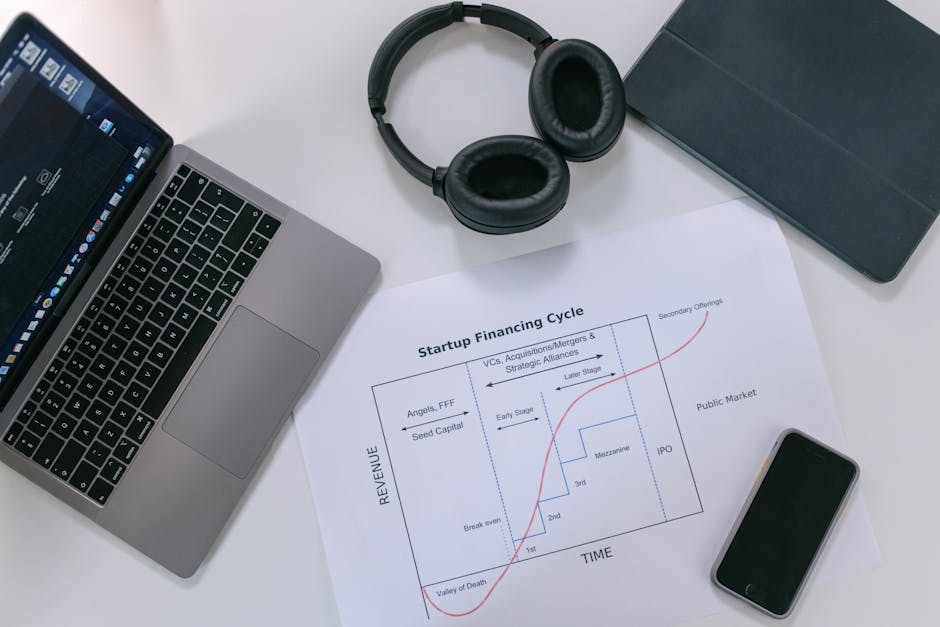
China announced new measures to support initial public offerings by technology startups in what Beijing calls "future industries" and by large-model artificial intelligence companies, escalating state intervention in capital markets as U.S.-China tech competition intensifies.
The move represents Beijing's latest effort to direct private investment toward strategic sectors through government-backed funding mechanisms, raising questions about market efficiency and the role of state planning in capital allocation decisions that traditionally rely on investor judgment and market signals.
Strategic Industrial Policy
Chinese officials framed the IPO support measures as part of broader efforts to bolster innovation in a technology landscape increasingly shaped by geopolitical rivalry. The announcement signals Beijing's determination to compete with American tech leadership through centralized industrial policy rather than market-driven investment decisions.
The "future industries" designation encompasses emerging technology sectors that Chinese planners have identified as strategically important, though the criteria for determining which startups qualify for preferential IPO treatment remain subject to government discretion. Large-model AI companies—firms developing foundational artificial intelligence systems—will receive similar support as Beijing seeks to close the gap with U.S. competitors in a critical technology domain.
Government-Directed Capital Flows
The funding measures represent a significant expansion of state influence over what are typically market-based capital allocation decisions. By supporting specific IPOs, Chinese authorities are effectively signaling to investors which companies merit investment, potentially distorting price discovery mechanisms that allow markets to efficiently allocate resources based on risk and return assessments.
The approach contrasts sharply with capital markets in the United States and other Western economies, where IPO success depends primarily on company fundamentals, investor appetite, and competitive positioning rather than government endorsement. Critics of state-directed investment argue that political considerations often override economic efficiency, leading to misallocation of capital and reduced returns for investors.
Competitive Implications
Beijing's announcement comes as U.S.-China tech competition has moved beyond trade disputes to encompass fundamental questions about innovation models and the role of government in technology development. American policymakers have increasingly restricted Chinese access to advanced semiconductors and other critical technologies, prompting Beijing to pursue self-sufficiency through state-backed initiatives.
The emphasis on large-model AI companies reflects the strategic importance both nations place on artificial intelligence capabilities, which have applications ranging from military systems to economic productivity. China's willingness to deploy government resources to accelerate AI development underscores the high stakes of technological leadership in the 21st century.
Why This Matters:
China's decision to support IPOs for technology startups through government measures highlights fundamental differences between state-directed and market-based approaches to innovation and capital allocation. While Beijing frames these interventions as necessary responses to geopolitical competition, they raise concerns about market distortions and the efficiency of politically directed investment decisions. For Western businesses and investors, China's expanding state role in technology sectors signals continued challenges in competing on level playing fields where government subsidies and preferential treatment advantage domestic firms. The intensifying U.S.-China tech rivalry suggests prolonged uncertainty for global technology markets and supply chains as both nations pursue competing visions of innovation policy.