
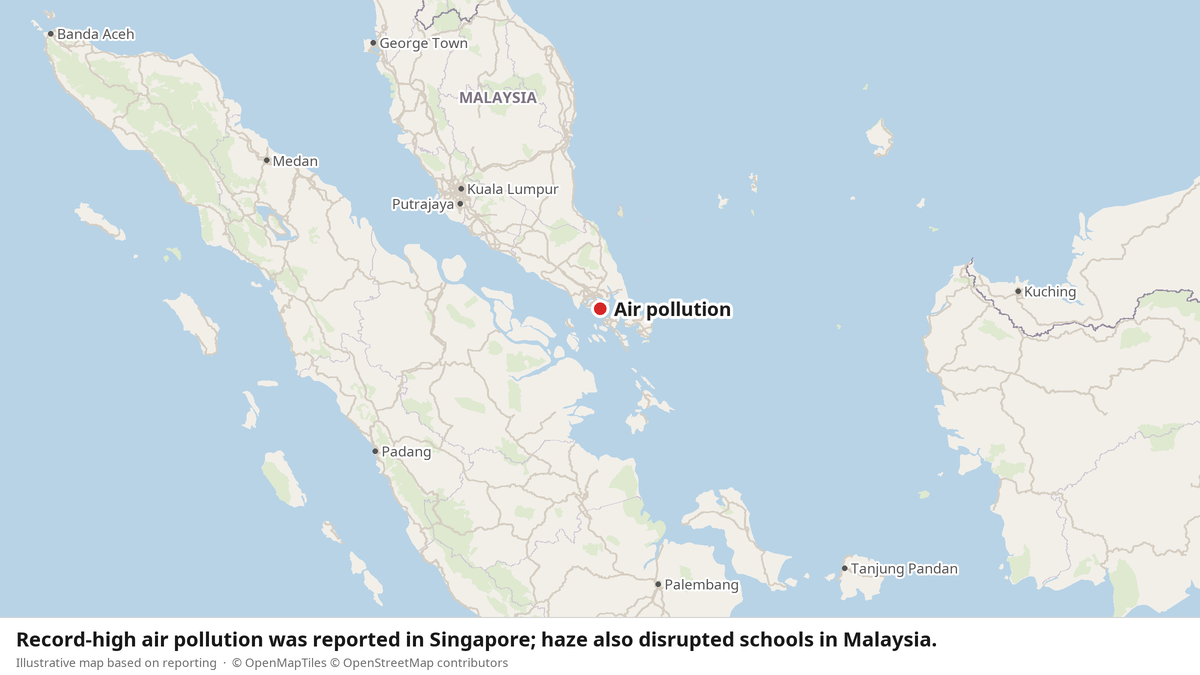
Some 200 schools, kindergartens and nurseries in Malaysia’s Batu Pahat district closed Wednesday as haze from Indonesian wildfires blanketed the region. Children went home. Singapore, meanwhile, recorded the worst air quality of any city on the planet.
IQAir data put Singapore’s air in the “very unhealthy” range on Wednesday afternoon. Kuala Lumpur, which had previously topped the global pollution rankings, slipped to second-most polluted. That shift offers little comfort. Two of Southeast Asia’s major cities now lead a list nobody wants to top, and smoke is arriving days before Singapore’s annual Formula One weekend, when the city-state expects a surge of visitors.
Who Is Affected
The closures in Johor state show where the burden lands first. Local media reports said authorities ordered schools shut in Batu Pahat, a district about 140km (87 miles) northwest of Singapore. Young children breathe faster than adults and spend more time outdoors. Keeping them away from smoky air is one of the few protections families have when the sky turns gray.
Not everyone can close a window and wait. Outdoor workers, people without air conditioning or filtration, and parents who can’t easily take time off when schools close all face different risks from those with more resources. The base reporting doesn’t break down who’s most exposed, but the closures make the stakes plain: a public-health problem that crosses borders falls hardest on people with the fewest ways to avoid it.
A Problem That Doesn’t Stop at the Border
The haze doesn’t recognize national boundaries. Wildfires in Indonesia send smoke across the region, and pollution is affecting Singapore and Malaysia alike. Singapore’s National Environment Agency data showed unhealthy air in all five regions of the city-state. No neighborhood escaped.
The outlook offers little relief. The agency said dry conditions were forecast over most of southern Southeast Asia for the next few days, keeping the risk of fires and transboundary haze elevated. Put plainly, the conditions feeding the fires are expected to persist, and smoke will keep drifting across borders.
Official Response
So far, the response has focused on monitoring and closures, not prevention. Singapore’s National Environment Agency published its latest outlook, warning of the elevated risk. Malaysian authorities in Johor ordered schools closed. Those steps are necessary in an emergency, but they address symptoms. Wildfires producing the smoke sit in a different country from the people breathing it, which is why regional coordination matters as much as any single government’s decisions.
Why This Matters:
Haze is a public-health emergency that arrives on a schedule the region has come to dread, exposing the limits of acting alone. When smoke from fires in one country shuts schools in another and pushes a wealthy city-state to the top of global pollution rankings, no national government can fix the problem by itself. The Batu Pahat closures show children and families paying a price despite having no say in where the fires started. Stronger cross-border cooperation, enforceable standards on fire prevention, and public investment in air-quality monitoring and health protection can shift that burden away from those least able to bear it. Dry conditions are forecast to continue, and pressure on regional institutions to deliver is rising along with pollution readings.