
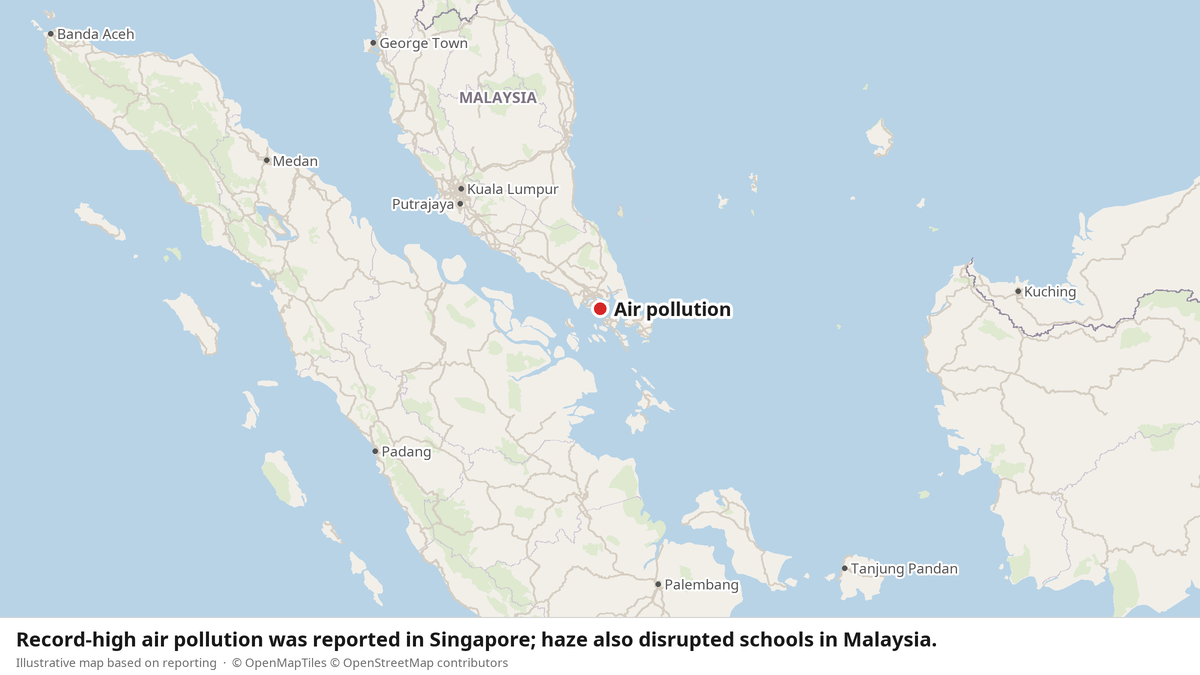
Singapore recorded the world’s worst air quality on Wednesday afternoon, as smoke from Indonesian wildfires covered the region just days before the city-state’s annual Formula One weekend. IQAir readings fell in the “very unhealthy” range. Kuala Lumpur, previously ranked first, dropped to second among the most polluted cities.
The timing is awkward. A marquee international event that draws visitors, spending and global attention now faces the prospect of racing beneath a smoke-filled sky.
Schools Shut Across the Border
The fallout reached beyond Singapore. In Malaysia’s Johor state, about 140km (87 miles) northwest of Singapore, authorities ordered around 200 schools, kindergartens and nurseries in Batu Pahat district to close on Wednesday because of the haze, local media reported.
That’s a concrete cost. Lessons stop, and parents scramble to arrange child care or miss work. Small businesses and hourly workers often feel those disruptions first and hardest.
No Relief in the Forecast
The outlook offers little comfort. Singapore’s National Environment Agency said in its latest forecast that dry conditions should persist across most of southern Southeast Asia for the next few days, keeping fire and transboundary haze risks elevated.
The agency’s data also showed unhealthy air in all five regions of Singapore. No part of the island escaped.
The word “transboundary” matters. Fires burn in Indonesia, but smoke respects no border. Singapore and Malaysia bear the health and economic burden of a problem that starts elsewhere, and neither country can put out a wildfire on another country’s soil. That gap between where a problem begins and where its costs land has long frustrated governments across the region.
What Comes Next
The source reports no changes to the Formula One schedule and gives no figures for economic losses. What it does establish is a regional air-quality emergency, with the near-term forecast pointing to continued fire risk.
For now, responses remain local and immediate: Johor has closed schools, Singapore’s environment agency is monitoring conditions, and residents are checking IQAir readings before deciding whether to go outside.
Why This Matters:
Haze episodes reveal a hard fact about regional governance: the party suffering the damage often isn’t the one that can stop it. Singapore and Malaysia can monitor air quality and close schools, but those reactive measures carry real costs for families, employers and public budgets. Long-term fixes may involve tighter enforcement, clearer accountability or private-sector land-use practices; lasting remedies lie upstream, where the fires start. For businesses, the Formula One weekend shows how exposed even well-run economies are to environmental shocks they don’t control. Predictability is an economic asset, and recurring haze erodes it. Watch whether governments choose cooperation with enforceable accountability or fall back on another round of short-term damage control.