
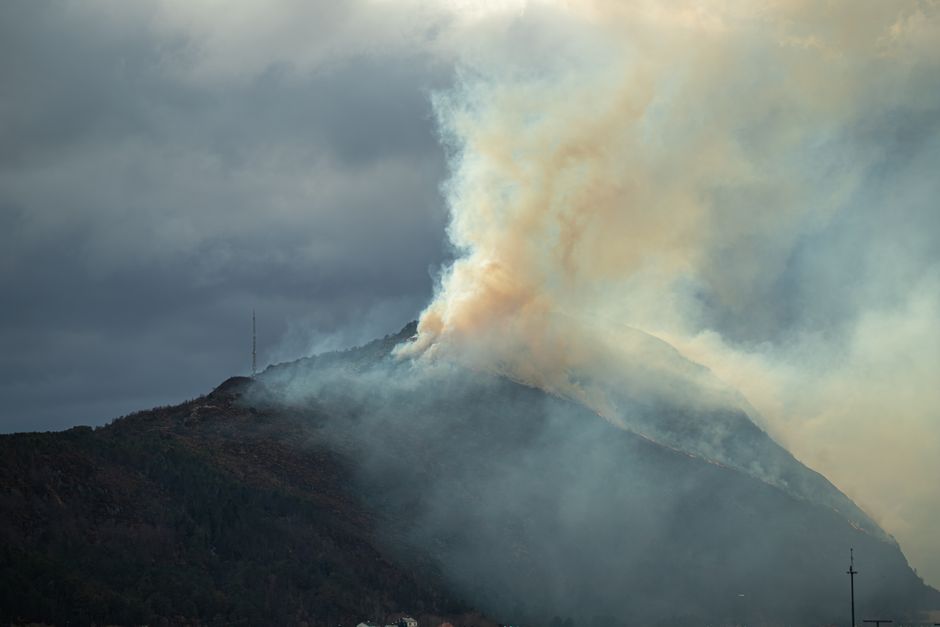
Wildfires are projected to burn 39% more of Europe by the end of the century even in the best-case scenario for stopping the planet from heating, according to a study published on Thursday, August 20, 2026. In the worst-case scenario modelled by researchers, with global heating reaching 3.6C above preindustrial levels, the burnt area would almost triple. The numbers are blunt. The response, so far, is not.
Brussels Counts, the Fire Keeps Moving
The study says the increase in hot, dry and windy weather that turns small fires into raging infernos will engulf more of Europe as carbon pollution pushes temperatures higher. It found that improvements in fire management could moderate those increases by more than 70%, but not eliminate them. Maik Billing, an ecosystem researcher at the Potsdam Institute for Climate Impact Research and lead author of the study, said investments into fire management could help to a certain limit, but if the world stays on a path of high emissions, there will still be strong increases in burnt area. He said fire management cannot replace climate mitigation.
That distinction matters because the continent’s institutions keep pretending adaptation can patch over the damage while the emissions machine keeps running. The study came as wildfires continued to ravage Europe, with large blazes hitting northern European countries such as the UK, Belgium and Germany after weeks in which France, Spain, Italy, Croatia and Greece battled monster infernos. Across the EU, this fire season is set to become the third-worst on record, behind 2025 and 2022, according to data published by the European Forest Fire Information Service on Thursday. More than 600,000 hectares have burned so far, with records broken for this time of year in Belgium, France and Slovakia.
The Climate Math Meets State Management
The researchers compared projected annual burnt area in 2070-2100 with modelled results for 2000-2030. They found that fire weather was the biggest driver of change. In the optimistic scenario, in which global heating is capped at 1.8C, a little above the current level of 1.4C, some regions showed moderate increases in fire weather while others experienced little change. In the pessimistic scenario, with 3.6C of heating by the end of the century, the researchers found consistent worsening of fire weather across virtually all of Europe. Scientists expect current policies to result in about 2.6C of global heating by the end of the century.
That’s the policy horizon. Not safety, not stability, just managed decline with a press release attached. Using a second model, the researchers found that continued improvements in fighting fires could temper the effects of worsening fire weather, reducing burnt area by 92% in the cooler scenario compared with fixing firefighting efforts at today's levels. The researchers used the Human Development Index as a proxy for firefighting ability, but acknowledged the rise of mega-fires made it hard to extrapolate from past experience.
Improvements in fire suppression since the 1980s have reduced the number of fires and the area burnt in southern Europe, but the enthusiastic suppression of fires, even small ones, has paradoxically increased the residual fuel load. That has allowed fires to develop to extreme levels when conditions are favourable, resulting in fewer but more ferocious fires. Such monster fires hit France and Spain in late July this year, forcing one-third of a million people from their homes as blazes raged with a force firefighters were unable to extinguish.
Who Pays When the System Fails
Víctor Resco de Dios, a forestry engineer at the University of Lleida who was not involved in the study, said the fire season is often accompanied by an unproductive blame game, isolating only one of the two key factors whose interaction results in wildfires, and that the study is a reminder to move beyond scapegoating. He said the problem of wildfires wouldn't be worsening if the world were heading towards an ice age instead of global warming, and that it would have been largely mitigated if landscapes were like they were a century ago, with a much smaller forest area.
A separate article said Europe can better protect against extreme wildfires through wildfire management, improved training and equipment for emergency responders, and stronger coordination between forestry authorities, conservation bodies and fire services. Thomas Hickler, a researcher at the Senckenberg Society for Nature Research, said Europe is not powerless in the face of the growing threat and that fire-conducive conditions are increasing, so more investment is needed. He said such measures can make a substantial difference.
The European Union's contribution to forest and wildfire management programs in member states between 2021 and 2027 is around €2.1 billion. World Bank estimates say every euro spent on prevention can save up to seven euros on firefighting and reconstruction. Kirsten Thonicke of the Potsdam Institute for Climate Impact Research, a co-author of the study, said climate change could create conditions so extreme that the limits of what is still feasible in preventing and fighting fires may be reached once fires grow beyond a certain size.
The separate article also said wildfires have been burning for days in western Germany and neighboring Belgium. In the High Fens, a cross-border forest and wetland region connecting the two countries, around 3,000 hectares of vegetation have been scorched in recent days, making it the largest wildfire Belgium has seen in decades. Wetlands such as marshes and raised bogs can burn when they dry out during droughts because peat soil, formed from dead plant material, becomes vulnerable to fire. Although wetlands cover only about 3% of the Earth's surface, they store around 30% of the carbon contained in soils worldwide.
Peat fires smoulder underground, burn at relatively low temperatures, produce large amounts of smoke and can persist for months, even through winter. They also release pollutants including smoke particles and hazardous heavy metals such as mercury. Massive peat fires in Canada and Siberia in recent years have shown the scale such fires can reach. A peat fire in Indonesia in 1997, which affected roughly 100,000 square kilometres, ranks among the largest environmental disasters of the 20th century. In a study published in Nature, scientists estimated that the single fire may have released between 13% and 40% of total global emissions in 1997. Across Indonesia and neighboring countries, more than 200,000 people were treated in hospitals for acute health problems, and several Southeast Asian nations later adopted an agreement aimed at combating transboundary air pollution.
The pattern is familiar. Institutions count, model, coordinate and invest while the ground keeps burning. People are forced out of their homes. Wetlands dry out. Peat smoulders underground. The apparatus calls it management. The fire doesn’t care.