
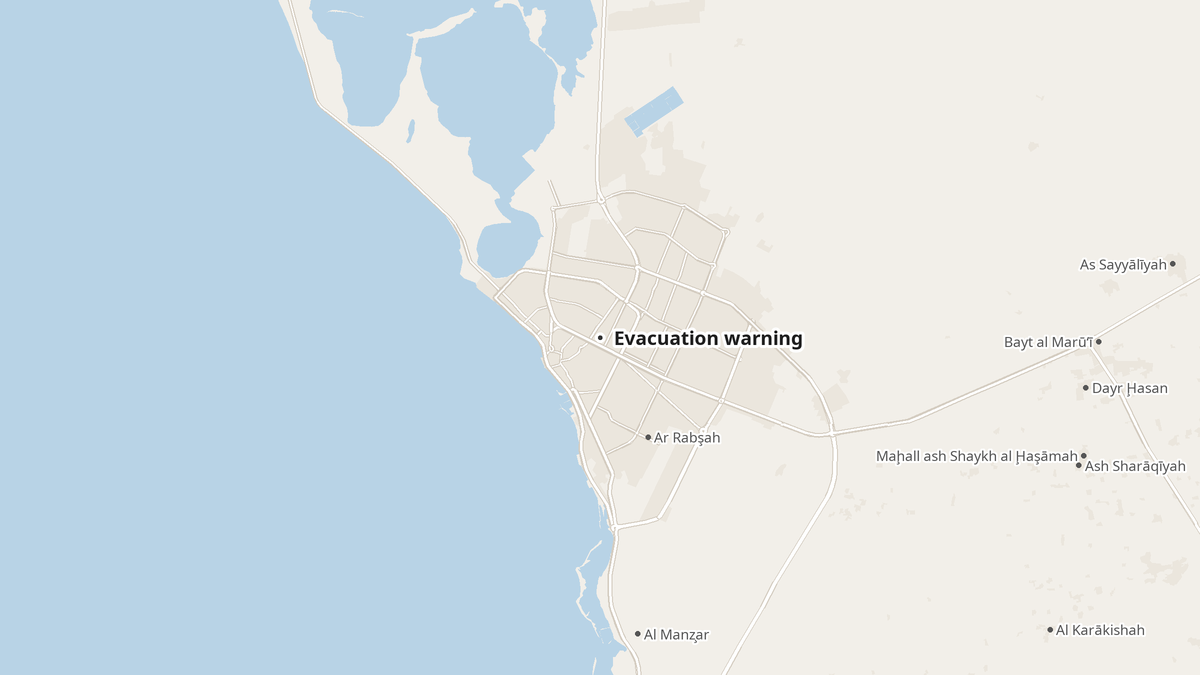
The Saudi-led coalition ordered civilians to leave Yemen’s port of Hodeidah ahead of planned strikes, after the Houthis said an earlier Saudi attack on the port killed at least 14 people. On Friday, the coalition published a map showing the areas it intended to attack.
Port workers and others in the area now face a warning as the coalition and the Houthis threaten further attacks. The coalition says it’s targeting weapons smuggling by the Iran-backed Houthi militia, which controls the facility.
A port under threat
Coalition spokesman Maj Gen Turki Al Malki said strikes targeted “operational capabilities at Hodeidah port that were used in smuggling operations and the transport of weapons and ballistic missiles.” He said the operation was continuing against military targets and ballistic missile capabilities in the governorates of Sanaa, Saada and Taiz.
The coalition said it had destroyed seven military targets designated for Houthi military use. It also said it had destroyed six workshops the group used to manufacture and assemble structures for ballistic missile and drone launchers.
The Houthi Armed Forces also warned Hodeidah port workers and people in the area to stay away, and urged ships to leave urgently. The Houthis said Saudi forces struck Hodeidah on Tuesday, killing at least 14 people. Their account of the deaths came after the coalition warned that it planned further strikes on the port.
Threats across the Red Sea
The Houthis answered the evacuation warning with threats against Saudi Arabia. They said Jeddah’s ports and all Saudi ports along the Red Sea would be “a target” if Hodeidah were attacked.
On Houthi spokesman Yahya Saree’s Telegram channel, the group warned airlines that Saudi airspace “will be a theatre of our operations in the coming hours.” It also said it would target the Kingdom’s Shuqaiq power station, citing coalition attacks on the Sadah and Mokkha power stations, and ordered civilians, workers and employees to evacuate.
Saree called Riyadh’s financial centre a “military target.” The Houthis had attacked the Public Investment Fund Tower in the financial centre and airports across Saudi Arabia, causing significant disruption to air travel.
The Hodeidah strikes came after repeated Houthi drone and missile attacks on Saudi Arabia. Saudi aircraft also carried out air strikes on Sanaa on Thursday, the Houthi-run Saba news agency reported.
Warnings beyond Hodeidah
Fighting between pro-government forces and the Houthis intensified in recent weeks. The Houthis made territorial gains inside Yemen and were estimated to be 100 kilometres from Aden, the de facto capital and a government stronghold. Those advances gave the group better access to the Bab Al Mandeb strait and the Red Sea, threatening maritime security.
Last month, the coalition issued a similar evacuation order for people in and around the Al Sabahah central station in rebel-held Sanaa. The station belonged to Yemen’s Petroleum Company and Yemen’s Oil Company. The Houthis warned that an attack on Sanaa would bring a “harsh and painful response” and threatened the kingdom’s oil facilities.
Why This Matters: The Hodeidah warning follows the Houthis’ report that at least 14 people died in an earlier strike on the port, while port workers, residents and ships are being told to leave. The coalition says it’s pursuing weapons-smuggling capabilities, while the Houthis threaten Saudi ports and a power station and warn airlines about Saudi airspace. Those threats follow attacks that disrupted air travel. Civilians and workers on both sides face evacuation warnings as the parties announce further targets.
- hodeidah port
- houthis
- saudi-led coalition
- yemen
- evacuation order
- airstrikes
- ballistic missiles
- red sea