
Storms on both U.S. coasts threaten Thanksgiving travel as 81.5 million people prepare to leave home for holiday trips. Flooding, strong winds and rising travel costs will confront families and transportation operators.
The American Automobile Association expects slightly fewer travelers on highways and in the air than the 81.6 million it counted the previous year. AAA also said round-trip airfares have risen 17% over Thanksgiving 2025, averaging $800. GasBuddy projected a national average gasoline price of $3.62 a gallon on Thursday, likely a record high for that date, though prices had fallen by at least 50 cents so far this month.
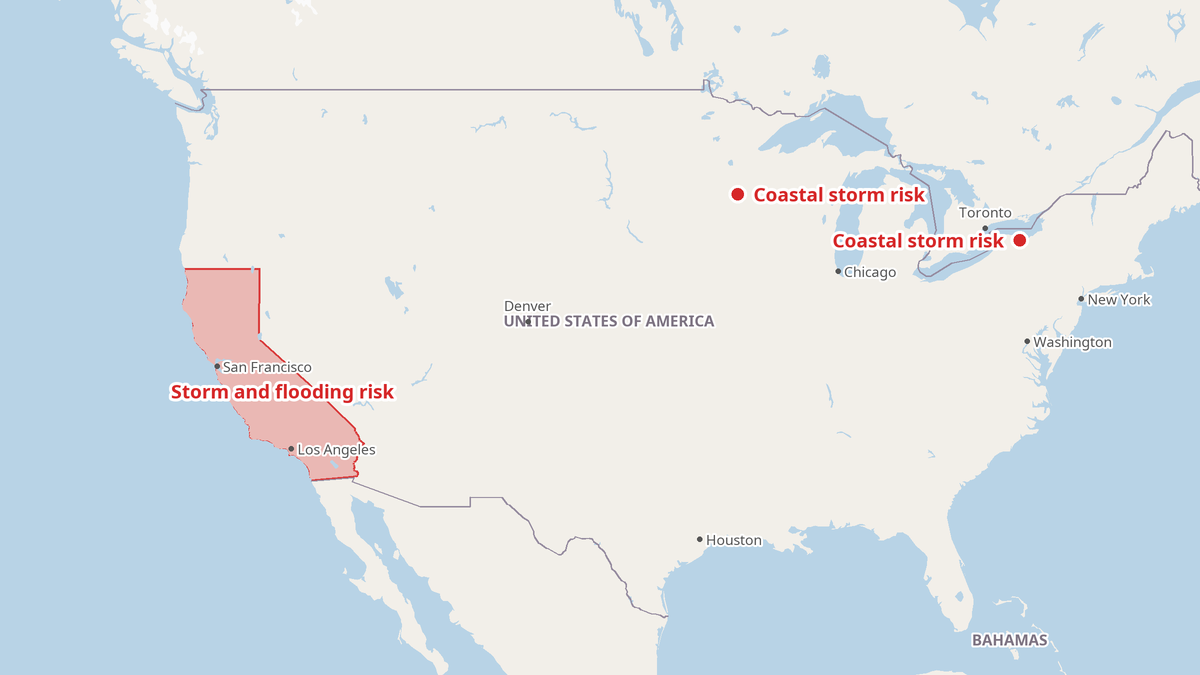
The forecasts have practical consequences for drivers and airports. On the East Coast, a fast-strengthening storm could bring heavy rain and damaging gusts on Thanksgiving Day. In the San Francisco Bay Area, unusually high tides could flood shoreline roads before Pacific storm rain arrives.
East Coast Travel Risks
The coastal storm is expected to develop off the Southeast coast Wednesday and move north. Rain could reach Washington, D.C., and Philadelphia by Wednesday night, making the Thanksgiving morning drive along Interstate 95 wet and hazardous.
The Weather Prediction Center said 1 to 2 inches of rain could fall along the I-95 corridor, with up to 3 inches possible in localized areas. The storm's track will determine how far inland the heaviest rain reaches, where the strongest winds hit and which parts of the Jersey Shore face coastal flooding.
The National Weather Service said a spinning winter cyclone over the urban Northeast on Thanksgiving Day could bring gusts of 50 mph, coastal flooding, bursts of heavy rain and embedded thunderstorms. Federal forecasters said unusually warm Atlantic waters would help the system spin and strengthen.
“Coastal flooding issues, beach erosion, and dangerously rough seas appear likely, especially from the Mid-Atlantic up into the New England coast,” the service said in a forecast discussion.
New York City Emergency Management urged residents to follow alerts and forecasts. “Keep an eye on Thursday,” it said on X, citing possible gusts of 40 to 45 mph and 1 to 2 inches of rain in the city.
Winds could affect the 100th Macy's Thanksgiving Day Parade, too. City rules require officials to ground its giant balloons if sustained winds exceed 23 mph or gusts top 34 mph. The parade is scheduled from 8:30 a.m. to noon, but officials hadn't yet determined whether winds along the Manhattan route would reach those thresholds.
Boston's roughest weather was forecast for Thanksgiving Day into the evening. Wind-driven rain could slow drivers, and strong gusts could delay flights at Logan International Airport. The Massachusetts coast could flood if the strongest onshore winds coincide with high tide.
Higher elevations in upstate New York and New England, along with the central Appalachians, could see snow, although forecasters weren't sure how much would stick. The drive home around Washington, D.C., was expected to turn drier by Friday, while rain and snow showers could continue into Saturday in northern New England.
Forecasters were also watching a separate storm that could form off the East Coast over the weekend. They said it was too early to determine whether it would affect Sunday travel.
West Coast Roads and Airports
In the San Francisco Bay Area, king tides could force road closures along the low-lying shores of San Francisco and San Pablo bays. A coastal flood warning ran from early Monday through Thanksgiving Day, with the greatest risk around each morning's high tide.
Water at the San Francisco tide gauge could come within an inch of its 1983 record around 11 a.m. PT Wednesday. San Francisco Mayor Daniel Lurie urged residents to avoid nonessential travel from Monday afternoon through Wednesday afternoon.
San Francisco International Airport staged sandbags and portable flood barriers and checked its pumps. San Francisco and Oakland airports prepared for high water. Oakland airport officials recommended Hegenberger Road or 98th Avenue, the airport's two main access routes, which they said lie outside the reach of tidal flooding.
Rain and gusty winds were expected in the Bay Area from Tuesday into Wednesday. Forecasters anticipated a quarter-inch to an inch of rain across much of the region and 1 to 2 inches in the North Bay, with gusts reaching 40 mph along the coast and through some mountain passes.
The National Weather Service said a Pacific storm would move over land Tuesday in the Pacific Northwest and Northern California. The weather service office in Reno, Nevada, expected fresh Sierra Nevada snow and “difficult travel.” Another Pacific storm could arrive Friday or over the weekend.
Why This Matters: Travelers face weather risks along with higher airfares and a projected holiday gasoline price of $3.62 a gallon. Timely warnings and individual planning will matter: East Coast drivers could encounter heavy rain and flooding, while Bay Area residents and airport passengers may have to navigate high water and road closures. Uncertainty adds to the challenge. The East Coast storm's track will determine where the heaviest rain, strongest winds and coastal flooding occur, and forecasters don't yet know whether another storm will affect Sunday travel. For families and transportation operators, reliable forecasts and open routes matter as much as the holiday schedule.
- thanksgiving travel
- coastal storm
- national weather service
- macys thanksgiving day parade
- san francisco bay area
- coastal flooding
- new york city
- heavy rain