
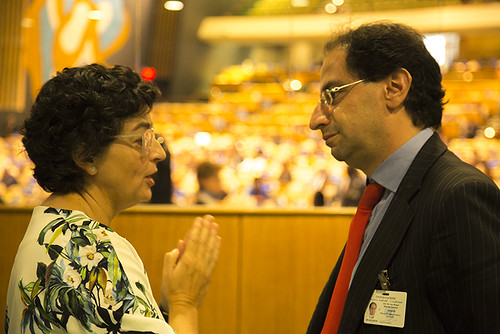
Vice President José Manuel Restrepo unveiled a massive 176-project investment portfolio to business leaders in New York on Tuesday, targeting more than US$150 billion in opportunities across energy, infrastructure, and emerging technology sectors. The presentation came during United Nations General Assembly week, where Restrepo met with executives from Apple, Intel, Pfizer, Visa, Citi and Lockheed Martin.
The government's pitch centers on what it calls Misión Crecer, a growth plan built on investment incentives with legal stability, strategic project selection, reduced bureaucracy, and mobilizing domestic savings toward productive investment. The stated target is ambitious: annual economic growth of 6%.
Who's at the Table
Restrepo spoke at a meeting of the Consejo Empresarial Alianza por Iberoamérica, or CEAPI, after meeting about 40 senior executives at the Council of the Americas on Park Avenue a day earlier. He said in a social media post that more than 60 investors saw the opportunities, though the two totals don't match exactly and no official note explains the gap.
The 176 projects span energy, infrastructure, logistics, agribusiness, tourism, industry, software, critical minerals and artificial intelligence. The government identified 37 projects as priorities out of the wider bank.
The Numbers Game
Colombian outlets put the same pipeline at more than 600 trillion pesos, which translates to about US$188 billion—significantly higher than the $150 billion figure presented to foreign investors. The peso number is often misread because Spanish-language reports write it as 600 billones, which in Spanish means a million millions, not the billion used in English.
The discrepancy between the peso and dollar valuations isn't explained in official communications, raising questions about whether the government is presenting different figures to different audiences or whether currency fluctuations and project scope account for the roughly $38 billion gap.
New Administration's Economic Bet
President Abelardo de la Espriella took office about 1 month and 16 days ago, on August 7, and Restrepo leads the investment push as vice president. De la Espriella stayed home during UN week, keeping a campaign promise not to leave the country—an unusual move that leaves Restrepo as Colombia's face to international investors and multilateral institutions.
Restrepo is due to deliver Colombia's address to the United Nations General Assembly tomorrow, on Thursday, September 24. The decision to send the vice president rather than the president to the world's premier diplomatic gathering signals either a deliberate prioritization of domestic governance or a constraint on the new administration's international engagement.
The investment plan represents a significant bet that legal stability and reduced red tape can attract the capital Colombia needs to hit its 6% growth target. Whether multinational corporations will commit billions based on incentives and promises from a government just over a month old remains to be seen. The plan also depends on mobilizing domestic savings, which means asking Colombians to shift their money into investments that carry risk in an economy seeking to transform itself.
Why This Matters:
Colombia's $150 billion investment pitch arrives as developing economies compete for capital in a world where investors have options. The success or failure of Misión Crecer will determine whether ordinary Colombians see the infrastructure improvements, job creation, and economic opportunity that 6% annual growth would deliver—or whether the plan becomes another set of promises that don't translate into better wages, services, and living standards. The emphasis on legal stability and cutting bureaucracy matters most to communities that have waited years for roads, energy access, and economic development projects stalled by red tape. The discrepancy between the peso and dollar figures, and the lack of explanation, raises transparency questions that matter when public resources and domestic savings are being mobilized. And the president's decision to stay home while his vice president courts Wall Street and addresses the UN suggests a governing approach that prioritizes visible domestic presence over traditional diplomatic engagement—a choice that will shape how Colombia's needs get heard in multilateral institutions that influence development financing.