
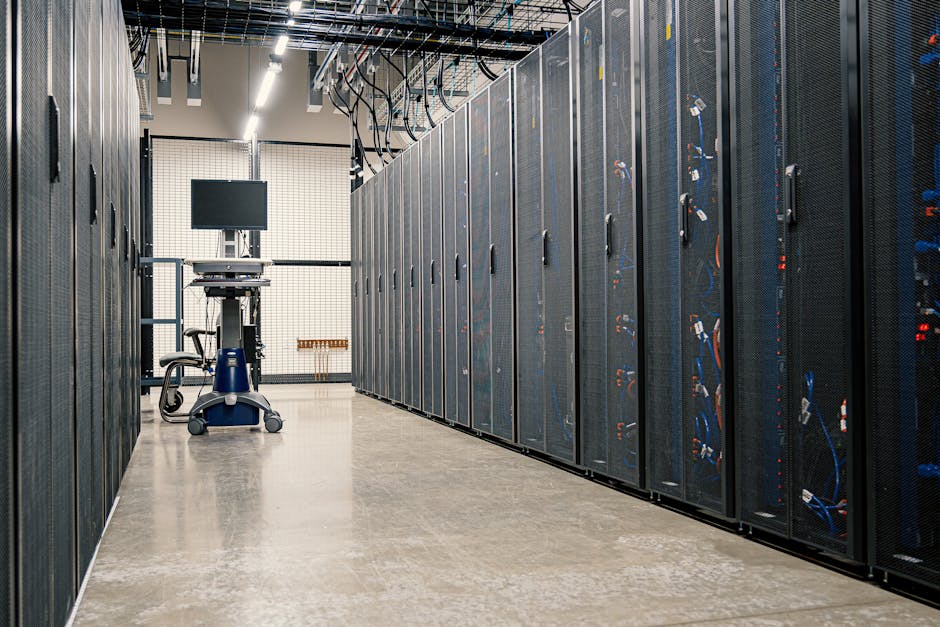
Colorado lawmakers face a critical decision about whether to prioritize environmental protections or economic incentives as they debate competing proposals to regulate or attract data centers—facilities with enormous energy and water demands that could strain the state's climate commitments and natural resources.
The Democratic legislative majority is considering a bill that would establish mandatory guardrails for new data centers, requiring them to cover their entire hourly energy demand by generating or purchasing renewable energy, sign long-term contracts with utilities, and comply with new state codes. The proposal reflects growing concerns about whether unchecked data center development could undermine Colorado's clean energy and climate goals while depleting scarce water resources.
State Sen. Cathy Kipp, a Democrat who sponsored the guardrails bill, framed the issue as one of democratic accountability and collective resource management. "We don't want to stop data centers, we just want to make sure we're still able to meet our clean energy and climate goals and that we don't use up all of our water," Kipp said. "We're saying that if you come to the state, you have to follow our rules."
The Competing Vision
State Rep. Alex Valdez, also a Democrat, has proposed an alternative approach centered on tax incentives rather than regulation. His bill would create new tax breaks for data centers that comply with certain environmental standards and agree to make $250 million in infrastructure investments over five years. Valdez argued that data centers could fund new electric infrastructure and bring clean generation capacity to the state while adding tax revenue to local budgets.
"How do we connect the need of hyperscalers to build and the dollars they have with our own public needs?" Valdez asked, contending that breaks on sales and use taxes are justified if paired with ratepayer protections. He characterized the incentive approach as both economically sound and aligned with labor interests, stating: "The economy in America is built around states attracting businesses. Being a Democrat, being pro-worker also means you should be pro-employer. I believe the government's priority, beyond public safety and protection of rights, is to foster economic development."
Obstacles to Both Proposals
Neither bill has advanced smoothly through the legislative process. Valdez's incentives bill was pulled from a scheduled hearing last month and faces headwinds in a session where budget constraints have already forced lawmakers to cut public programs. The guardrails bill has also stalled, partly due to opposition from labor and construction groups—constituencies that might benefit from data center development and construction jobs.
Critics of the guardrails approach warn that strict renewable energy and environmental requirements could push data centers to neighboring states like Wyoming, which does not impose green energy requirements and embraces fossil fuels. This interstate competition dynamic frames the debate as one where Colorado must choose between environmental stewardship and economic competitiveness.
Time Running Short
With the Colorado legislative session ending May 13, time is running short for lawmakers to reach consensus. Kipp expressed hope that the guardrails bill would gather enough support to advance before the deadline. Valdez suggested a potential path forward, saying he believes the two bills could be merged to create an incentive program that keeps Colorado competitive with neighboring states while maintaining some environmental standards.
The outcome will shape not only Colorado's data center landscape but also signal whether the state intends to condition economic development on environmental and resource protection—or to rely on market competition and voluntary standards to balance growth with sustainability.
Why This Matters:
Data centers consume massive amounts of electricity and water, resources that are increasingly scarce in the West and central to Colorado's climate commitments. The choice between regulation and incentives reflects a fundamental question about how democratic societies should govern large-scale industrial development: through enforceable public standards or market-based inducements. The guardrails approach asserts that public resources and environmental goals should be protected through mandatory compliance; the incentive approach assumes that voluntary standards paired with tax benefits will achieve similar outcomes while attracting investment. The decision also affects workers and communities—construction jobs and tax revenue depend on data center growth, while water scarcity and climate impacts are borne collectively. With the session ending in 11 days, Colorado lawmakers must decide whether to establish binding environmental guardrails or pursue a competitive incentive model that risks repeating the pattern seen in Wyoming and other states that prioritize immediate economic gains over long-term resource sustainability.