
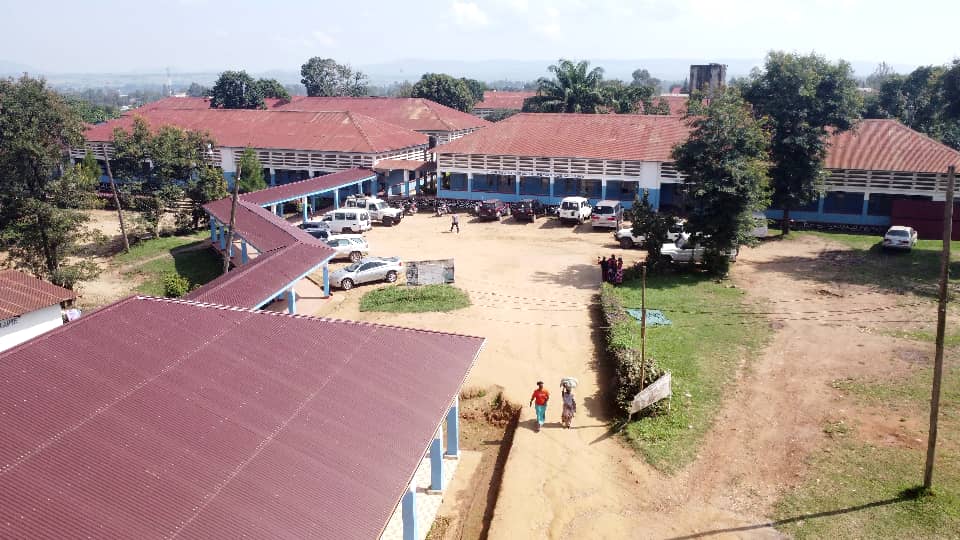
Health workers at Bunia General Hospital—the largest medical center in Congo's hard-hit Ituri province—walked off the job yesterday, barricading the entrance and refusing to work. They haven't been paid. Not once. Since the outbreak began this year on May 15, they've shown up anyway, treating patients under impossible conditions. Yesterday, they stopped.
They're not alone. The outbreak has now claimed 754 lives among 2,011 confirmed cases, making it the fastest-growing on record according to government data released overnight. Dozens of healthcare workers at an Ebola treatment center in Rwampara, another city in Ituri province, went on strike three days ago over unpaid salaries and bonuses. They agreed to return to work on condition the government pay them within 72 hours—a promise that, given yesterday's action at Bunia, appears to have fallen short.
Some workers told the Associated Press they haven't received any payment since the outbreak began.
Who Bears the Burden
More than 100 healthcare workers have been infected since the beginning of the outbreak, the World Health Organization reports. These aren't abstract statistics. They're people who showed up to work despite knowing the risks, without protective equipment guarantees, without hazard pay, and without basic compensation.
A total of 753 patients remain isolated or hospitalized. Another 366 have recovered. But the system that might have contained this outbreak—the hospitals, the clinics, the trained staff—is collapsing under the weight of both the disease and the government's failure to pay those keeping it running.
Dr. Chikwe Ihekweazu, the WHO's emergencies chief, returned from Bunia on Tuesday with a grim observation: many of the newly reported deaths are people who died in their communities without ever reaching a health facility, without receiving any care at all.
The Perfect Storm of Failure
The outbreak is spreading faster than health officials can track it. Two days ago, the WHO reported that at least 80% of new cases are emerging from unknown chains of transmission—meaning authorities don't know where the virus is coming from or where it's going next.
Health authorities still haven't identified the outbreak's patient zero. Armed conflict in eastern Congo has displaced populations, making it nearly impossible to trace thousands who've had contact with infected individuals. Mining-related movements compound the problem. Communities don't trust the response efforts. Health centers have been attacked.
And then there's the science problem: there's no approved vaccine or treatment for the Bundibugyo virus causing this outbreak. The more common Zaire virus, responsible for most of Congo's past 16 outbreaks, has both. Enrollment in a study of two possible treatments only recently started in Ituri.
The response is being hampered by a funding gap that's now so severe it can't even pay the people risking their lives on the front lines.
Why This Matters:
When healthcare workers strike during a pandemic, it signals a system in complete collapse. The Ebola crisis in Congo isn't just a medical emergency—it's a crisis of institutional failure and inequality. Workers in wealthy nations receive hazard pay, equipment, and regular salaries during outbreaks. Congo's healthcare workers receive nothing. The virus spreads fastest where public health infrastructure is weakest, where governments can't or won't fund the basic wages that keep hospitals open. The 754 deaths aren't inevitable. They're the result of choices: choices about funding, about prioritizing workers' safety, about building resilient health systems. Every person who dies in their community without reaching a hospital dies because the international community and the Congolese government failed to ensure that hospitals could function. That's not a tragedy of nature. That's a failure of collective responsibility.