
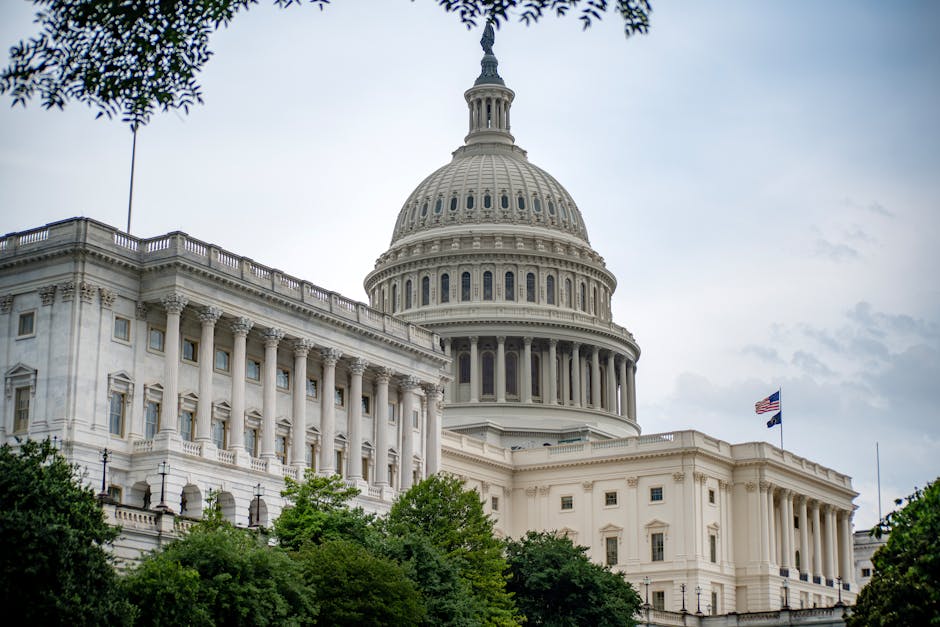
The House approved a short-term two-week extension of a national-security surveillance program’s authorities early Friday after a compromise proposal to renew the five-year program failed to advance, leaving the machinery of state monitoring in place while lawmakers stalled over how to keep it running.
Who Holds the Switch
The immediate result was not a clean renewal, but a temporary stopgap. A compromise House proposal to renew the program for five years failed to advance early Friday, and the chamber instead approved a two-week extension of the program’s authorities. The article describes the move as a temporary measure in the ongoing debate over the surveillance program, a familiar pattern in which the apparatus of power is preserved while the public is told the matter remains under discussion.
The short extension keeps the program alive while Congress continues its internal fight over the terms of surveillance. The facts in the article make clear that the people subject to this system do not get a say in whether it exists; the decision is made inside the House, where the terms of monitoring are negotiated as a matter of procedure.
The Cost of Delay
The failure of the compromise proposal was described as an embarrassing setback for Republican leaders, who had hoped to push the measure through in overnight votes. That detail matters because it shows the hierarchy at work: leaders at the top trying to force through a renewal, while the outcome is reduced to parliamentary timing and tactical failure rather than any meaningful challenge to the surveillance regime itself.
The article does not describe any grassroots response, mutual aid effort, or direct action from outside Congress. What it does show is a political class managing the continuation of surveillance through short-term extensions when its preferred route runs into resistance. The public is left with the same apparatus, only on a shorter leash and with a new deadline attached.
What the House Actually Did
The compromise House proposal was meant to renew a five-year national-security surveillance program, but it did not advance early Friday. In its place, lawmakers approved a two-week extension of the program’s authorities. The article frames this as a stopgap, not a resolution, which means the underlying power structure remains intact while the debate is kicked down the road.
That is the basic rhythm of institutional rule: when a surveillance program becomes contentious, the response is not to dismantle it, but to extend it briefly and keep the machinery humming. The article presents the episode as part of an ongoing debate, but the only concrete outcome reported is that the authorities continue for two more weeks.
The setback for Republican leaders underscores how much of this process is about control over the timetable as much as control over the surveillance powers themselves. Overnight votes, failed compromises, and temporary extensions are the language of a system trying to preserve its reach while appearing to deliberate.
For ordinary people, the hierarchy cost is simple: the surveillance authorities remain in force, and the decision over whether they continue is made by congressional actors operating far above the people who live under the program’s reach. The article offers no reform beyond the extension itself, and no alternative outside the apparatus. It is just another round of managed continuation, with the state’s monitoring powers left standing while the political class argues over how long to keep the lights on.