
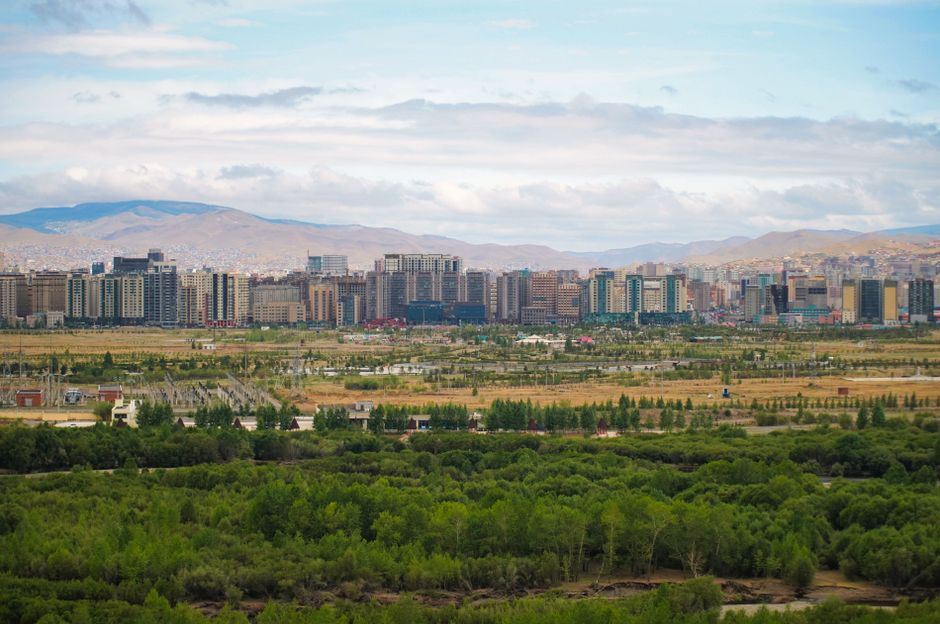
At UNCCD COP17 in Ulaanbaatar, Mongolia, governments, financial institutions and businesses announced $1.3 billion in new and pipeline financing for land restoration and drought resilience across 23 countries on five continents, while the UNCCD said the annual financing need is $355 billion through 2030 and current investment sits at about $77 billion.
Who Gets the Money
The numbers tell the story before the speeches do. Of the $1.3 billion announced at COP17 Finance Day on 24 August 2026, $644.5 million has been identified as new finance and $216.4 million has already been confirmed and is moving toward implementation. The rest sits in the familiar fog of pipeline promises, where institutions love to count future money as if it were already in the ground.
The UNCCD said the annual shortfall stands at $278 billion. That gap is not a technical glitch. It is the price of a system that keeps treating land as a balance-sheet problem while the people living on degraded soil carry the damage.
Ulrich Apel, GEF Senior Environmental Specialist, said African countries are the largest beneficiaries of Global Environment Facility funding, having received about 30 per cent of the funds, compared with Asia at 18 per cent and Latin America and the Caribbean at 15 per cent. He said the GEF programmes cover all available funding and that Africa is a particular focus because of the region’s vulnerability to land degradation, desertification and drought.
The GEF also announced a new Drylands and Drought Management Integrated Program for the GEF-9 investment cycle, covering 2026 to 2030, with a tentative GEF grant envelope of $140 million. Claude Gascon, GEF Interim CEO and Chairperson, said: “Investing in healthy land and healthy people means investing in food security, climate resilience, biodiversity, water, jobs, and peace.” He said the program will support countries in moving from crisis response toward proactive drought resilience.
What People at the Bottom Are Living With
The UNCCD Data Dashboard shows approximately 11.96 per cent of Africa’s total land area as degraded in baseline reporting, while Nigeria reports roughly 23.41 per cent, or 21.07 million hectares, of its total land area as degraded. Authorities in Nigeria have said more than 50 per cent of the country’s rangelands and grazing routes have been degraded, contributing to farmer-herder conflicts for decades.
That’s the ground truth beneath the finance theater. The land is failing, and the people who depend on it are paying for decisions made far above them.
The UNCCD said official development assistance contracted by 23.1 per cent in 2025, while about half of low-income countries are either in debt distress or at high risk of debt distress. It estimated the annual cost of inaction on land degradation at about $878 billion and said investment in healthy land could generate benefits of up to $1.8 trillion annually. The Convention also said an estimated $2.4 trillion in public subsidies currently support activities that can contribute to environmental degradation.
Science, But Make It Useful to Power
Oluseyi Ifatimehin said Africa does not primarily suffer from a lack of scientific knowledge, but from gaps in data continuity, local-scale evidence, technology deployment and the capacity to translate evidence into decisions. He said Nigeria needs denser, continuous and interoperable datasets on soil health, land degradation, groundwater, vegetation, drought indicators and land-use change, along with stronger national and regional land and drought observatories, satellite and ground data integration, stronger universities and research institutions, and indicators that measure outcomes such as hectares of degraded land restored, changes in soil organic carbon, vegetation recovery, water availability and the number of farmers receiving actionable early warnings.
Ifatimehin, a Professor of Geography (Environmental Resource Planning) at Kogi State University, Nigeria, and Science and Technology Correspondent to the United Nations Convention to Combat Desertification, said the disconnect between research institutions and policymakers exists because research and policymaking often operate on different timelines and communicate in different languages. He said policymakers need concise answers to practical questions about cost, intervention, location and expected results within three or five years, and he called for stronger institutional links between universities, government ministries, agencies and communities.
He said COP17 can help by strengthening the UNCCD Science-Policy Interface and encouraging countries to establish stronger national science-policy mechanisms. He also said Nigeria should establish a measurable mechanism in which scientific baselines, measurable targets, independent monitoring and periodic evidence reviews accompany major land-restoration policies and programmes.
Ifatimehin said the test is whether scientific evidence can change a government decision, improve an investment or change what happens on the farm. That’s the standard, stripped of ceremony.
He said Nigeria can already deploy satellite Earth observation to monitor vegetation stress, soil moisture, rainfall anomalies, surface water and land-use change, and use artificial intelligence and machine learning to combine satellite observations with rainfall, temperature, soil, crop, hydrological and historical drought data to generate localised drought-risk forecasts. He also called for multi-hazard early-warning systems that connect meteorological and hydrological forecasts with agricultural advisory services, climate modelling and seasonal forecasting, and an end-to-end drought information system linking observation, forecasting, early warning, communication, early action and impact assessment.
Communities as Knowledge Partners
On Indigenous knowledge, Ifatimehin said the answer is not to choose between modern science and Indigenous knowledge, but to put them into dialogue. He said farmers and pastoralists have generations of knowledge about rainfall patterns, soil characteristics, pasture availability, water sources, drought indicators, livestock behaviour and locally adapted crops, and that scientists should work with communities to test Indigenous observations against meteorological, ecological and satellite data.
He said communities should be treated as knowledge partners, not just recipients of scientific information, and proposed community demonstration sites where restoration interventions are jointly designed, tested and monitored. That’s the rare part of the story where the people most affected are named as participants instead of targets.
He said governments should create innovation-to-implementation pathways in which promising technologies are identified, field-tested, independently evaluated and then incorporated into national programmes and procurement systems. He said universities should strengthen technology-transfer offices, innovation hubs, demonstration farms and partnerships with farmers, pastoralists, government and industry, while development partners should move beyond short-term pilot projects. He said the private sector is critical because governments and donors alone cannot finance the scale required.
Ifatimehin proposed a Land Restoration Innovation Pipeline with stages of Research, Field testing, Independent validation, Community adoption, Investment readiness, Scale-up and Impact measurement. He said success should be measured by hectares restored, farmers and pastoralists reached, increases in soil and water productivity, drought losses avoided, jobs created, technologies commercialised and sustained improvements in livelihoods.
The GEF said 20 per cent of resources across the family of funds are expected to benefit Indigenous Peoples and local communities directly, and 10 per cent of total GEF-9 funding is allocated to the blended finance window, with an overall target of using 25 per cent of GEF resources to help mobilise private-sector investment.
The Rangelands Flagship Initiative was described as a $1.2 billion initiative across 45 named projects and the largest single mobilisation for rangelands in the history of the UNCCD. Rangelands cover more than half of the world’s land surface and support the livelihoods of about two billion people, including an estimated 500 million pastoralists. The UNCCD said up to half of the world’s rangelands are degraded or at risk, the economic value of rangelands is estimated at between $21 trillion and $47 trillion annually, restoring rangelands typically generates between $4 and $6 in benefits for every dollar invested, and the return can rise to as much as $36 per dollar invested when broader public benefits are included.
The Asian Development Bank has committed $113 million to the Green Inclusive Regional Agribusiness Fund. The Green Climate Fund is supporting three projects, including $40 million for Resilient Rangelands in Northwestern Zimbabwe with the World Wide Fund for Nature and the TWENDE initiative in Kenya with IUCN. The Adaptation Fund has committed $9.1 million to locally led adaptation involving Indigenous Peoples and local communities across Africa. Germany’s development agency, GIZ, and the German Federal Ministry for Economic Cooperation and Development are supporting Forests4Future with $76 million, alongside three other programmes in Southern Africa. Other projects include the $35 million Herding for Health initiative by Peace Parks Foundation and Conservation International, and the $22 million STELARR Investment Hub brought by the International Livestock Research Institute.
Twelve projects under the initiative are being delivered with the United Nations Development Programme, six with the United Nations Environment Programme and three with the Food and Agriculture Organisation of the United Nations. UNCCD Executive Secretary Yasmine Fouad said: “Land is not simply an environmental issue -- it is economic infrastructure. It underpins food, water, jobs and stability, and when land fails, the costs are felt across economies and communities.” She said the shift in Ulaanbaatar is from talking about the financing gap to building pathways that move investment into implementation.
Mongolia unveiled measures to increase domestic financing for land restoration, including sector-wide sustainable finance principles, a national green taxonomy and a target to allocate 10 per cent of lending to green activities by 2030. It also launched a national Business 4 Land Hub, bringing the UNCCD’s private-sector platform to the national level for the first time. Russia later launched its own Business 4 Land Hub, Luxembourg announced plans to establish a Business 4 Land Foundation, and Germany provided funding for the Business 4 Land Finance Expert Group.
Peter Bakker, president and chief executive officer of the World Business Council for Sustainable Development, said: “Business does not lack appetite for resilient supply chains, secure water and productive soil - it lacks bankable projects, credible data and a fair share of the early risk.” He said private-sector finance currently accounts for only about six per cent of global investment in land restoration.
A ministerial dialogue on innovative financial mechanisms brought together the World Bank Group, the African Development Bank, the Asian Development Bank, the European Investment Bank, the Islamic Development Bank, the GEF and the Green Climate Fund. Participants called for land, soil health and drought resilience investments to become more visible and trackable within existing nature finance categories, and backed the expansion of guarantees, first-loss capital and index-based insurance to attract private investment and manage risks. They also called for stronger project preparation facilities, simpler access to multilateral funds, debt-for-nature swaps, nature-performance bonds, sustainability-linked bonds and country platforms.
At an African Union high-level event, the African Development Bank committed $100 million to the Zambezi River Basin programme, covering eight countries, alongside the Southern Africa Great Green Wall Accelerator. Luxembourg committed €5 million in catalytic first-loss capital to the Drought Resilience Investment Facility, Spain pledged €5 million for the second phase of the International Drought Resilience Alliance, and Germany committed a further €11 million to CompensActions. The Korea Forest Service, UNDP and the UNCCD Global Mechanism launched a call for proposals under the Greening Drylands Partnership, with $2.4 million in small grants expected to go directly to community-level implementers.
The FIELD facility said it intends to catalyse an additional $2 billion in land restoration finance across Asia and the Pacific, but that amount is an investment ambition rather than committed funding and is excluded from the $1.3 billion announced at COP17. The new financing commitments underline a central message from COP17: restoring degraded land is increasingly being treated not only as an environmental obligation but also as an investment opportunity tied to food security, water, jobs, climate resilience and economic stability.