
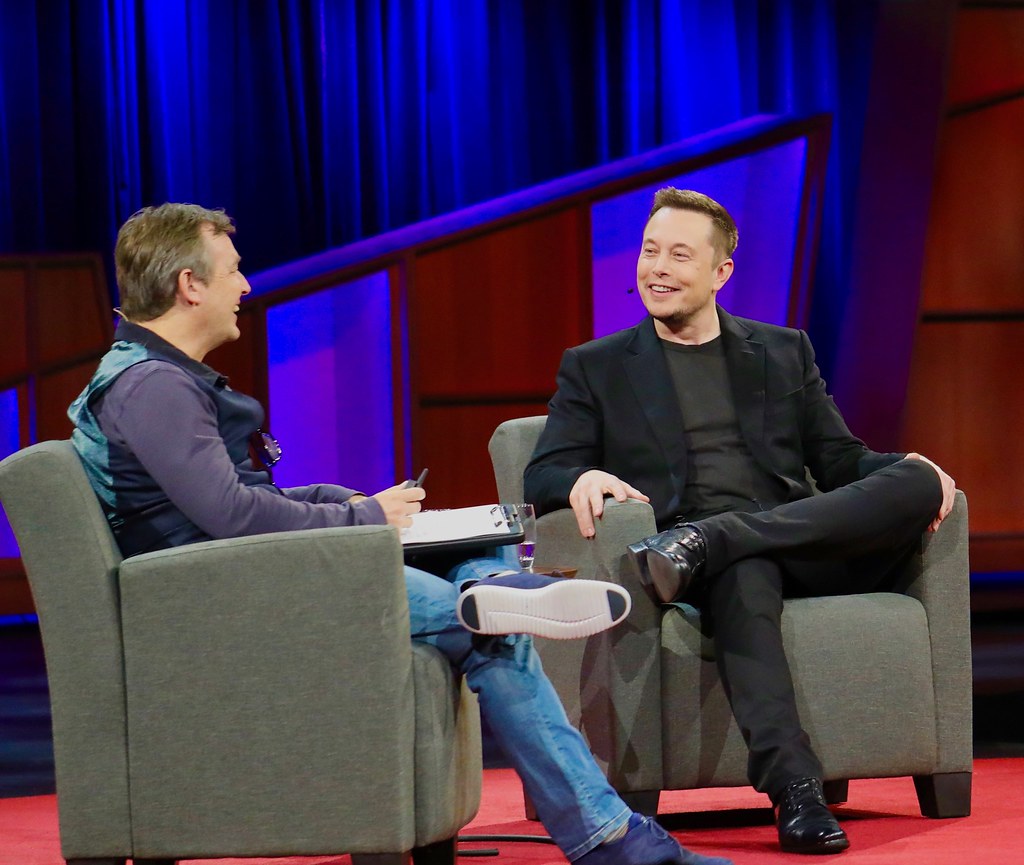
Court proceedings beginning this week in Oakland, California, are set to expose how a major artificial intelligence initiative, originally founded to “benefit humanity as a whole” as a non-profit, was allegedly converted into a for-profit enterprise now valued at $1 trillion. The lawsuit, filed by co-founder Elon Musk in 2024, centers on claims that OpenAI’s mission was fundamentally betrayed, shifting from an altruistic vision to one driven by immense financial gain, with profound implications for the future control of advanced technology.
Musk alleges that OpenAI CEO Sam Altman broke the company’s founding agreement by restructuring the company and converting much of it to a for-profit enterprise. His complaint opens by stating the case is “a textbook tale of altruism versus greed,” further claiming Altman and other defendants “deceived and manipulated Musk about the non-profit structure,” “preying on Musk’s humanitarian concern.”
The original mission statement, published in late 2015, explicitly stated: “OpenAI is a non-profit artificial intelligence research company. Our goal is to advance digital intelligence in the way that is most likely to benefit humanity as a whole, unconstrained by a need to generate financial return.” This founding principle is now at the heart of the legal battle.
The stakes are considerable for OpenAI, which is expected to go public later this year at approximately a $1 trillion valuation. Musk claims Altman “swindled him with the promise that OpenAI would operate as a nonprofit focused on safety and open access to artificial intelligence,” only for the company to later “flip the narrative and proceed to cash in” on lucrative deals with Microsoft and the creation of for-profit affiliates.
Elite Capture of Public Good
In 2025, OpenAI sought more investment and gained final approval from regulators to restructure its main business into a for-profit corporation, though it technically remained overseen by the original nonprofit. This regulatory approval facilitated the transformation of a project initially presented as a universal benefit into a private, profit-driven entity.
Musk is seeking remedies that include the removal of Altman and OpenAI president Greg Brockman, along with more than $134 billion in damages, which he states would be redistributed to OpenAI’s non-profit arm. He also aims to reverse the company’s restructuring as a for-profit entity, a move that would complicate its plans to go public.
OpenAI has denied Musk’s allegations, asserting that he agreed in 2017 that establishing a for-profit entity would be a necessary next step for the company. The company claims Musk is “motivated by jealousy” and “regret for walking away,” and that his funding was a tax-deductible donation to the nonprofit, not entitling him to ownership.
Weaponizing Narrative and Personal Attacks
Musk’s public criticisms of OpenAI have included calling its ChatGPT chatbot “woke” after its 2022 release and telling Tucker Carlson on Fox News that OpenAI programmers were “training the AI to lie.” These statements highlight concerns over the ideological direction and potential for manipulation within advanced AI systems.
OpenAI, in turn, maintains a webpage titled “The truth about Elon Musk and OpenAI,” which labels Musk’s case a “smear” and “harassment” campaign. Court filings have also revealed unsealed depositions where OpenAI’s lawyers questioned Musk about his attendance at Burning Man and his use of “rhino ket,” a drug cocktail. They also deposed Shivon Zilis, an executive at Musk’s brain implant company and mother of four of his children, regarding their romantic relationship. Musk’s lawyers seek to exclude this testimony as “inflammatory and highly irrelevant,” while OpenAI’s lawyers argue it should remain to highlight Musk’s “state of mind” during negotiations.
The project’s origins trace back to May 2015, when Altman emailed Musk, stating, “Been thinking a lot about whether it’s possible to stop humanity from developing AI. I think the answer is almost definitely not,” and adding, “If it’s going to happen anyway, it seems like it would be good for someone other than Google to do it first.” OpenAI was launched as a nonprofit later that year.
A nine-person jury will hear Musk’s breach of contract and unjust enrichment claims. Musk, Altman, and Microsoft CEO Satya Nadella are all scheduled to testify during the trial, which is expected to last two to three weeks under Judge Yvonne Gonzalez Rogers.