
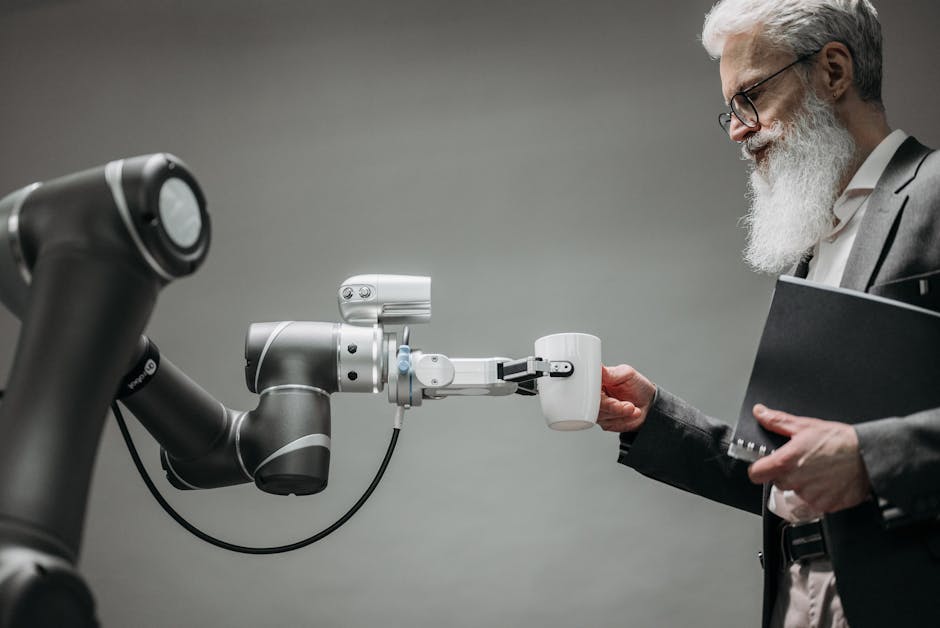
New technology, showcased by an Australian lab and featured in an AP video on August 9, 2026, promises to help older people live independently by making everyday tasks easier. This cutting-edge tech aims to allow older adults to remain in their homes for longer, a solution presented as living independently becomes "more challenging" for the aging population. The report frames this development as a technological answer to a growing social need, yet it sidesteps the fundamental questions of collective responsibility for elder care, focusing instead on individual fixes.
The Promise of Individualized Solutions
The Australian lab is demonstrating a range of technologies specifically designed to assist with daily tasks. These innovations are intended to mitigate the difficulties faced by individuals as they age, enabling them to maintain their residence without immediate reliance on institutional support. The AP feature, published today, connects this development directly to artificial intelligence, positioning it within the broader health and tech coverage. It's a vision of aging where personal devices and automated systems fill the gaps in support, rather than robust public services. The report emphasizes how these tools can simplify routines, from managing household chores to monitoring health, all within the confines of one's private dwelling. This approach underscores a trend towards individualizing solutions for what are inherently societal challenges, a pattern that often benefits capital by externalizing social costs.
Shifting the Burden of Care
The stated goal of helping older adults "remain in their homes longer" carries significant implications for the broader care economy. By enabling individuals to defer or avoid entry into assisted living or nursing facilities, this technology implicitly reduces the demand for such services. This shift can alleviate pressure on public healthcare budgets, or it can transfer the financial and emotional costs of care directly onto individuals and their families, rather than being borne collectively. The AP video feature, while highlighting the technological prowess of these systems, doesn't delve into the economic structures that stand to gain from this model of care. It doesn't detail the ownership of these technologies, nor the profit margins anticipated by their developers and distributors, leaving the financial beneficiaries unexamined.
Furthermore, the report omits any discussion of the labor dimension. It doesn't address how such automation might impact the care workforce, whether through deskilling existing roles or reducing the need for human caregivers. Nor does it consider the accessibility of these "cutting-edge" solutions for all older adults, particularly those without the financial means to acquire or maintain advanced technological systems. The narrative focuses solely on the technical capacity to prolong independent living, leaving unexamined the systemic conditions that make such independence increasingly precarious for many. This technological fix, presented as a universal benefit, functions within an economic order that consistently offloads social responsibilities onto the individual, reinforcing a system of privatized welfare.