
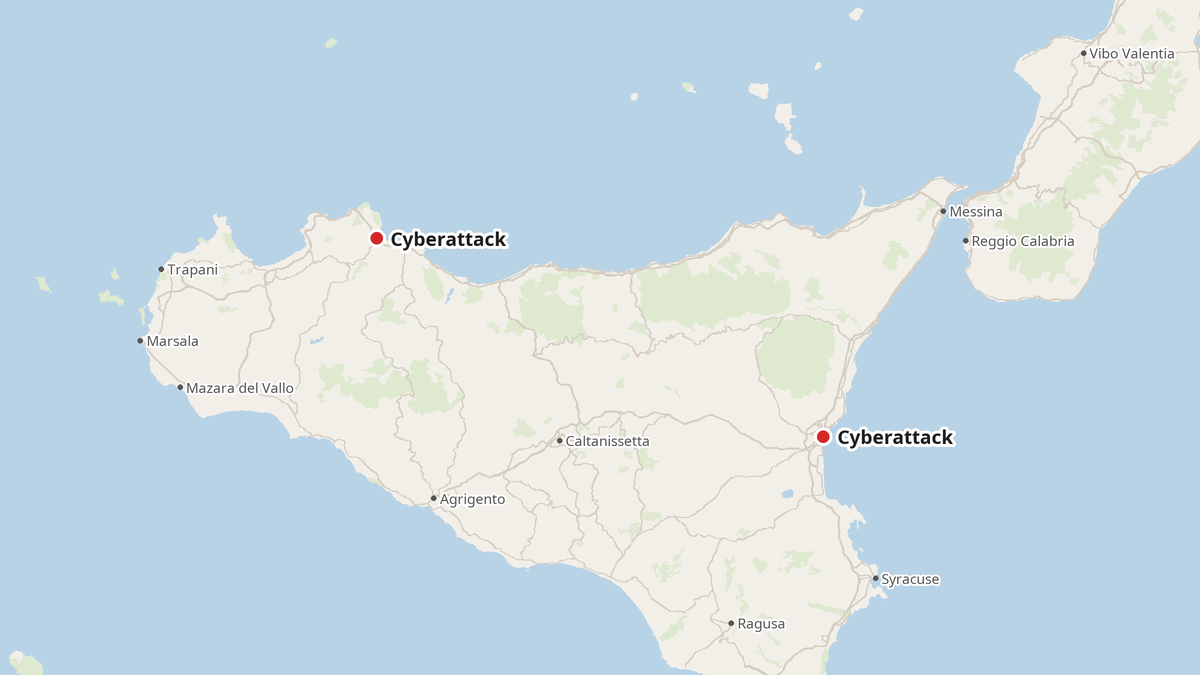
At least four Coop supermarkets in Sicily, three in Catania and one in Palermo, faced a grim sight on Tuesday: freezer counters that had quietly overheated overnight, leaving food to be thrown away. A suspected cyberattack raised temperatures in the stores’ refrigeration systems around four in the morning.
The Sicilian incidents weren’t isolated. They came amid attacks affecting around a hundred supermarkets in Sweden, Belgium, Luxembourg, Estonia and Ireland. Dozens of supermarkets in six European countries were hit on Monday night, and refrigerator temperatures climbed to 50°C or above. No one has claimed responsibility, though the report describing the attacks said they appeared connected.
Human Impact
For the stores involved, the damage was immediate and physical. Retailers found spoiled goods when they opened and had to discard them. Food that spoils on a shelf costs a business money, but it also hits the supply chain that puts groceries within reach of ordinary households.
Giuseppe Spadaro, general manager of the Radenza group, which runs the Coop supermarkets, first reported the Italian incidents to Ansa. Danilo Radenza, Coop Radenza’s chief executive, confirmed the nature of the breach. “We have verified that it is an attack on our remote control system for frozen-food counters. After a careful screening it appears there is no further damage, but the attack did take place,” he said.
Spadaro said the company is still counting the cost. “We are calculating the damage. In some cases we have fixed the problem. We have already contacted the National Cybersecurity Agency and activated protocols to carry out in depth investigations,” he said.
The Italian Response
The postal police are reconstructing the origin and scale of the attacks and checking for links to incidents in other European countries. The National Cybersecurity Agency (Acn) said it had received a report of an incident affecting a Tuscan company in the collective catering sector and had detected an attack against an Emilia company producing frozen foods.
The agency gave food-distribution chains specific advice. Check urgently whether control and remote-assistance systems are exposed on the Internet. Strengthen remote access through VPNs and multi factor authentication. Review privileged accounts. Update or replace devices no longer supported by manufacturers.
A meeting between the agency, sector federations and the main national large-scale retail companies was scheduled for the following day. The Parliamentary Committee for the Security of the Republic (Copasir) was due to request information from the government on Tuesday. Palazzo Chigi also decided to convene a meeting with the Director of the National Cybersecurity Agency and the heads of the intelligence agencies, coordinated by Alfredo Mantovano, the undersecretary to the prime minister’s office.
A Pattern Across Borders
This isn’t the first strike on the continent’s food retail. Another cyberattack hit the main supermarket chains in France on 12 October, causing losses of millions of euros. The European Union described the current situation as “highly worrying.”
The geography tells its own story. Sweden, Belgium, Luxembourg, Estonia, Ireland, Italy: the affected stores sit in different national jurisdictions and belong to different companies, yet appear to share the same vulnerability in remote-control systems. A problem that crosses six borders in a single night isn’t one any single national agency can resolve by itself.
Why This Matters:
Refrigeration is the quiet infrastructure of daily life. This week, it proved fragile. When someone can overheat freezer systems remotely, the risk lands on shopkeepers, small supply chains and, ultimately, households that depend on affordable fresh and frozen food. The incidents also expose a gap between how connected Europe’s retail sector is and how coordinated its defences are. Italy’s agency is urging basic fixes, from multi factor authentication to replacing unsupported devices, and the questions now are whether firms of every size can afford them and whether national responses will be matched by shared European ones. The EU’s own description of the situation as “highly worrying” raises that test directly. Attacks that ignore borders call for cooperation that doesn’t.
- coop supermarkets
- cyberattack
- sicily
- national cybersecurity agency
- radenza group
- food retail
- postal police
- european supermarkets