
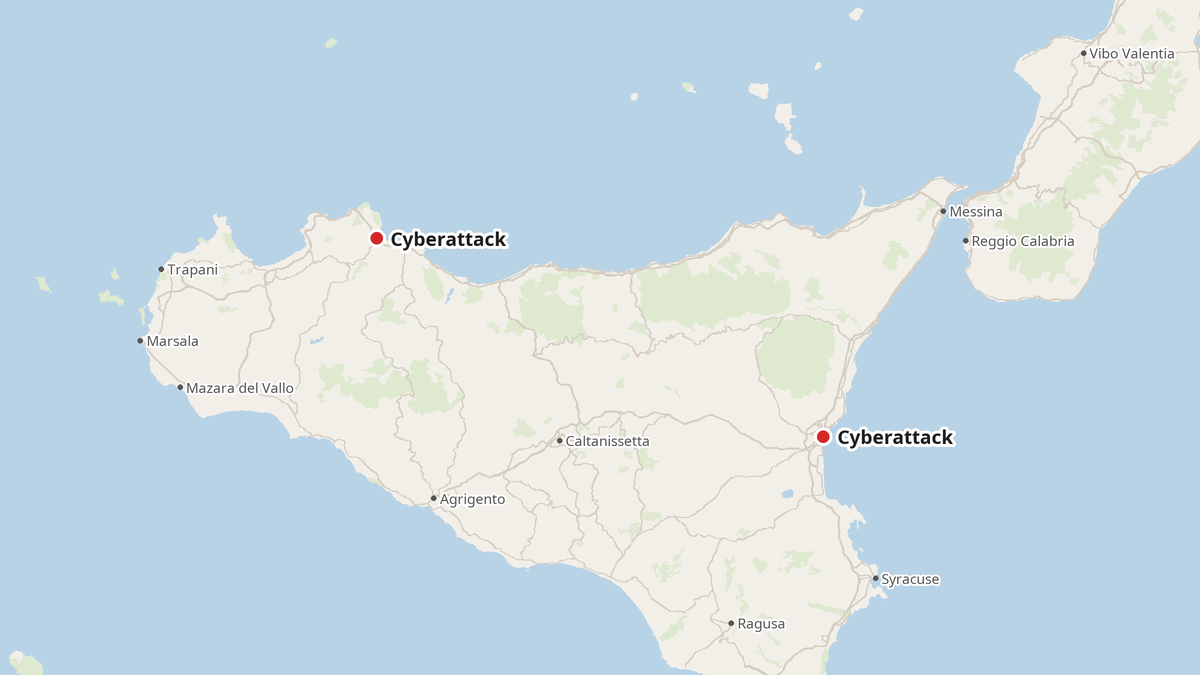
At around four in the morning, someone attacked the remote control system running frozen-food counters at four Coop supermarkets in Sicily. Refrigeration temperatures climbed. By the time shopkeepers opened their doors, the stock had spoiled, so they threw it away. Three stores sit in Catania, and one is in Palermo.
The Sicilian incidents weren’t isolated. Dozens of supermarkets in six European countries were hit on Monday night, while the broader wave touched around a hundred supermarkets in Sweden, Belgium, Luxembourg, Estonia and Ireland. Refrigerator temperatures reportedly rose to 50°C or above. Nobody has claimed responsibility, and the report describing the attacks says they appear connected.
What Happened in Sicily
Giuseppe Spadaro, general manager of the Radenza group, which runs the Coop supermarkets in question, first reported the Italian incidents to Ansa. Danilo Radenza, Coop Radenza’s chief executive, specified the target. “We have verified that it is an attack on our remote control system for frozen-food counters. After a careful screening it appears there is no further damage, but the attack did take place,” he said.
The cost remains under calculation. “We are calculating the damage. In some cases we have fixed the problem. We’ve already contacted the National Cybersecurity Agency and activated protocols to carry out in depth investigations,” Spadaro said. The postal police are reconstructing where the attacks came from and how far they reached, while checking for links to incidents in other European countries.
Rome Moves, Brussels Worries
The National Cybersecurity Agency (Acn) said it had received a report of an incident affecting a Tuscan company in the collective catering sector. It also detected an attack against an Emilia company producing frozen foods. Its advice to food-distribution chains was blunt: urgently check whether control and remote-assistance systems are exposed on the Internet, strengthen remote access through VPNs and multi factor authentication, review privileged accounts, and update or replace devices no longer supported by manufacturers.
The Agency, sector federations and the main national large scale retail companies were due to meet the following day. The Parliamentary Committee for the Security of the Republic (Copasir) was due to ask the government for information on Tuesday. Palazzo Chigi also decided to convene its own meeting, with the Director of the National Cybersecurity Agency and the heads of the intelligence agencies attending. Alfredo Mantovano, the undersecretary to the prime minister’s office, was to coordinate it.
The European Union described the situation as “highly worrying.” That’s the extent of the Brussels response reported so far. National bodies are handling the practical work, from forensic tracing to advice for retailers: the postal police, the Acn, Copasir and the prime minister’s office.
A Pattern, Not a Blip
This isn’t the first strike on European food retail. Another cyberattack hit the main supermarket chains in France on 12 October, causing losses of millions of euros. The source gives no year for that incident, so no timeline beyond the date can be drawn. The two episodes share a target: everyday retail infrastructure, the systems that keep food cold and shelves stocked.
The weakness the Acn flagged is mundane. Remote-assistance tools exposed to the Internet, privileged accounts nobody has reviewed, and devices their manufacturers no longer support. These failures reflect basic digital hygiene at the level of the individual firm, and national agencies are telling companies to fix them now.
Why This Matters:
Supermarket refrigeration isn’t a glamorous target, but it’s where public confidence in basic services gets tested. When spoiled stock is binned across six countries in a single night, retailers bear the cost, and consumers eventually do too. Italy’s cybersecurity agency, its postal police, its parliamentary security committee and its prime minister’s office are all engaged, while the EU has offered concern. That division of labour raises a fair question about where responsibility for critical-infrastructure resilience should sit, and how quickly firms must secure systems that national agencies say companies left exposed. For governments, the fiscal and security burden of hardening commercial networks is only beginning to be counted.
- coop supermarkets
- cyberattack
- sicily
- national cybersecurity agency
- radenza group
- food retail
- postal police
- european supermarkets