
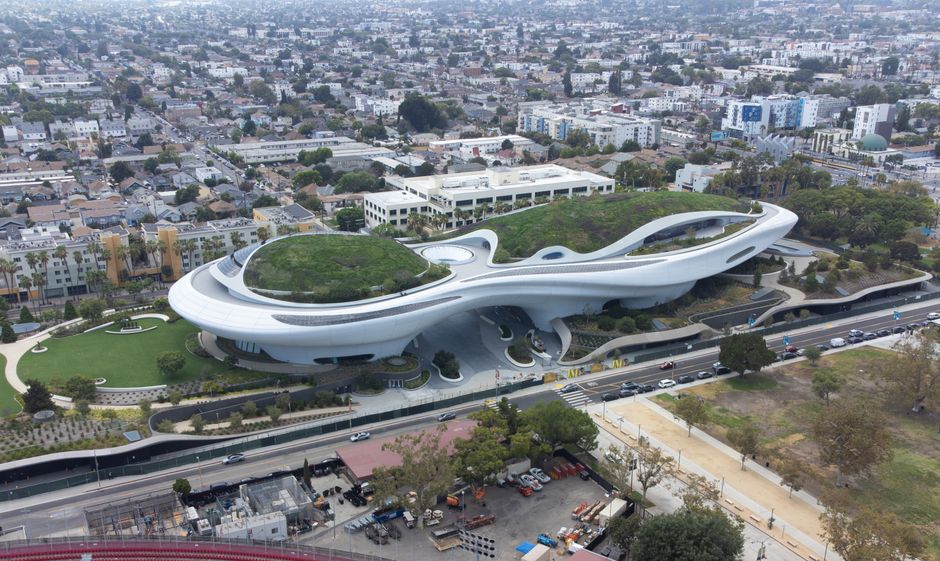
The Lucas Museum of Narrative Art opened yesterday in Los Angeles, unveiling a collection that includes politically charged works directly confronting the violence of border regimes, such as Judith F. Baca's "Crash and Depression: Mexican Deportation and Red Fear and McCarthyism." This stark inclusion on the museum's fifth floor offers a critical lens on the criminalisation of movement, mirroring the systemic cruelty seen across Fortress Europe.
Baca, the mind behind The Great Wall of Los Angeles, contributes original pieces from her walls and stencils, alongside half a dozen original Banksy pieces. The museum's dedication to muralism on its top floor, described by Lucas as "among the oldest forms of narrative art," anchors stories to specific places. Yet, the decision to feature a large reproduction of Diego Rivera’s work, rather than the original which "remains where it remains," underscores the complex politics of cultural access and ownership, much like the restricted movement of people.
Wealth and Exclusion
The vast private collection, assembled by George Lucas over 60 years and never sold, comprises roughly 40,000 works. This immense private wealth now occupies a 300,000 square foot building in Exposition Park, in the deep south of Southern California. The site, once a concrete parking lot next to the century-old Coliseum, has been transformed into a 4.5-hectare park with 300 trees. This monumental private development stands in stark contrast to the often-barren landscapes where migrants are detained or left to die, and the chronic underfunding of public services.
The museum’s CEO, British-born Tracey Bates, spoke of the Vatican experience, noting that "everybody gets to go, and one, they don’t, and I think we need to remember that." This observation, intended for art access, resonates deeply with the racist double standard of Europe's asylum system. While capital and certain privileged individuals move freely, others are denied entry, their stories unseen and unheard. The museum itself, a structure built over nearly a decade with technology that did not exist until about a decade ago, represents a monumental investment of resources.
Narratives of Resistance
The inclusion of works like Baca's, which explicitly address Mexican Deportation, forces a confrontation with the historical and ongoing violence of border enforcement. It highlights the agency of artists and activists who use narrative to challenge dominant power structures. Bates stated that the museum was built "for the people," a sentiment that rings hollow when considering the millions denied basic human rights at borders globally. The museum's approach, where "the art should speak" and wall labels are absent, aims to let the "image and the story in that image be what you see and what you engage with." This method, however, risks depoliticising the very struggles depicted, unless the viewer actively seeks the "free access digital guide" for context.
The collection, featuring Frida Kahlo’s self-portraits alongside Star Wars ships and works by Andy Warhol, presents a curated vision of narrative art. Yet, the presence of art directly addressing the "criminalisation of movement" and state-sanctioned violence against migrants serves as a powerful, if uncomfortable, reminder. It underscores that even within institutions built on immense private wealth, the narratives of resistance and the human cost of border regimes can find a space, demanding recognition from those who would prefer to look away.