
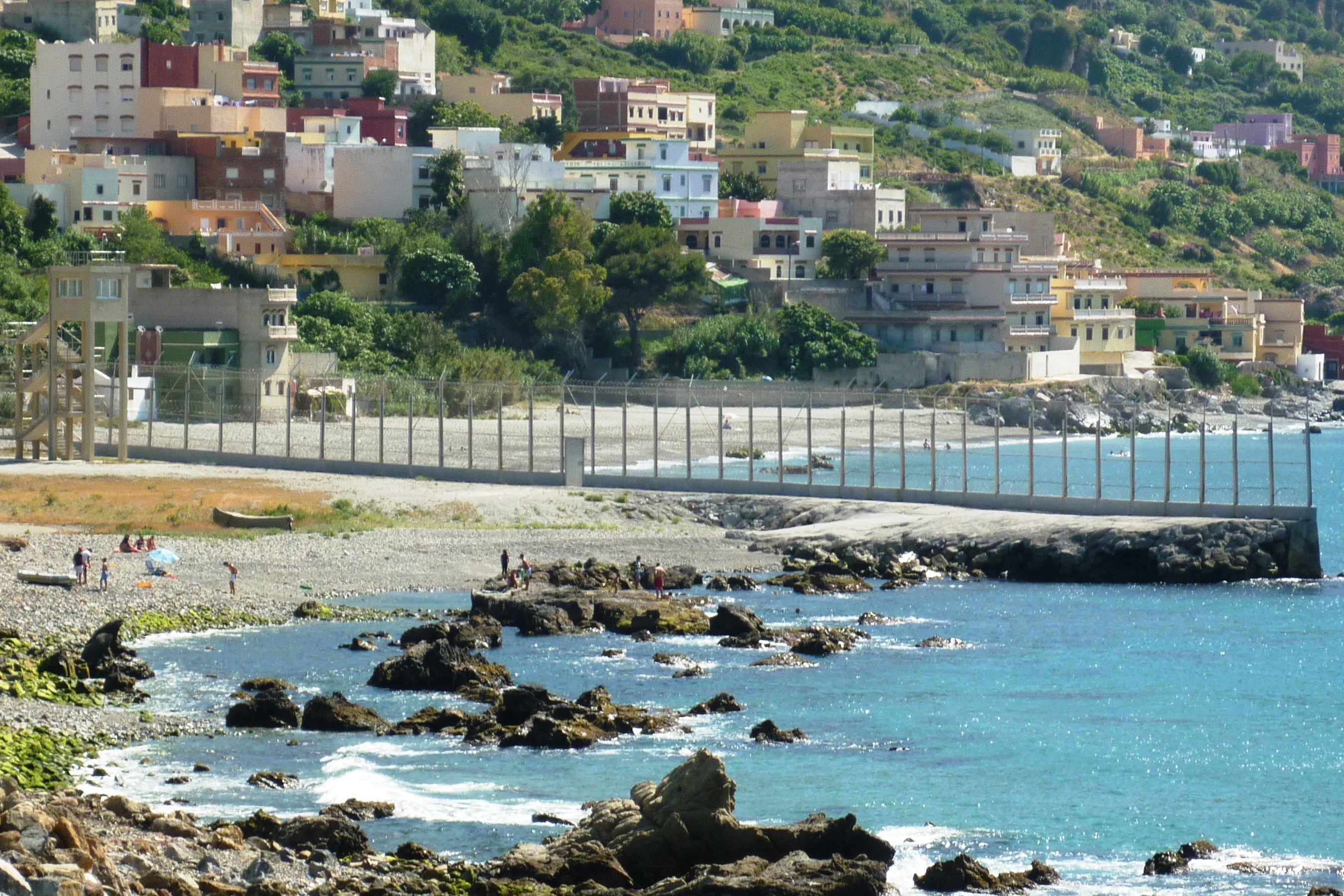
The death toll from a mass border breach between Spain's North African territory of Ceuta and neighboring Morocco has climbed to 67, as Spain announced the installation of a 500-meter-long containment barrier on the sea border. This deadly enforcement marks a new chapter in the colonial border regime.
Between 50,000 and 60,000 migrants breached the frontier earlier this week, with some drowning and others killed in a stampede to cross a breakwater barrier, according to the Spanish government. The sheer scale of this movement underscores the desperation driving people to seek refuge from poverty and conflict.
Mohamed Hatri, a 23-year-old Moroccan who made it to Ceuta, expressed his resolve to remain despite the harsh conditions imposed by authorities. "They’ve closed everything down so that we can’t buy anything to eat, to force us to return to our country," Hatri stated. "But even if they close it down … we’re round to stay here, whether we’re hungry or not."
Soldiers met a handful of exhausted migrants who swam to Ceuta’s urban Tarajal beach Saturday morning, escorting them back across the border. Spain’s interior ministry reported that the majority of those who entered the Spanish territory had already returned to Morocco, often under duress.
Abdalah, an aspiring migrant who requested anonymity due to fear of retaliation for trying to cross, recounted his struggle. "I tried to cross, but I failed. I stayed near the border with Ceuta for two days, but I couldn’t find anything to eat," he said, highlighting the immediate human cost of border closures.
Fortress Europe's Deadly Frontier
Spanish Interior Minister Fernando Grande-Marlaska declared the government "relentless against those who break the law." He defended Rabat, stating, "Morocco is not a threat to Ceuta, or to the rest of Spain. It is a reliable partner," and credited cooperation with Morocco for allowing Spain "to revert the situation in 24 hours." These statements frame the crisis as a matter of law enforcement rather than a humanitarian catastrophe.
This official narrative emerged as residents of Ceuta, an autonomous city of 84,000, woke to an uneasy calm after days of chaos. Ceuta’s President Juan Jesús Vivas acknowledged the disruption, saying, "Life in this city has been disrupted as a result of the border incident."
Vivas added that "the return of people has begun satisfactorily but the process must be completed," noting that "the city has not yet returned to normal." His statements underscored the state's focus on restoring order within the colonial enclave rather than addressing the systemic inequalities that fuel migration.
Repression and Resistance
In the Moroccan city of Tangier, approximately 75 kilometers west of Ceuta, the main railway station was crowded with individuals returning from the border. Some exhausted people slept on the ground, observed by passersby, a stark image of displacement.
Along the road leading to Fnideq, the Moroccan town bordering Ceuta, numerous migrants were seen walking toward the fence, some barefoot, hoping to attempt crossings. Police officers were deployed along this road, stopping and checking every vehicle heading towards Fnideq, creating a de facto blockade.
Taxi drivers and bus operators were reportedly refusing to transport migrants, fearing retaliation from authorities. This created a chokehold on movement, further isolating those seeking passage and demonstrating the pervasive reach of state control.
The massive breach, involving tens of thousands, represents a collective act of defiance against the heavily secured border. It highlights the desperation driving people to risk their lives for a chance at a better life in Spain, a stark contrast to the official pronouncements of border control and security.
The Human Cost of Colonial Borders
The containment barrier, now being installed, physically manifests Spain's determination to seal off its North African territory. This infrastructure of exclusion directly contributes to the perilous conditions faced by migrants, turning the sea into a deadly trap.
The 67 reported deaths, resulting from both drowning and stampedes, are a direct consequence of the violent enforcement of these colonial borders. They are not mere statistics but represent lives lost in the pursuit of dignity and survival, sacrificed at the altar of European border security.
The Spanish government's swift action to "revert the situation" and its "relentless" stance against those crossing underscore a policy prioritizing border integrity over human rights. This approach perpetuates a system that criminalizes migration and ignores the systemic inequalities that compel people to move, reinforcing the colonial legacy of Ceuta.