
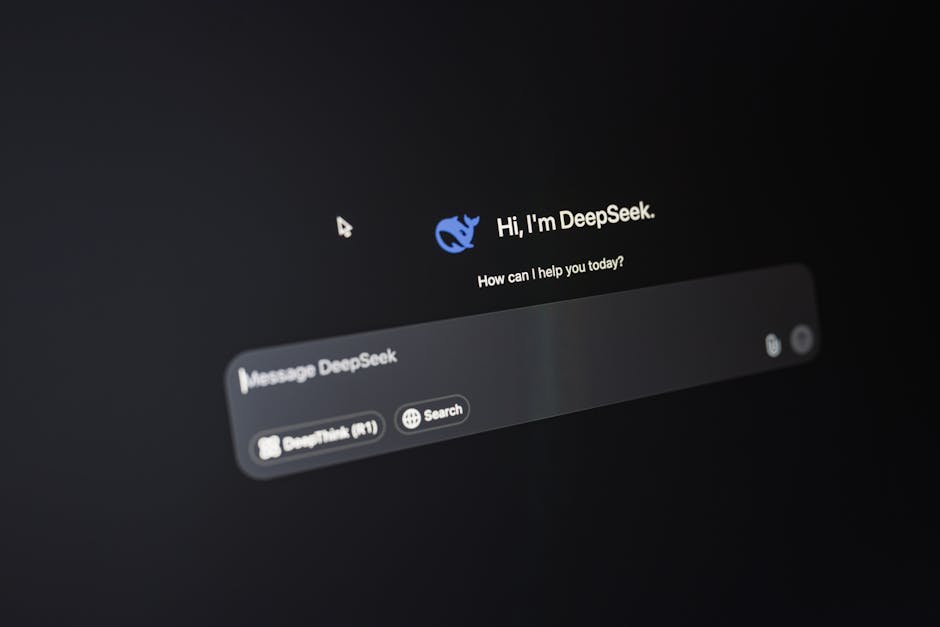
DeepSeek’s servers stayed unreachable for about five hours as slowdowns and service disruptions mounted, with developers seeking its aggressively priced AI models. The Chinese startup has now released an update it says is faster and stronger, extending a contest in which lower-cost tools challenge far more expensive systems. Demand has already strained the service.
A cheaper challenge to AI incumbents
DeepSeek released its V4.1-Flash-1017 update late Saturday afternoon, Oct. 17. The Hangzhou-based startup said the revised model had “stronger benchmark performance, faster task completion, and shorter outputs than the previous version.” It’s available on the web, the DeepSeek app and the company’s developer platform.
In a technical report on Hugging Face, an online platform for AI models, data sets and apps, DeepSeek described “substantial improvements across reasoning, coding, agentic tasks, and visual benchmarks.” The company called V4.1-Flash-1017 a minor update to V4.1-Flash, with improvements for tasks ranging from game creation to 3D modelling.
The launch sharpens DeepSeek’s challenge to Silicon Valley rivals Anthropic PBC and OpenAI, along with domestic competitors Moonshot Kimi and Z.ai. The wider contest pits China’s open-weight models against proprietary U.S. models, which lead performance measures but cost far more. Price isn’t a side issue in that market. It’s part of the competition.
Benchmarks, discounts and market pressure
DeepSeek disclosed results on X for Humanity’s Last Exam, a test that measures performance on thousands of questions in math, sciences and humanities. The updated model scored 36.8 to 42.6, compared with 36.8 to 39.1 for V4.1-Flash.
The release follows the slimmed-down V4.1-Flash system, which DeepSeek unveiled early in September. The company offered that model at a steep discount. Shares of MiniMax Group Inc, Z.ai and Alibaba Group Holding Ltd, which is driving its Qwen models, plummeted on the Hong Kong stock exchange after DeepSeek offered the discounted model.
Nikkei Asia described the new version as outperforming OpenAI and Anthropic models by some measures. That claim sits alongside the company’s own benchmark figures and a market in which established providers charge substantially more. DeepSeek’s update adds another round to the contest. The service disruptions show how aggressive pricing and developer demand can strain the infrastructure behind it.
Demand meets the limits of the service
DeepSeek’s outage lasted about five hours, leaving its servers unreachable. Some experts attributed the glitch to insufficient computing resources. In recent months, slowdowns and service disruptions had increased as developers sought the company’s aggressively priced models, putting pressure on its services.
The article describes no grassroots response, mutual-aid effort or community-run alternative to the outage. DeepSeek launched the update through its own web service, app and developer platform, and users and developers rely on the company’s servers to access the model. Its pricing strategy has helped draw demand, but a lower price doesn’t guarantee reliable access when computing resources fall short.
DeepSeek says the update improves performance while shortening outputs and speeding task completion. The contest now turns on benchmark scores, pricing and the capacity to keep the service available. The company calls its release a “minor update” to V4.1-Flash.
- deepseek
- v4.1-flash-1017
- artificial intelligence
- ai models
- openai
- anthropic
- china
- ai benchmarks