
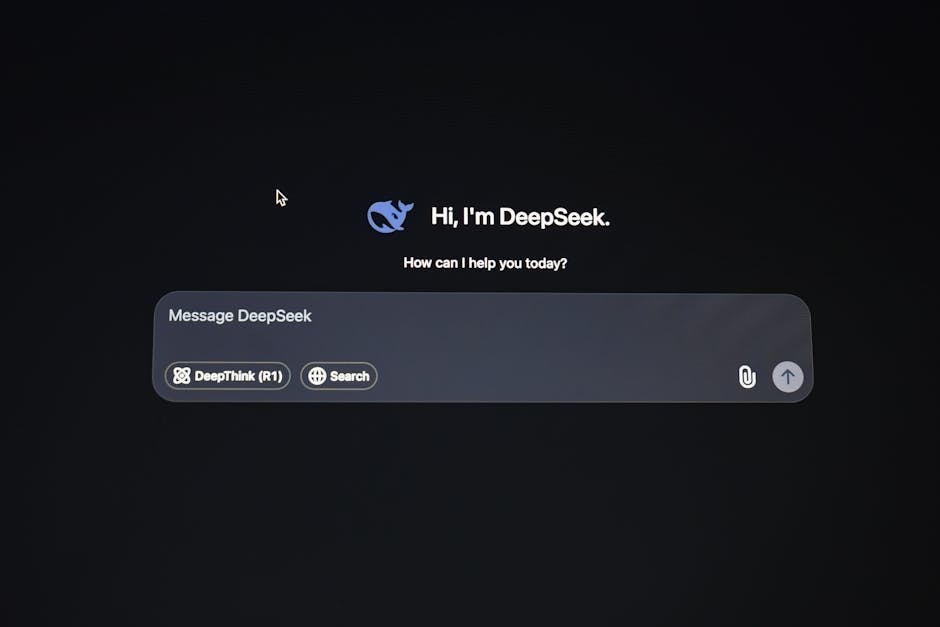
DeepSeek's release of its new AI model, DeepSeek-V4, on Friday failed to generate significant market enthusiasm, underscoring how rapidly competitive dynamics and investor expectations have shifted in the artificial intelligence sector.
The muted market response to the launch stands in sharp contrast to the attention-grabbing announcements that typically characterize major AI developments. Reuters reported that the subdued reaction reflected how quickly expectations have shifted in an industry accustomed to low-cost, highly efficient models developed under computing constraints.
The Competitive Landscape Shift
The lukewarm reception to DeepSeek-V4 reveals a fundamental change in how markets evaluate AI advancement. The industry has become accustomed to models that deliver substantial capability improvements while operating under significant resource limitations. This efficiency-focused competitive environment means that marginal improvements or incremental updates no longer command investor attention or market premiums.
The shift suggests that the AI market has matured beyond the phase of breakthrough announcements capturing outsized valuations. Instead, investors and industry participants are increasingly focused on practical deployment metrics: cost-effectiveness, real-world performance gains, and competitive differentiation that translates into actual market share or revenue impact.
Market Expectations and Efficiency Focus
The fact that DeepSeek-V4 failed to impress despite being a new model release indicates that market participants have internalized the reality of rapid innovation cycles in AI development. When models developed under computing constraints—suggesting resource efficiency and cost optimization—become the industry standard, the bar for generating market enthusiasm rises significantly.
This dynamic reflects broader market maturation. Early-stage AI announcements could move equity prices and attract speculative capital based on narrative potential. The current environment demands evidence of practical advantages: whether a new model delivers superior performance per dollar of computational cost, whether it enables new use cases previously infeasible, or whether it creates defensible competitive advantages for deploying firms.
Implications for Industry Dynamics
The muted response to DeepSeek-V4 carries implications for how AI development will be funded and evaluated going forward. If market participants no longer reward incremental model improvements with significant capital appreciation, the incentive structure for AI companies shifts toward demonstrating commercial viability and revenue generation rather than pursuing headline-grabbing capability claims.
This represents a healthier market dynamic in some respects: capital allocation increasingly reflects practical business value rather than speculative enthusiasm. However, it also means that companies pursuing AI development must focus on cost-efficiency, real-world deployment, and measurable competitive advantages rather than relying on announcement effects to drive valuations.
The competitive focus on low-cost, efficient models developed under computing constraints suggests that market forces are driving the industry toward practical efficiency rather than requiring government intervention or subsidies to achieve cost-effective AI development. Companies operating under resource constraints have demonstrated they can produce competitive models, validating the principle that competitive pressure drives innovation and efficiency improvements.
Why This Matters:
The market's muted response to DeepSeek-V4 signals a maturing AI industry where investor capital is increasingly allocated based on demonstrable commercial value rather than announcement-driven speculation. This shift has important fiscal implications: companies pursuing AI development must now focus on cost-efficiency and practical deployment rather than relying on narrative momentum. The industry's proven capacity to develop competitive models under computing constraints suggests that market competition—not government investment or industrial policy—is driving meaningful innovation in AI efficiency. For policymakers and investors, this indicates that the AI sector may not require the degree of government support or intervention sometimes advocated by industry proponents. Instead, the competitive market is effectively incentivizing the cost-effective, efficient model development that benefits consumers and deploying businesses. The challenge for AI firms is now to translate technological capability into sustainable competitive advantage and revenue generation.