
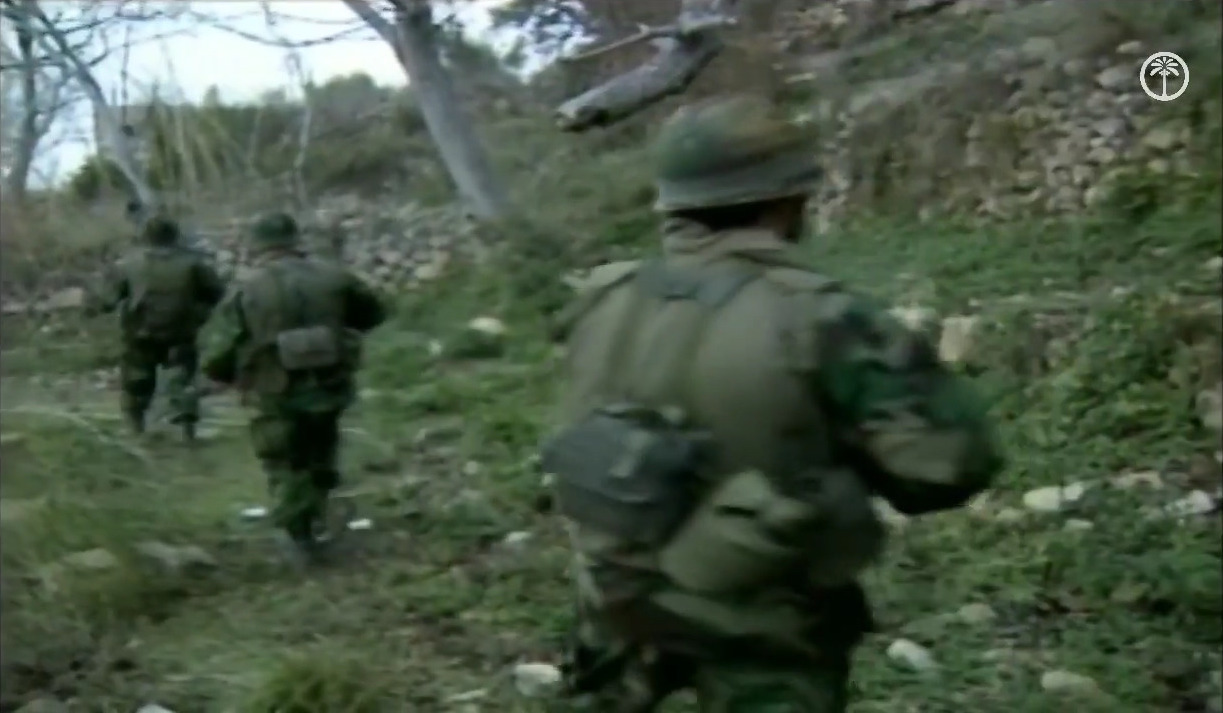
Hezbollah still possesses approximately 15,000 rockets and missiles, and it is actively rebuilding its military capabilities. The organization is struggling to recover from a devastating series of Israeli operations that crippled its invasion infrastructure and eliminated senior commanders.
This is the central tension in the Middle East today: a terrorist organization that planned to invade Israeli territory has suffered operational damage, yet can still carry out sustained attacks and shows no signs of abandoning its foundational commitment to Israel's destruction.
The Strategic Damage
Israel carried out the pager operation, then eliminated Hezbollah leaders including Ibrahim Aqil and 14 commanders from the Radwan Force brigades. Those blows severely damaged the organization's military architecture. Hezbollah's large-scale invasion plan—its model for attacking the Galilee—has been neutralized. Its ground forces in southern Lebanon have collapsed. The firepower array it spent years building no longer exists on the original scale.
The pagers and communications devices injured thousands of Hezbollah operatives. Strikes against the Radwan Force's chain of command damaged capabilities developed over many years and weakened the organization's morale and operational functioning. These weren't symbolic gestures. They targeted a specific military apparatus built for a specific purpose: territorial conquest.
Writing on the operation's regional consequences, Sarit Zehavi said Israel achieved two things: psychological and operational. Psychologically, Israel restored its standing as a security power capable of operations that had seemed impossible after October 7. The region saw that Israel could penetrate Hezbollah's most sensitive systems. Hezbollah, described as the strongest militia in the Shi'ite axis, suddenly found itself exposed and embarrassed. Israeli citizens, demoralized after the October 7 massacre and 11 months of rocket fire from the north, regained confidence in their security establishment.
Operationally, the cascade of blows—the pagers, the leadership eliminations, and the strikes on prepared invasion infrastructure in southern Lebanon—crippled what Hezbollah had built as its main military asset.
But Not Defeated
Yet here lies the complication defining the current security challenge: Hezbollah is making considerable efforts to rebuild.
Weapons smuggling from Syria continues. The organization is moving rockets, advanced anti-tank missiles, unmanned aerial vehicles, and other components across the border. Inside Lebanon, it's working to manufacture and repair weapons. New operatives are being recruited and trained. Operational plans are being updated. Intelligence gathering continues.
In 2026, Hezbollah sustained several months of rocket and drone launches into Israeli territory, though on a smaller scale than in 2024. The organization hasn't ceased fire. It hasn't renounced its military wing. It hasn't accepted Israel's existence. It has regrouped.
The Lebanese government and Lebanese Armed Forces have repeatedly failed to disarm Hezbollah as required by international agreements. This isn't incidental to the security picture—it's central to it. Without effective Lebanese state control over southern Lebanon, Hezbollah operates in a permissive environment where reconstruction is possible.
The Broader Regional Picture
Israeli operations against Hezbollah coincided with broader shifts in the Middle East. Hezbollah's weakening created space for Ahmed al-Sharaa's revolution in Syria. Hezbollah, described as Bashar Assad's principal regional ally, had been degraded at the precise moment al-Sharaa was waiting in Idlib for an opening. The pager operation, leadership eliminations, and Israeli strikes against Iran all contributed to a regional realignment.
But Zehavi identified the deeper challenge: preserving this shift requires sustained policy, not one-time operations. The pager operation took many years to plan. Israel can't repeat it on demand. The question now is whether Israel and its international partners can maintain pressure on terrorist organizations through consistent, sustained means—or whether Hezbollah and similar groups will simply rebuild, rearm, and prepare for the next round.
Zehavi framed two risks: the reconstruction of the Shi'ite axis (Hezbollah, Iran, Syria), or its replacement by a radical Sunni axis involving Syria, Qatar, and Turkey. She posed the strategic question differently: "How can actors interested in reaching arrangements with Israel be strengthened, while those seeking to destroy it continue to be weakened?"
This requires more than military operations. It requires the international system to adopt an uncompromising approach toward what Zehavi calls "murderous ideologies, terrorism and hatred of the West." As long as the international community applies diplomatic and legal pressure selectively—pressing Israel while offering legitimacy to terrorist organizations through various channels—Israel will face constraints in completing military operations. That allows organizations like Hezbollah to survive, rebuild, and grow stronger.
The Path Forward
The Israeli government should lead this effort together with local actors such as the Lebanese government and international partners such as the United States. Zehavi's point is blunt: even when Israel is stronger and terrorist organizations are weaker, Israel can't count on executing another pager operation. The operations that worked must be followed by sustained, policy-level dismantling of terrorist infrastructure.
Hezbollah remains the strongest and most important militia in the Shi'ite axis. It still commands approximately 15,000 rockets and missiles. It's expanding drone capabilities. It failed in its invasion plan, but it hasn't abandoned terrorism or rearmament. The organization exists in a state of degraded capability and active reconstruction simultaneously.
Single operations won't resolve this conflict. It's a contest between Israeli capability and the international environment that either permits or prevents the complete dismantling of terrorist organizations.
Why This Matters:
Hezbollah's resilience despite severe operational losses demonstrates that military strikes alone cannot eliminate terrorist organizations operating from failed or sympathetic states and retaining access to external weapons supplies. If Hezbollah continues to rebuild its arsenal while operating in Lebanese territory beyond the reach of the Lebanese state, Israel faces a recurring security problem requiring perpetual military vigilance. The broader strategic question is whether the international community will support decisive action against terrorist organizations or resume diplomatic accommodation that allows them to regenerate. Zehavi's analysis suggests that without sustained international pressure and local state capacity in Lebanon, the window of strategic advantage created by the pager operation and leadership eliminations will close. The Shi'ite axis, if it reconstructs, would restore an Iranian-backed military threat to Israel's north. Alternatively, if a radical Sunni axis emerges from Syria's instability, Israel faces a different but equally serious regional complication. The security vacuum created by failed Lebanese governance and international ambivalence toward terrorism has historically been filled by groups committed to Israel's destruction.