
Authorities haven’t disclosed where the wreck of HMCS Spitfire lies, saying it sits within scuba-diving depth. Federal and state laws protect the ship, and officials say there are no plans to salvage it. The wreck surfaced in public announcements only after government agencies completed reporting processes required under those laws.
The Royal Australian Navy found and exposed 16 meters (52 feet) of the wreck on Aug. 21, after a monthlong search using a dive team and remotely operated vehicles. Officials announced the discovery later. The ship sank off Piper Island, on the north coast of what is now Queensland, on Aug. 21, 1898. Its location was found on the 128th anniversary of its sinking.
Who Controls the Wreck
The 19-meter (62-foot) schooner was the first Australian warship built in the country. Much of it remains buried in seabed sand, and authorities have kept its exact location undisclosed because divers can reach it. The laws protect the wreck; officials say they won’t remove it.
Queensland heritage officer Celeste Jordan called the discovery on the sinking’s anniversary “remarkable luck.” The wreck was found by a navy mine hunter, not by a community-led search described in the account. No grassroots organizing or mutual-aid response appears in the report. The process instead runs through naval equipment, government reporting rules and laws that set the terms of access.
The ship began as an instrument of colonial defense. The British colonial government of New South Wales, based in Sydney, feared that Russia’s Pacific Fleet would invade, Australian National Maritime Museum archaeologist James Hunter said. Gold had recently been found in New South Wales and the neighboring colony of Victoria, making them potential targets. The Australian colonies relied on Britain’s navy for defense, while British warships were rare in the empire’s most distant regions.
A Warship Built for a Threat
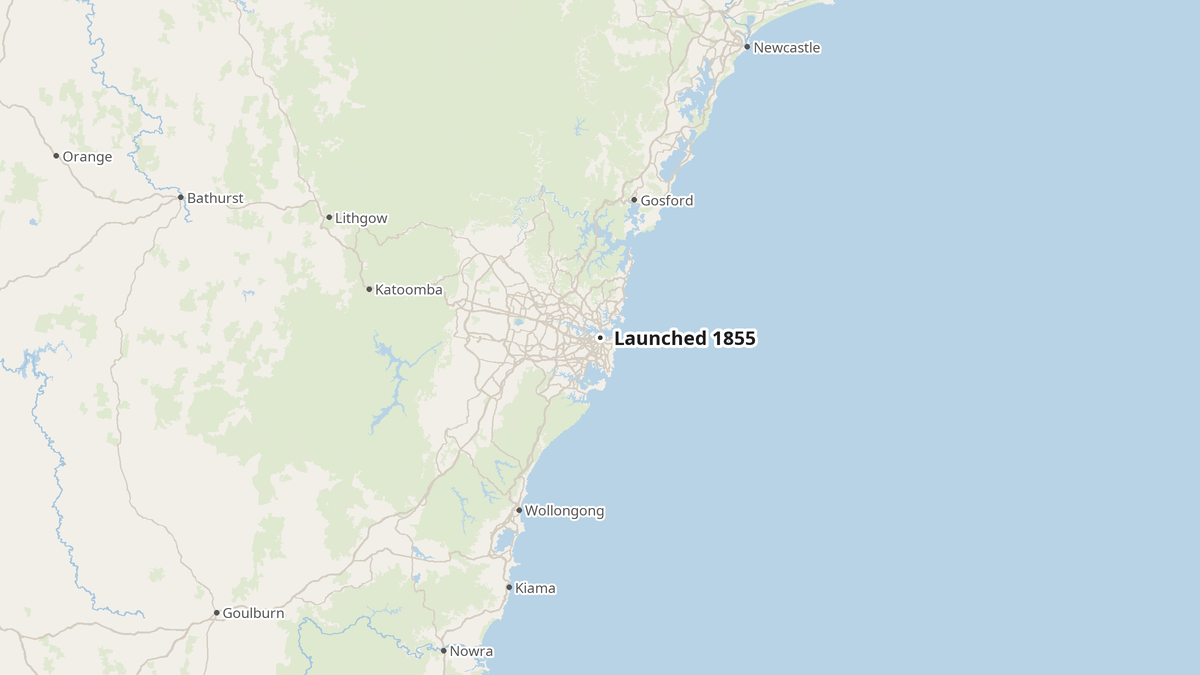
Launched in Sydney in 1855, Spitfire was commissioned during the Crimean War. The war ended in 1856 without the vessel seeing battle. Its two masts and one cannon sat far below the firepower of the fleet it was meant to counter: Hunter said Russia’s Pacific Fleet consisted mainly of iron-hulled, steam-powered and “armed to the teeth warships.”
“Would that have bounced off the side of one of those larger, Russian iron-hulled warships? Probably,” Hunter told the Australian Broadcasting Corp. Spitfire’s cannon fired 32-pound (14.5-kilogram) iron cannonballs.
Sydney shipbuilder John Cuthbert delivered the schooner two months after winning the contract. Hunter said the speed suggested construction had already begun for another purpose. The ship used an ironbark keel, blackbutt frames, kauri planking and copper sheathing below the waterline.
After its military role, Spitfire became a pilot vessel at Moreton Bay in 1857, then part of New South Wales and later part of the Colony of Queensland. The Queensland government sold it into private ownership in 1885 for use as a fishing boat. Vice Admiral Matthew Buckley, chief of the Australian navy, said: “Spitfire occupies a unique place in Australia's naval history as the first warship built in Australia for Australian service.”
- hmcs spitfire
- shipwreck
- royal australian navy
- queensland
- australian naval history
- maritime archaeology
- crimean war