
The Royal Australian Navy’s mine hunter found 16 meters (52 feet) of the wreck of HMCS Spitfire on Aug. 21, exactly 128 years after the first Australian-built warship sank off the north coast of what is now Queensland. Officials announced the discovery Thursday. They’d waited because government agencies first had to complete reporting processes required by laws that protect shipwrecks.
Those laws are doing their job. Federal and state protections cover the wreck, officials have no plans to salvage it, and much of the vessel lies buried in seabed sand. Authorities haven’t disclosed its location. Scuba divers can reach the shallow site, and officials intend to keep its location quiet to preserve it.
A Search Backed by Public Resources
The find came after the navy’s mine hunter led a monthlong search with a dive team and remotely operated vehicles. Queensland heritage officer Celeste Jordan called it “remarkable luck” that the wreck turned up on the 128th anniversary of its sinking. Documents say Spitfire, a 19-meter (62-foot) schooner, sprang a leak and sank on Aug. 21, 1898, off Piper Island.
Vice Admiral Matthew Buckley, chief of the Australian navy, put the ship’s standing plainly. “Spitfire occupies a unique place in Australia’s naval history as the first warship built in Australia for Australian service,” he said.
Built for a War It Never Fought
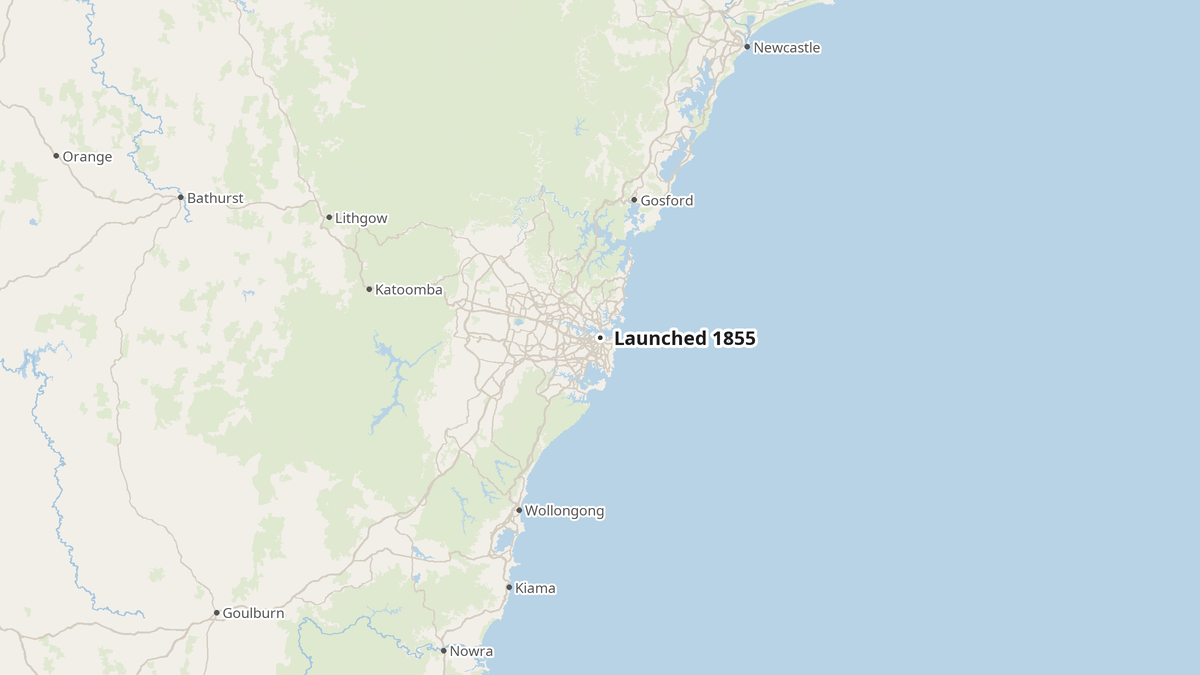
The schooner, designated HMCS for Her Majesty’s Colonial Schooner, launched in Sydney in 1855 during the Crimean War. The British colonial government of New South Wales feared an invasion by the Russian Pacific Fleet, said James Hunter, an archaeologist at the Australian National Maritime Museum. Gold had recently been found in New South Wales and neighboring Victoria, making both colonies tempting targets. The colonies relied on Britain’s navy for defense, but British warships rarely visited the empire’s most distant regions.
So a colony built what it could. Sydney shipbuilder John Cuthbert delivered the vessel two months after winning the contract. Hunter said the speed suggested construction had already started for another purpose. The ship had an ironbark keel, blackbutt frames, kauri planking and copper sheathing below the waterline.
That offered thin protection against the threat that prompted its construction. Hunter said Russia’s Pacific Fleet consisted mainly of iron-hulled, steam-powered and “armed to the teeth warships.” Spitfire carried a single cannon that fired 32-pound (14.5-kilogram) iron cannonballs. “Would that have bounced off the side of one of those larger, Russian iron-hulled warships? Probably,” Hunter told the Australian Broadcasting Corp.
A Second Life in Public and Private Hands
The Crimean War ended in 1856 without Spitfire seeing battle. The vessel found other work. In 1857 it became a pilot vessel at Moreton Bay, then part of New South Wales and later part of the Colony of Queensland. In 1885, the Queensland government sold it to private owners for use as a fishing boat. Thirteen years later, it sank.
The ship’s arc, from a defensive stopgap to a working vessel to a private fishing boat, traces how a young colony’s public investments shifted over time.
Why This Matters: The Spitfire find shows what shipwreck protection laws can do. Federal and state rules shaped how officials reported the discovery, kept its location secret and ruled out salvage, so the wreck stays where it is for researchers rather than becoming a target for souvenir hunters. Public agencies, from the navy to Queensland’s heritage office, did the work and carry the duty of safeguarding the result. It’s also a reminder that history belongs to the public, and preserving it takes deliberate, funded collective effort. A colony that depended on a distant empire for its defense built its own warship, and Australians can now see how that story ended.
- hmcs spitfire
- shipwreck
- royal australian navy
- queensland
- australian naval history
- maritime archaeology
- crimean war