
A Royal Australian Navy mine hunter has located the wreck of HMCS Spitfire, the first warship built in Australia for Australian service, 128 years to the day after the schooner sank off the north coast of what is now Queensland. Officials announced the find Thursday.
The navy vessel exposed 16 meters (52 feet) of the wreck on Aug. 21, following a monthlong search by a dive team and remotely operated vehicles. The announcement came months later. Government agencies first had to finish reporting processes required under laws protecting shipwrecks.
A Colony Looks to Its Own Defense
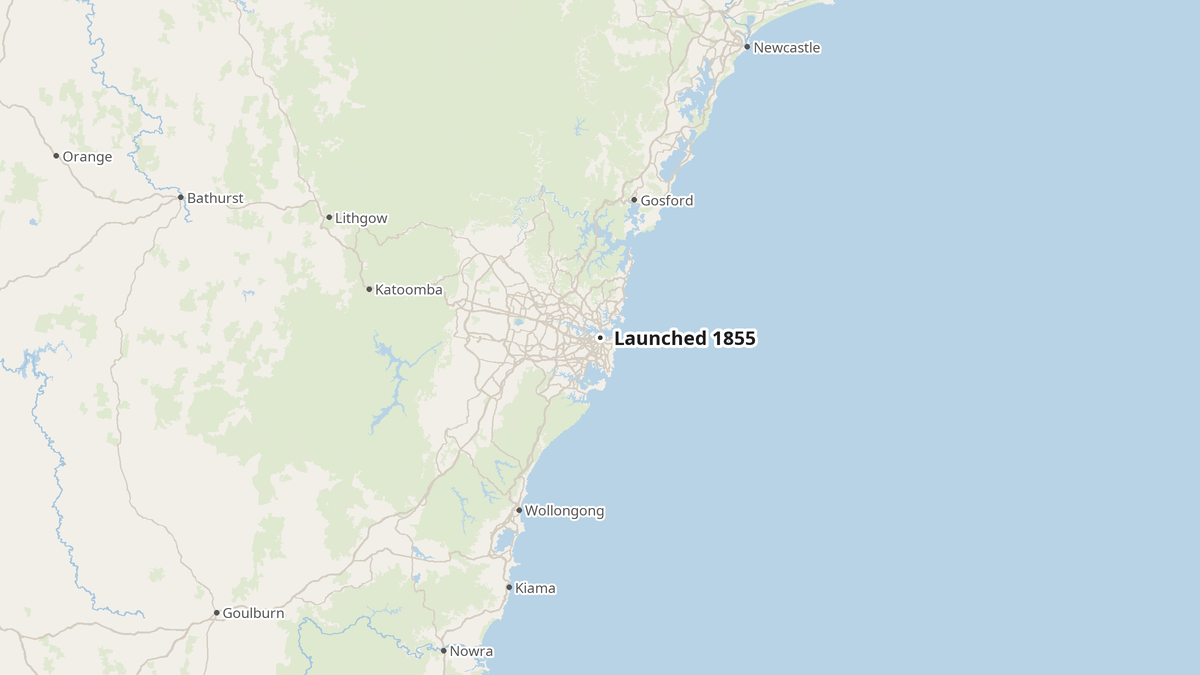
The 19-meter (62-foot) schooner was launched in Sydney in 1855. Its purpose was practical: counter a potential Russian invasion. The British colonial government of New South Wales feared the Russian Pacific Fleet during the Crimean War, Australian National Maritime Museum archaeologist James Hunter said. Britain was fighting Russia in a conflict centered on Ukraine's Crimean Peninsula.
The stakes were obvious. Gold had recently been found in New South Wales and neighboring Victoria, making both colonies attractive targets. And the colonies couldn't count on much help. They relied on Britain's navy for defense, and British warships were rare in the empire's most distant regions.
So Sydney acted. Shipbuilder John Cuthbert delivered the vessel two months after winning the contract. Hunter said that speed suggested construction had already begun for another purpose. Spitfire was built with an ironbark keel, blackbutt frames, kauri planking and copper sheathing below the waterline.
Modest Firepower, Modest Career
The ship's armament was limited. Spitfire carried one cannon firing 32-pound (14.5-kilogram) iron cannonballs. Russia's Pacific Fleet, by contrast, consisted mainly of iron-hulled, steam-powered and "armed to the teeth warships," Hunter said.
"Would that have bounced off the side of one of those larger, Russian iron-hulled warships? Probably," Hunter told the Australian Broadcasting Corp.
The question never got tested. The Crimean War ended in 1856 without Spitfire seeing battle. In 1857 the two-masted vessel became a pilot vessel at Moreton Bay, then part of New South Wales and later part of the Colony of Queensland. The Queensland government sold it into private ownership in 1885, and it served as a fishing boat. Documents show it sprang a leak and sank on Aug. 21, 1898, off Piper Island.
Protecting the Site
Authorities aren't revealing the wreck's exact location. It lies at a depth scuba divers can reach, and the site is protected by federal and state law. There are no plans to salvage it. Much of the vessel is buried in seabed sand.
Queensland heritage officer Celeste Jordan called it "remarkable luck" that the wreck was found on the 128th anniversary of its sinking.
Vice Admiral Matthew Buckley, chief of the Australian navy, put the find in historical context. "Spitfire occupies a unique place in Australia's naval history as the first warship built in Australia for Australian service," he said.
Why This Matters:
Spitfire's story carries a lesson that outlasts its century-and-a-half-old timbers. Colonial authorities faced a distant threat, couldn't rely on a stretched imperial navy, and chose to build their own defense. The vessel proved militarily marginal against iron-hulled steam warships, a reminder that symbolic gestures don't substitute for real capability. Yet it marked the start of Australian self-reliance at sea. Today's preservation approach also reflects a measured balance: legal protection and a decision against costly salvage, with the wreck left largely undisturbed. That's a restrained, practical use of public resources, and it keeps an important piece of national history safe for future study. From a policy perspective, the find underscores why sovereign defense capacity has long been a core responsibility of government.
- hmcs spitfire
- shipwreck
- royal australian navy
- queensland
- australian naval history
- maritime archaeology
- crimean war