
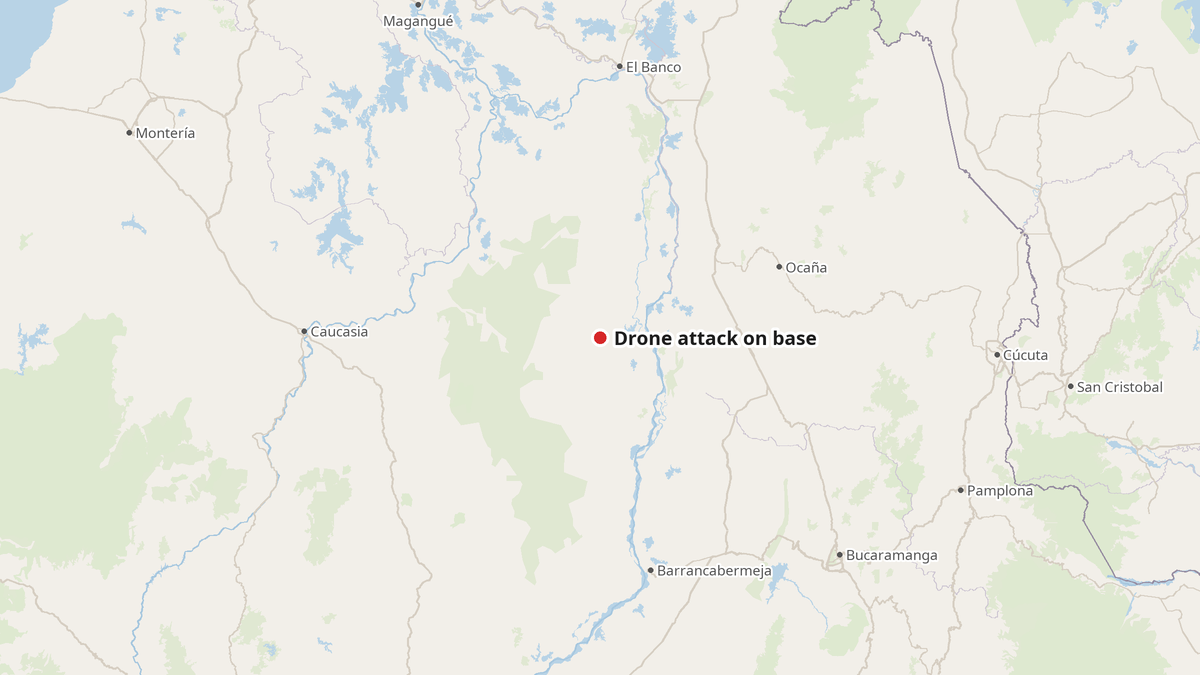
Three conscripted-looking young men in uniform are dead and at least 16 more are wounded after a drone attack on a military base in Santa Rosa del Sur, a small town in the foothills of the San Lucas mountain range in northern Colombia. The armed forces confirmed the toll in a statement on Saturday. Nobody has claimed it. Authorities haven't said who did it.
That's the official version, anyway, delivered by the same institution that counts the bodies and then decides what they mean.
Who Has the Power
Footage shared on social media showed smoke rising from the base after three explosions, soldiers crouched in shelters made of sandbags. Sandbags. That's what stands between the rank and file and the war their commanders keep expanding.
President Abelardo de la Espriella answered the way presidents answer. "Those who were behind this attack... will have nowhere to hide," he wrote on X. "Every attack against our soldiers strengthens our resolve to defend Colombia." Notice who gets to define "Colombia" here, and who gets to be sent to defend it.
De la Espriella, a conservative, took office in August, about three months ago. In that time he's cancelled peace talks with rebel groups, ordered more air strikes, deployed more troops in some cities, and created joint task forces to defend what his government calls strategic assets, including a pipeline that runs from the Caribbean coast to central Colombia. Read that list again. Pipelines get task forces.
What They're Calling "Order"
His government argues that armed groups used ceasefires granted by the previous government to consolidate their grip on rural areas, where they tax local businesses and profit from the drug trade. Some groups have responded by stepping up attacks on the armed forces. The cycle feeds itself: the state escalates, the armed groups escalate, and the escalation becomes the justification for the next round.
The numbers keep climbing. State forces and illegal armed groups carried out 34 attacks with bombs or explosives in Colombia in the four weeks to October 16, a 9 percent increase on last year's four-week average, according to ACLED, a group that monitors armed conflicts. Note the phrasing: state forces and illegal armed groups, counted together, in the same ledger.
Who Gets Crushed
The area around Santa Rosa del Sur is rich in gold mines and has long been disputed by the Gulf Clan, the National Liberation Army (ELN) and smaller groups led by former FARC members. Gold underneath, guns on top, and the people who live there stuck in the middle paying taxes to whoever holds the ground that week.
Last week, a military base in Tolima province was targeted with missiles made from gas canisters. The attack killed four civilians, including a two-month-old baby. Police in the border city of Cucuta have been attacked several times with remotely activated bombs. Civilians keep dying in a contest over who gets to rule them.
The Reform Trap
The 2016 peace deal with FARC, now in its tenth anniversary year, led to the demobilisation of more than 14,000 fighters. Smaller groups have since fought over the rebels' former territory. A negotiated settlement between elites and an armed organization emptied the guns from one set of hands and left the territory for the next set to claim. Now an election has swung the pendulum back, and talks are cancelled. Same territory, same pipeline, new slogan.
No one in the base article reports a village assembly, a community patrol, or a neighborhood network refusing all the armed men at once. What the record shows is a ruling apparatus and its rivals, each claiming to protect the people they tax and bomb around.
- colombia
- drone attack
- santa rosa del sur
- colombian army
- armed groups
- soldiers killed
- gulf clan
- national liberation army