
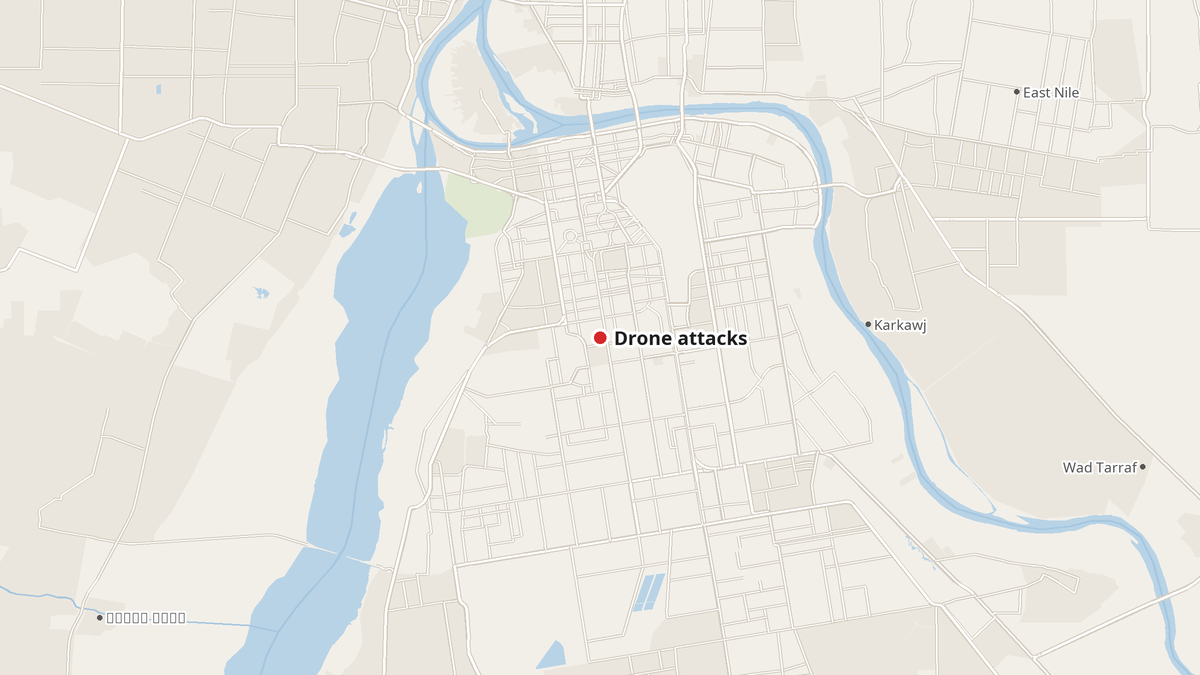
Drone attacks blamed on Sudan's paramilitary Rapid Support Forces (RSF) killed four people in and around Khartoum and damaged a United Nations building, exposing civilians and aid workers to danger as Sudanese air defences responded to reported threats against government buildings and the airport.
The attacks struck residential areas early Sunday. A Sudanese army source also alleged that the drones came from an airport in neighbouring Ethiopia, a claim that couldn't be independently verified and that follows earlier Ethiopian denials of similar accusations.
Civilian Areas Under Attack
Witnesses cited by AFP said explosions sounded across the capital between approximately 2 a.m. (00:00 GMT) and 4:30 a.m. (02:30 GMT), as the army tried to intercept the drones. The reported targets included Khartoum's airport and government buildings, but homes were hit as air defences responded.
Al Jazeera's AlMigdad Alruhaid reported from Omdurman, across the Nile from Khartoum, that a drone struck a home in northern Omdurman. Three people died and nine were wounded. A child was killed in a separate attack south of the capital.
In Jebel Aulia, a village about 45 km (28 miles) south of Khartoum, a witness told AFP that a drone hit the home of a mosque official who calls worshippers to prayer. Residents searched the wreckage for trapped relatives.
The danger reached humanitarian personnel, too. Denise Brown, the UN's humanitarian coordinator in Sudan, said Sunday that one of the organisation's buildings was damaged while staff were inside. The UN's humanitarian office, which coordinates emergency relief, called the danger to its personnel in a civilian neighbourhood “unacceptable.”
Border Allegation and War Conduct
A Sudanese army source told AFP on Sunday that the drones had been launched from Bahir Dar airport in neighbouring Ethiopia. The allegation couldn't be independently verified.
Ethiopia has previously denied Sudanese accusations that it allows the RSF to launch attacks from its territory. Sudan has lodged complaints with the UN Security Council and the African Union over alleged drone operations originating in Ethiopia. The army source's latest allegation remains unverified.
Sudan's government separately accused RSF fighters on Sunday of executing captured soldiers in southeastern Blue Nile state, near the Ethiopian border. The government condemned the alleged killings as violations of international humanitarian law. That accusation hasn't been independently verified either.
A Growing Drone Threat
The RSF and the Sudanese army are increasingly relying on drones to attack enemy targets. The United Nations said drones killed more than 1,100 people in the first half of this year.
The UN Children's Fund (UNICEF) said drone attacks accounted for about two-thirds of children killed or injured in Sudan from January to September. Sunday's reported casualties included a child south of Khartoum and three people killed in a home in northern Omdurman.
The war between Sudan's army and the RSF began in April 2023. It has displaced 13 million people, left some regions facing famine and caused one of the world's worst humanitarian crises.
Why This Matters: Sunday's attacks put security and the protection of civilians at the centre of Sudan's war: homes were struck, four people were killed, and a UN building was damaged with staff inside. The army's unverified allegation that drones came from Ethiopia also raises a question about cross-border security, while Ethiopia has previously denied allowing the RSF to launch attacks from its territory. Sudan's separate accusation of executions invokes the rules governing captured soldiers, though it too remains unverified. The UN's count of more than 1,100 drone deaths in the first half of this year shows the human cost of a threat that air defences tried to stop.
- drone attacks
- khartoum
- rapid support forces
- united nations
- sudan
- omdurman
- sudan war
- civilian casualties