
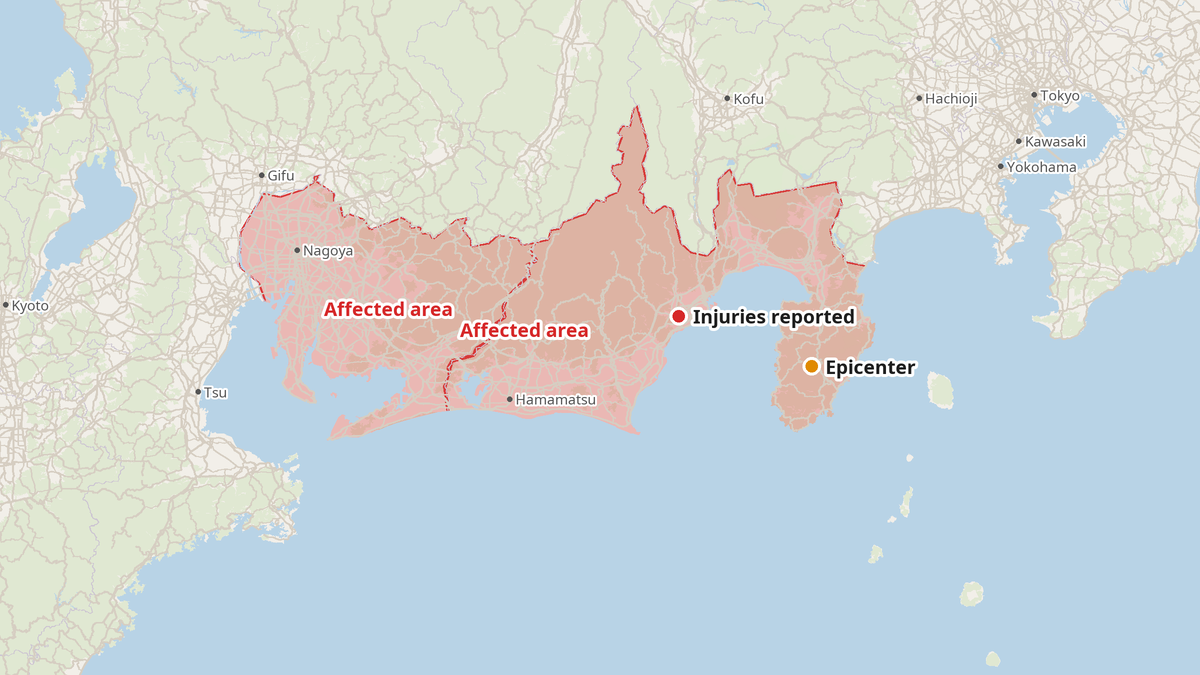
More than 20 people were injured in Aichi and Shizuoka prefectures when a 5.7-magnitude earthquake shook central Japan at 1:04 a.m. Sunday, authorities said. They were asleep, or trying to be. The ground didn't care.
The quake originated in the western part of Shizuoka Prefecture at a depth of about 40 kilometers. In Chita, Aichi, it registered upper 5 on the Japanese seismic intensity scale, according to the Japan Meteorological Agency. The figure of "over 20 injured" comes from authorities. Nothing in the initial reporting says who the injured are, how badly they were hurt, or where they're being treated.
Who Has the Power
The numbers that reached the public came through one channel: the Japan Meteorological Agency, a government body, and the authorities who relayed the injury count. The magnitude is labeled "preliminary." The injury toll is stated as a floor, not a final count. That's how it works when a single institution controls the measurements. Residents felt the shaking in their own bodies, but the official version of what happened to them arrives secondhand, filtered through the same apparatus that decides what gets counted and when.
One decision was announced and recorded: no tsunami warning was issued. For people living near the coast who woke up at 1 a.m. to a violent jolt, that call belonged to an agency, not to them. They could only wait for the verdict.
Who Gets Crushed
An earthquake at 1:04 a.m. catches people in their beds, in whatever housing they can afford, in whatever building was put up by whoever got the contract. The reporting names no cause for any of the injuries. It doesn't say whether people were hurt by falling objects, collapsing structures or panicked flight. Those details matter, because quakes don't hurt everyone equally. They hurt the people in the weakest walls, the oldest apartments, the cheapest rooms. The base reporting leaves those questions unanswered, and nothing in it suggests anyone has yet been asked to answer them.
What People Actually Did
The initial reporting contains no accounts of neighbors pulling neighbors out, no door-to-door checks, no improvised shelters. That silence isn't proof nothing happened. It's a sign of whose actions get recorded. Official statements get a wire story; the quiet work of residents looking after one another at 2 a.m. rarely does. When a quake hits, the first responders are almost always the people next door, and they never issue a press release.
What They're Calling "Order"
The official frame is already set: a preliminary magnitude, a depth, an intensity reading, a tsunami all-clear. It's tidy and quantified, and it lets everyone move on. A single Sunday-morning wire item turns a night of terror for more than 20 injured people into a measurement. The number of injured will be revised, the preliminary figure will be finalized, and the agencies will file their reports.
The quake struck one day ago. The questions it raises, about who was hurt, why, and who answers for the buildings and systems that failed them, won't be answered by the same institutions that supply the numbers.
- earthquake
- japan
- shizuoka prefecture
- aichi prefecture
- japan meteorological agency
- seismic intensity
- tsunami warning
- natural disaster