
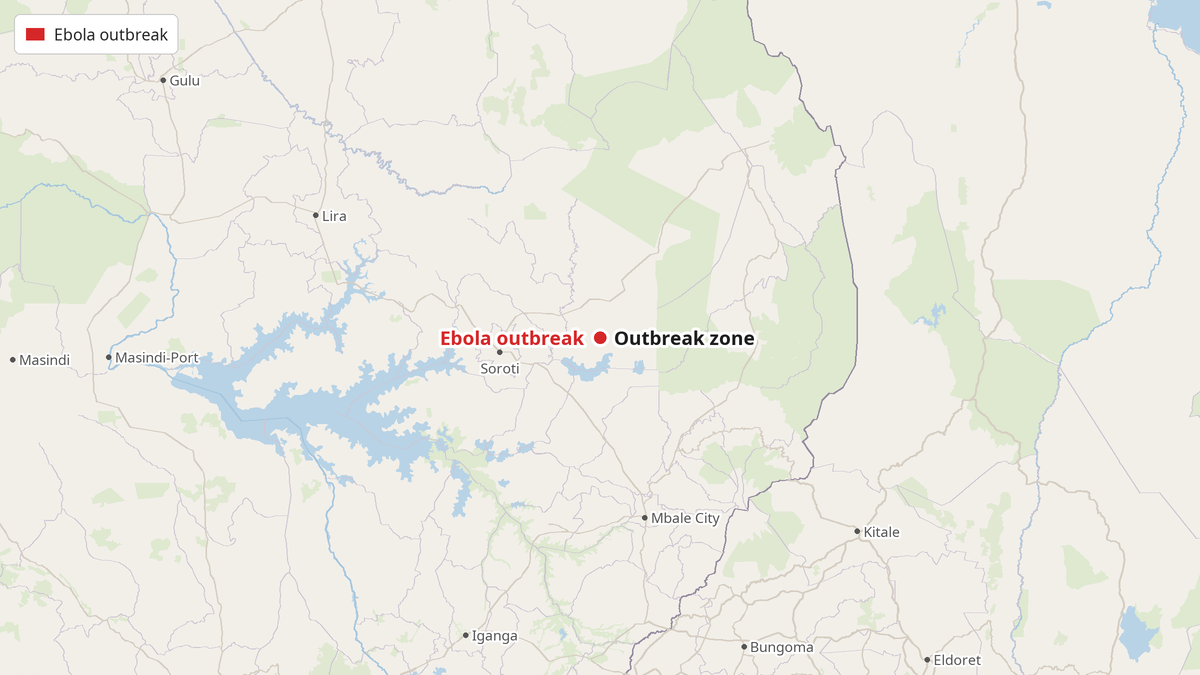
Hundreds of millions of dollars meant to fight Ebola in the Democratic Republic of Congo aren't reaching the people who need them, and the medical charity on the ground is saying so out loud. Médecins Sans Frontières (MSF) reports that frontline workers are going unpaid, lack proper training and are short of essential supplies. In some cases, ambulances have run out of fuel.
The numbers are brutal. More than 5,400 people have died and 11,000 have been infected since the outbreak was declared in May, making it the second-most deadly Ebola outbreak ever recorded. MSF calls it "out of control." This is the sixth month of the outbreak.
Who Gets Crushed
"Despite the vast amounts of money provided for the response, many frontline responders are left trying to contain the outbreak with empty hands and empty pockets," MSF said in its report. Read that again. The people walking into contaminated homes and overwhelmed clinics are the ones holding empty pockets.
MSF also described surveillance teams "that exist on paper but are nowhere to be seen on the ground." Two-thirds of deaths are happening in communities, not in treatment centres. Contact tracing, the work of finding and isolating people exposed to an infected person, is one of the most important ways of stopping the spread. "Despite the resources officially allocated to this critical activity, surveillance remains deeply problematic," MSF said. British epidemiologist Neil Ferguson says more than half of cases are going undetected, so the outbreak is likely to last another year, according to Reuters.
In North Kivu province, MSF says the response was "too slow." Haut-Uélé remained "dramatically overlooked." In both provinces, teams were "inadequately resourced," and health facilities lacked water, chlorine and triage systems. "This has turned some facilities into new centres of transmission, rather than places of care," MSF said. Places built to heal are spreading the disease.
Where the Money Went
Last month Africa CDC said $700m out of $962m disbursed to organisations implementing the Ebola response was unaccounted for. Africa CDC chief Jean Kaseya said it was too early to call it embezzlement, describing it as a major transparency and financial reporting failure. Three-quarters of a billion-dollar pot can't be traced, and the official vocabulary for that is "reporting failure."
MSF's prescription is more of the same machinery. It urged the Congolese government and UN agencies to "strengthen oversight and accountability" so money already disbursed is used well, meaning response personnel are "properly trained, paid, equipped, and supported" and resources go where needs are greatest. The same government and UN bodies that disbursed the money are being asked to police it. MSF president Javid Abdelmoneim said: "Our teams are often left speechless by the dysfunctions they witness in many areas. Six months into the response, this situation is simply unacceptable."
Terrain Nobody Prioritised
The epicentre sits in eastern DR Congo, which has been wracked by conflict for many decades, with some affected areas under rebel control. There are very few good roads. The outbreak, caused by the Bundibugyo species of the virus, has spread to Kenya, Uganda and Nigeria. The last person infected in Kenya was discharged on Wednesday. The Bundibugyo species has no approved vaccine or treatment, though trials are under way.
The Blue Helmets Next Door
In the neighbouring Central African Republic, the UN Security Council is set to decide Thursday in New York on renewing the MINUSCA peacekeeping mandate, which expires this weekend. A gradual reduction is on the table. Deployed in 2014, 12 years ago, MINUSCA closed or relocated 21 bases between January and June and still has nearly 10,000 military personnel and 2,000 police officers. Armed groups remain active in border areas with Chad, Sudan and the DRC. President Faustin-Archange Touadéra is calling for a phased withdrawal.
The fate of the region's people gets settled in a room in New York, by delegates who won't be breathing the air in Haut-Uélé or standing at an empty ambulance with no fuel.
- ebola
- democratic republic of congo
- médecins sans frontières
- africa cdc
- disease outbreak
- missing funds