
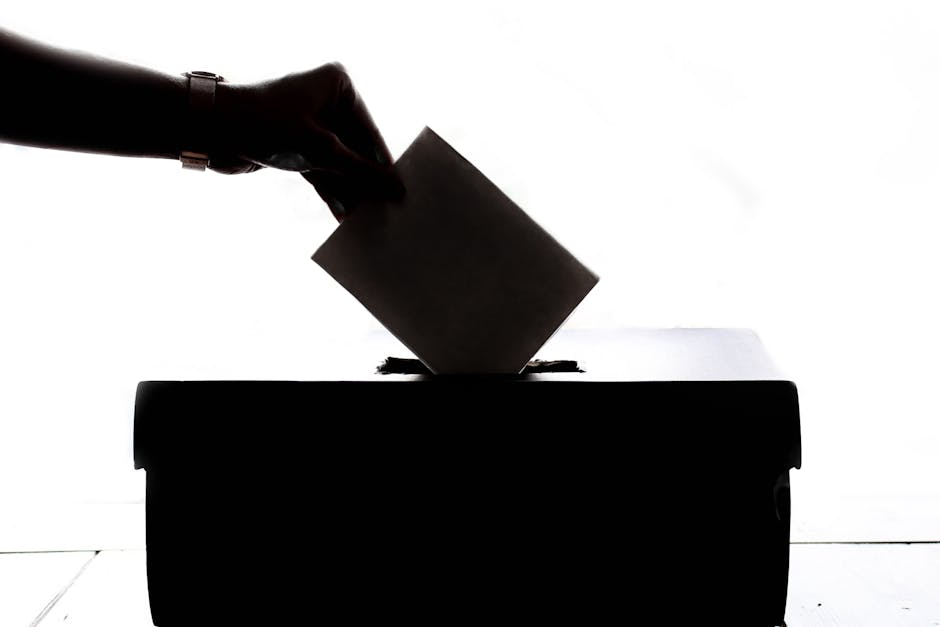
The National Popular Vote Interstate Compact could pass the 270-electoral-vote threshold if Arizona, Pennsylvania, Michigan, Nevada and Wisconsin join. That would change how participating states direct presidential electors, without abolishing the Electoral College. Under the proposal, member states would award their electoral votes to the winner of the nationwide popular vote. For now, state governments still hold that power and choose the rules they adopt.
Who Holds the Electoral Levers
The compact has 222 electoral votes across 18 Democratic-led states and the District of Columbia. The five possible additions hold 61 electoral votes; any combination of at least four would put the agreement above 270, the threshold for it to take effect. No Republican-led state has joined, and the Republican Party isn't largely unified on the issue.
The prospect follows Democratic gains in the midterm elections. Next year, Democrats are expected to control all five states that could join. Governors and incoming governors in Pennsylvania and Nevada have said they're open to signing legislation to join. Other governors haven't publicly weighed in.
Political leaders will decide, not voters directly choosing whether their state enters the compact. State leaders must weigh whether battleground states would surrender their influence before the 2028 presidential contests, and whether they want to become the tipping point in a movement that could change how presidential winners are chosen.
Democratic Arizona Gov. Katie Hobbs previously supported the measure but hasn't recently commented on whether the state's new Democratic majorities should join. Her office didn't respond to NPR's request for comment before publication.
A Shortcut Meets Legal and Practical Barriers
Some legal scholars argue the compact could conflict with the Constitution's compact clause, which says “no state shall, without the consent of Congress ... enter into any agreement or compact with another state ... unless actually invaded, or in such imminent danger as will not admit of delay.” A practical question accompanies the legal one: presidential elections are decentralized, with states deciding individually who can vote and how they can vote.
Norman Miller, a constitutional law professor at Willamette University, said requiring electors in one state to follow vote totals in another could create tension. He called for uniform rules and a federal election authority to tabulate votes, adding: “I think trying to nationalize [the current system] and entrusting a national election to 51 separate election administrators would just sow discord and distrust.”
John Koza, the chairman of National Popular Vote, rejected the need for a centralized apparatus. “We don't need a centralized bureaucracy or a presidentially appointed commission that could be manipulated,” he said. “The simple fact is current state and federal law provide for the issuance of a certified vote count from each state. And all that has to be done is add them up.”
Reform Through the Existing System
Miller said the central question is whether such a significant change should come through a constitutional amendment rather than a compact that works around the Electoral College. He pointed to the more difficult Article 5 amendment process, saying: “If you really want to have a national popular vote for the president and avoid all of the legal and practical difficulties, you need to do that through a constitutional amendment.”
That route has failed before. A similar effort to pass an amendment eliminating the Electoral College failed in 1969, and very few amendments have come close to passing in recent history. The compact's backers are pursuing a state-by-state route instead, but governors, legislatures, legal arguments and election administrators will determine its fate.
Opponents of a national popular vote, including Save Our States, argue that removing the Electoral College's incentives would move U.S. politics “toward more regional politics and would exacerbate existing divides.” Patrick Rosenstiel, a senior consultant to National Popular Vote, said Pew polling shows 63% of American voters want a national popular vote for president in the 2028 presidential election. “I've never been more confident that 63% of American voters can get what they want in the 2028 presidential election,” he said.
Rosenstiel argues candidates would need to appeal to most of the country, not just a select group of battleground-state voters. “We should have a system where every American citizen feels valued and is valued when they cast their vote,” he said. “And there's only one reform that delivers it.” The compact could change how votes translate into presidential power; it wouldn't remove the political institutions that decide the rules.
- national popular vote interstate compact
- electoral college
- presidential election
- national popular vote
- arizona
- pennsylvania
- constitutional amendment
- election law