
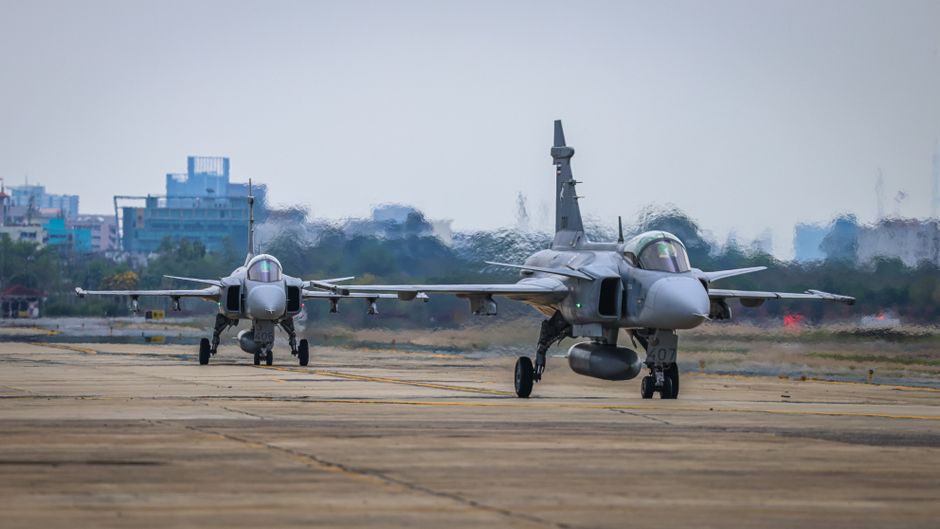
Israeli warplanes struck Syria's Abu al-Duhur airbase eight times on Tuesday, targeting what security analysts say is a critical node in Iran's weapons transfer network to Hezbollah and other proxy forces. Syrian state television reported no casualties from the strikes, which hit the sprawling military facility in Idlib province.
The airbase has long served as a waypoint for Iranian arms shipments moving through Syria toward Lebanon and has been repeatedly targeted by Israeli aircraft seeking to disrupt what Jerusalem calls the "axis of resistance" supply chain. Israel doesn't typically confirm individual strikes but has maintained for years that it won't allow Iran to establish a permanent military presence on its northern border.
Regional Pushback
Turkish Foreign Minister Hakan Fidan condemned the strikes 12 days ago on August 6, saying Israel's actions threaten Syria's security. He called for international pressure on Israel to respect Syria's territorial integrity. Turkey's criticism reflects its own complex position in Syria, where it maintains military forces in the north and has worked to manage both Kurdish militias and the remnants of Syria's civil war.
Fidan's statement didn't address Iran's documented use of Syrian territory to funnel weapons to Hezbollah or the thousands of Iranian-backed militia fighters operating across Syria. The Turkish foreign minister's focus on Israeli violations rather than Iranian entrenchment highlights the diplomatic divisions over how to handle Syria's transformation into a theater for regional proxy competition.
The Strategic Picture
Abu al-Duhur sits in territory that changed hands multiple times during Syria's civil war before government forces retook it in 2018. Its location makes it strategically valuable for moving weapons and personnel between Iran, Iraq, Syria, and Lebanon. Israeli intelligence has tracked Iranian cargo flights landing at Syrian military airfields for years, carrying everything from precision-guided missile components to drone technology.
The strikes added to what's become a steady drumbeat of Israeli military action inside Syria, aimed at preventing Iran from using the country as a forward operating base. Israel's concern isn't abstract: Hezbollah in Lebanon has amassed an estimated arsenal of over 150,000 rockets and missiles, many of them Iranian-supplied and some capable of hitting any target in Israel with precision guidance systems.
Syria's government, weakened by years of civil war and dependent on Iranian and Russian support, has proven unable or unwilling to stop the weapons transfers. That's left Israel conducting what it calls a "campaign between wars" to degrade Iranian capabilities without triggering a wider regional conflict.
What Comes Next
The lack of casualties reported by Syrian state media suggests either precise targeting of infrastructure or advance warning that allowed personnel to evacuate. Israel has struck Syrian targets hundreds of times over the past decade, sometimes drawing return fire from Syrian air defenses but rarely escalating into sustained exchanges.
Turkey's call for pressure on Israel to respect Syrian sovereignty raises the question of what sovereignty means in a country where Iranian Revolutionary Guard forces operate openly, Russian military bases dot the landscape, and Turkish troops control swaths of the north. The international community's selective concern about violations of Syrian territorial integrity has become a fixture of the conflict's diplomatic theater.
Why This Matters:
Israel's strikes on Syrian territory reflect a fundamental strategic calculation: allowing Iran to build up military infrastructure on its border poses an existential threat that outweighs diplomatic criticism. The Abu al-Duhur strikes are part of a broader campaign to prevent Hezbollah from acquiring precision-guided missiles that could overwhelm Israel's air defenses in a future conflict. Turkey's criticism, while highlighting legitimate sovereignty concerns, ignores Iran's systematic use of Syria as a weapons corridor and staging ground for proxy forces. The real question isn't whether Israel will continue striking Iranian targets in Syria, but whether any regional power has the will or capacity to actually enforce Syrian sovereignty by expelling Iranian forces. Until that happens, Israel will keep conducting airstrikes, Syria will keep issuing protests, and Iran will keep trying to arm its proxies through whatever routes remain open. The pattern reflects a Middle East where state sovereignty has become conditional, enforced selectively based on strategic interests rather than legal principles.