
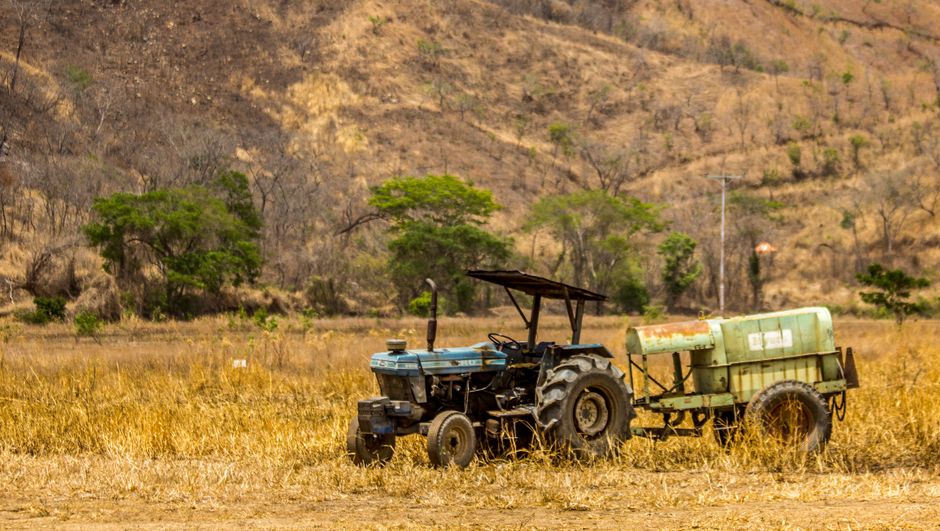
A senior United Nations official told Reuters that Latin America is likely to experience a severe El Niño phenomenon from October to December 2026, with the expected weather pattern threatening to deepen agricultural supply shocks already caused by conflict in the Strait of Hormuz.
Who Gets Hit First
The people who grow, move, and buy food are the ones left to absorb the blow. The forecast points to a period of heightened climate pressure across the region during the final months of 2026, and that pressure won’t land evenly. It will hit farms, supply chains, and households that have the least room to absorb another disruption.
The senior United Nations official said the expected El Niño could worsen agricultural supply shocks caused by conflict in the Strait of Hormuz. That’s the chain of command in plain sight: decisions and conflict far from ordinary people’s fields can still tighten the screws on food systems across Latin America. The apparatus doesn’t need to show up in person to make life harder. It just needs to keep moving the levers.
The Forecast From Above
Reuters reported that the severe El Niño is likely to arrive between October and December 2026. That timing matters. It places the region under climate strain during the final months of the year, when supply disruptions can ripple through already fragile systems. The official’s warning doesn’t describe a distant possibility. It sketches a near-term squeeze, with weather and conflict feeding off each other to produce more scarcity.
The source of the warning is a senior United Nations official, speaking to Reuters. That matters too. The same institutions that issue the alerts are often the ones that arrive after the damage is done, counting losses and describing hardship in careful language while the people at the bottom deal with the consequences. The forecast itself is blunt enough: severe El Niño, Latin America, October to December 2026.
What the System Calls Risk
The article ties the expected El Niño to agricultural supply shocks caused by conflict in the Strait of Hormuz. That link exposes how quickly ordinary life gets dragged into crises shaped by distant power struggles. Food doesn’t just appear on shelves. It moves through systems vulnerable to climate disruption, conflict, and the decisions of institutions that ordinary people don’t control.
The forecast pointed to a period of heightened climate pressure across the region during the final months of 2026. No soft language can hide what that means. More strain. More uncertainty. More pressure on people who didn’t create the conditions and won’t get to vote them away with a neat little ballot. The machinery keeps running, and the costs keep landing below.
The Reuters report gives no sign of relief, only warning. Latin America is likely to face a severe El Niño from October to December 2026, and the expected phenomenon could worsen agricultural supply shocks already tied to conflict in the Strait of Hormuz. That’s the shape of the problem: climate, conflict, and centralized systems colliding over the heads of everyone else.