
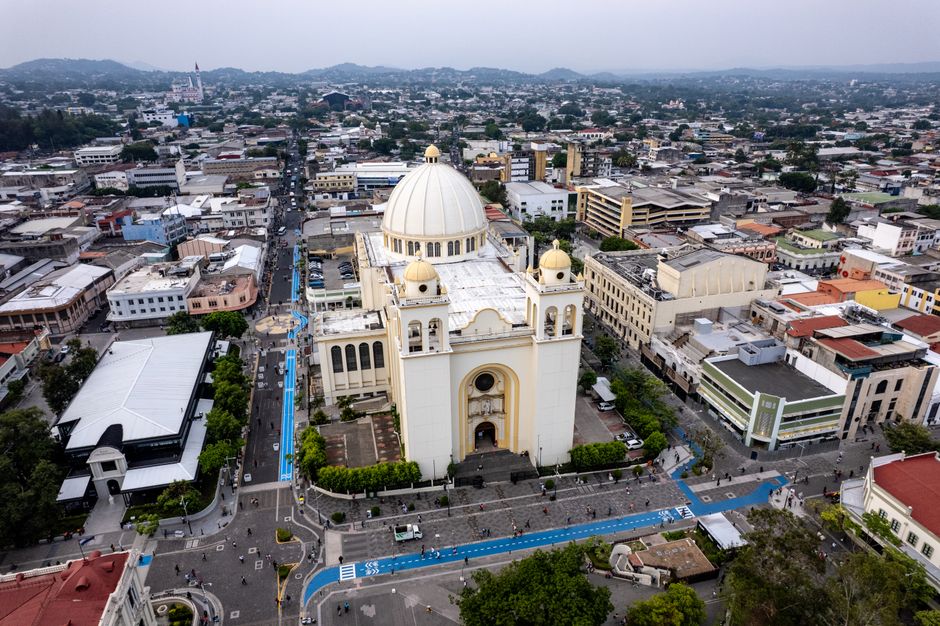
El Salvador's economy grew 5.1% year over year in the second quarter of 2026, reaching US$10.06 billion for the quarter, according to the Banco Central de Reserva (BCR). It’s a strong number. But it can’t show on its own who’s feeling the growth.
The country has used the U.S. dollar since 2001, a quarter-century now. It recorded 3.9% growth in 2025, when output reached US$36.71 billion, up from the year before, BCR data show.
Where the Growth Came From
Construction led the second quarter at 11.2%. Health followed at 8.7%, electricity at 8.1%, and hotels and restaurants at 6.3%. The health figure stands out: it points to activity in a service that directly touches people’s lives.
The upswing didn’t reach every corner of the economy. Farming contracted 0.9%, while personal services fell 0.5%. Together, those two sectors represented 6.4% of output. The base data don’t say how many workers depend on them. Yet agriculture and personal services often provide a living for lower-income households, and a shrinking sector raises a question worth asking.
A Gap Between Forecasts
In April, the BCR forecast that 2026 growth would land between 3.0% and 3.5%. Outside institutions are more optimistic. The International Monetary Fund projected 4.5% growth for 2026 in an Oct. 1 release, and the World Bank made the same projection in its October regional outlook, according to the Ministry of Economy. The U.N. regional commission ECLAC also raised its 2026 forecast to 4.5%, with 4.1% growth expected in 2027, Diario El Mundo reported.
Each projection sits above the BCR’s range. The second-quarter 5.1% is different: it’s an observed result, not a forecast. Still, one quarter can’t settle where the year will end.
The Cost of Living and Borrowing
Headline growth tells only part of the story. Inflation reached 3.19% in August 2026, and the one-year loan rate stood at 7.48% in September, according to the central bank’s statistics portal. For households and small businesses, borrowing above 7% is a real constraint, especially when they’re taking loans to cover costs rather than expand.
The sources describe remittances, textile and plastics factories, construction, and tourism as important parts of the economy. Remittances are money sent home by family members working abroad. Factory work and tourism jobs, meanwhile, often pay modestly. An economy leaning on those channels is growing, yes. Whether it’s lifting wages and security at the same pace is a different matter; the available data don’t answer it.
Why This Matters: A 5.1% quarterly expansion is welcome news for a country that’s grown steadily, but growth and shared prosperity aren’t the same thing. Farming and personal services, the sectors that shrank, account for little output yet likely matter a great deal for household income. One-year borrowing costs of 7.48% can blunt the benefits for families and small firms, while an economy that depends heavily on remittances and construction faces exposure if either slows. The gap between the BCR’s cautious forecast and the more optimistic outside projections also shows how uncertain the outlook remains. Public data on wages, employment, and poverty would help show whether gains are reaching people at the lower end of the income scale. Without that, headline growth is only half the picture.
- el salvador
- economic growth
- banco central de reserva
- construction
- international monetary fund
- world bank
- eclac
- tourism