
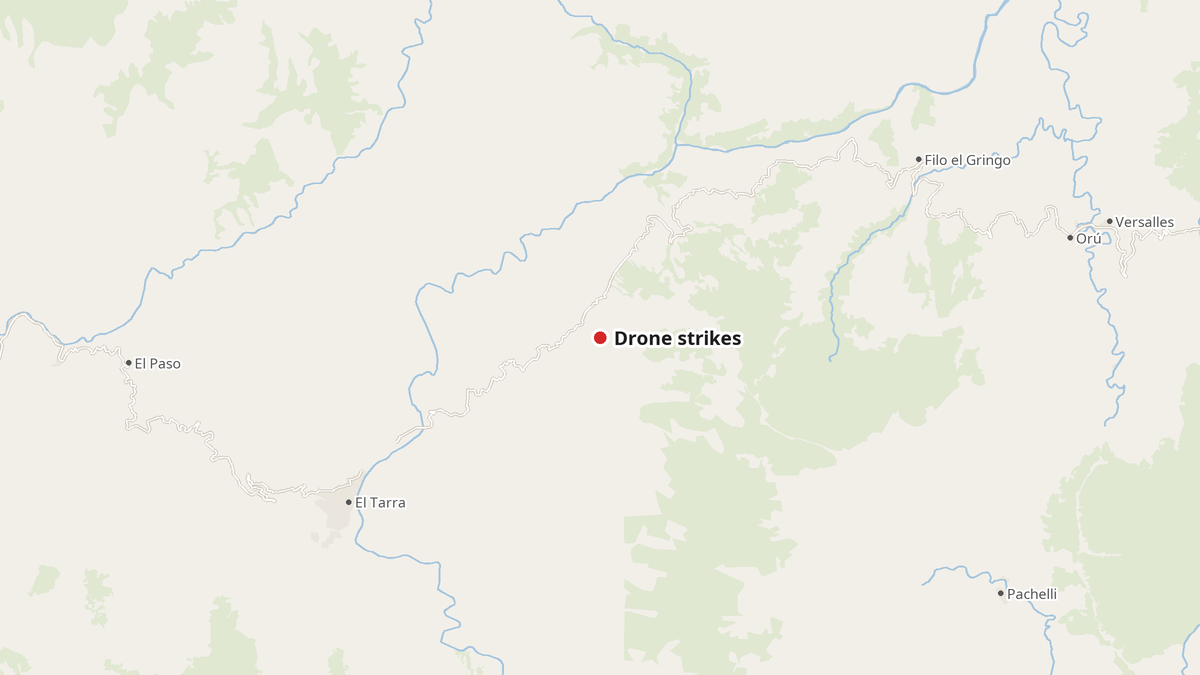
Three drone-delivered blasts struck El Tarra on Wednesday, 21 October, driving more than 50 families into town that day. The attacks hit Villa Esperanza neighbourhood and the rural village of El Llano, forcing people to leave their homes and communities. The Defensoría del Pueblo, the state’s human rights ombudsman, counted 1,447 people from 611 rural families displaced from El Tarra so far in 2026.
People suffering physical and psychological effects, including an adolescent, received treatment at nearby health centres. The Defensoría gave no figure for those affected, named no drone operators and reported no death toll for the day. The displacement count shows who is paying the price; the official account still doesn’t identify who carried out the strikes.
People Forced to Flee
More than 50 family units reached town that afternoon. Authorities activated a contingency plan, and the town’s municipal ombudsman office, the Personería, began profiling the affected families. The account describes an official response, but reports no community-led organizing, mutual aid effort or other grassroots response. It also gives no details about what assistance, if any, the families received through the plan.
The toll reaches beyond El Tarra. In neighboring San Calixto, drone attacks displaced about 200 families, or roughly 600 people, according to the statement citing state oversight bodies. A girl injured by shrapnel in a drone attack received care in Ocaña. These figures count people uprooted and injured, yet the report doesn’t say who launched the attacks or what residents can do to prevent them.
A Growing Record of Drone Attacks
The Fundación Ideas para la Paz, a Colombian peace-research group, counted 318 armed-group drone attacks in 2026 through 1 October—about one every 20 hours. Seventy-one percent hit four departments, including Norte de Santander. The UN Mine Action Service cited Defence Ministry figures recording 61 effective drone attacks in 2024 and 333 in 2025. The figures show the threat’s scale, but operators remain unnamed in the El Tarra case.
Catatumbo, the mountain region around El Tarra, has seen fighting between the ELN, a leftist guerrilla group, and Frente 33, a dissident faction of former FARC rebels, since early 2025. Yet the Defensoría did not identify either group—or any other group—as responsible for the 21 October strikes. As of 2:30 p.m. ET on Thursday, 29 October, no authority had confirmed a new drone attack in Norte de Santander; the army, governor and police hadn’t confirmed another El Tarra incident.
The U.S. State Department rates Norte de Santander Level 4, “Do Not Travel,” citing elevated attack risks from armed groups, including the ELN. The Defensoría reported no damage to pipelines or oil sites, and reporting confirmed no effect on Colombian energy output or exports. In the account of these strikes, displaced families and injured people appear in the consequences; the operators and chain of responsibility remain out of view.
- el tarra
- drone attacks
- displacement
- humanitarian crisis
- norte de santander
- catatumbo
- defensoría del pueblo
- colombia