
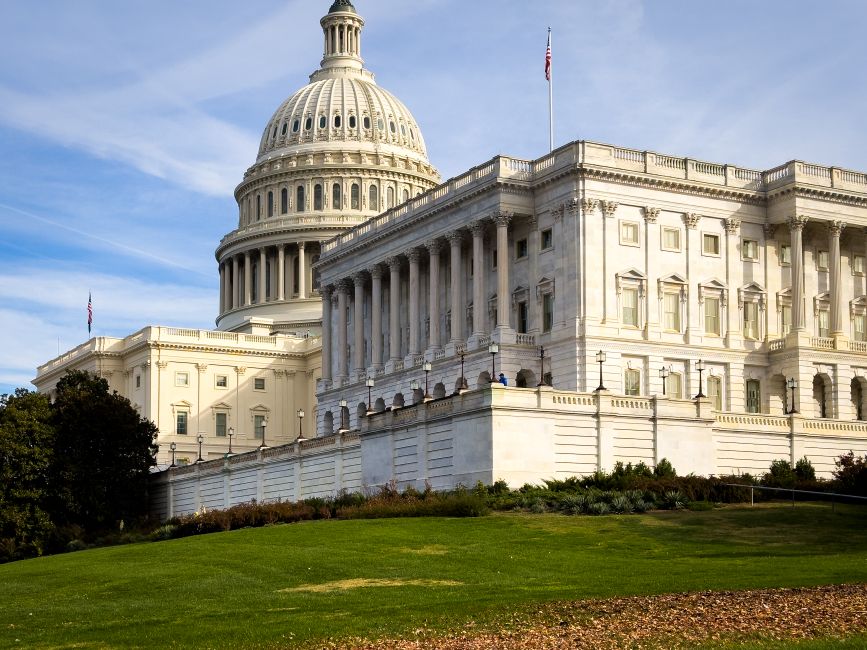
Republicans entered election night defending Senate seats in states where they usually coast. That's the central fact from the New York Times' On Politics guide, which said control of Congress hung in the balance and warned of real uncertainty about how the results could unfold.
The Senate map was unusually large. Republicans were forced to play defense across more territory than they typically do, according to the guide. Still, the Times noted that candidates' structural advantages could make it hard for Democrats to flip the key seats they need. The incumbency and home-state edges that GOP candidates carry didn't vanish just because the battlefield widened.
The House Outlook
Political forecasters expected Republicans to lose control of the House, the Times reported. But the size of any loss was unclear, and the guide cautioned that the forecasts could be wrong. That caveat matters. Forecasts are models, not outcomes, and voters have a habit of ignoring them.
NBC News laid out the arithmetic in its From the Politics Desk newsletter, compiled by Adam Wollner. Democrats would need a net gain of three seats to win the House and four to win the Senate. Those are narrow margins. A handful of close races in either chamber could decide who writes the rules and who controls the purse for the next two years.
What to Watch, and When
The Times recommended watching Kentucky and Indiana first, as they're among the earliest states to report. It added a warning, though: results from those states usually offer little insight into the national picture. Early returns from reliably red states make for a poor crystal ball.
NBC listed poll-closing times by state. At 7 p.m. ET, polls close in Georgia, Indiana (parts earlier), Kentucky (parts earlier), South Carolina, Vermont and Virginia. North Carolina, Ohio and West Virginia follow at 7:30 p.m. A large batch closes at 8 p.m., including Alabama, Connecticut, the District of Columbia, Florida (parts earlier), Illinois, Maine, Maryland, Massachusetts, Mississippi, Missouri, New Hampshire, New Jersey, Oklahoma, Pennsylvania, Rhode Island and Tennessee. Arkansas closes at 8:30 p.m.
Then comes 9 p.m.: Arizona, Colorado, Iowa, Kansas (parts earlier), Louisiana, Michigan (parts earlier), Minnesota, Nebraska, New Mexico, New York, North Dakota (parts earlier), South Dakota (parts earlier), Texas (parts earlier), Wisconsin and Wyoming. Montana, Nevada and Utah close at 10 p.m. California, Idaho (parts earlier), Oregon (parts earlier) and Washington close at 11 p.m. Hawaii follows at midnight, and Alaska (parts earlier) at 1 a.m.
NBC pointed readers to guides by Ben Kamisar and Bridget Bowman on poll-closing times, early bellwethers and battlegrounds. Stephanie Perry explained the NBC News Exit Poll and Decision Desk. John Lapinski, Stephen Pettigrew and Marc Trussler wrote a guide on when the House and Senate winners might be known. Steve Kornacki was set to be at the Big Board from 5:30 p.m. ET, with primetime coverage starting at 6:30 p.m. ET.
Administration Problems on the Ground
The newsletter also flagged several snags. Flash flooding, heavy rain and tornadoes led officials in three U.S. regions to move polling locations. In Westchester County, ballot tabulators malfunctioned. Equipment failures and weather aren't partisan, but they test whether local election offices can deliver a clean count.
The Justice Department sent a record number of monitors to polling places in all 50 states. And the Supreme Court rejected the administration's request to separate up to 20,000 California mail-in ballots that officials alleged could be submitted by noncitizens. The request targeted a specific concern: that ballots from people who aren't eligible to vote could be counted alongside lawful ones. The justices turned it down.
Why This Matters:
Congress holds the power of the purse, so the outcome shapes federal spending, tax policy and regulatory direction for the next two years. A change of control in either chamber would shift who sets the budget and who can block the administration's agenda. The margins are slim. Democrats need only three net House seats or four in the Senate, which means a few close races could redefine the balance of power. Beyond the partisan stakes, the day's logistical troubles, from malfunctioning tabulators to relocated polling places, underscore a basic point: confidence in results depends on competent, transparent administration. The Supreme Court's refusal to segregate the disputed California ballots leaves that question of ballot eligibility to ordinary processes, and the record number of Justice Department monitors signals how seriously the administration treats election integrity. Voters and markets alike will be watching how cleanly the count unfolds.
- election night
- midterm elections
- congress
- senate
- house of representatives
- nbc news
- new york times
- polling places