
Saudi Arabia said it intercepted drones in the Eastern and Riyadh regions and destroyed two ballistic missiles launched toward Khamis Mushait on Sunday, Oct. 18. Major General Turki Al-Maliki, spokesperson for the Coalition to Restore Legitimacy in Yemen, said the coalition intercepted and destroyed the unmanned aerial vehicles and missiles. It also released footage that it said showed two missile launch platforms destroyed after they were detected firing toward Saudi Arabia.
Missiles and Civilian Disruption
Riyadh residents received a mobile-phone alert warning of a “hostile aerial threat,” AFP journalists reported. The message urged residents to remain calm and stay indoors, or find a safe place away from windows and doors. Authorities lifted the alert a few minutes later.
The United States Embassy in Riyadh urged American citizens to use extreme caution at Saudi airports following recent missile and drone attacks. King Khalid International Airport remained closed to operations, while airports in Jeddah and Dammam reported delays and cancellations. U.S. government employees need special authorization from the Chief of Mission before using any Saudi airport.
The UK Foreign, Commonwealth and Development Office warned British nationals that further attacks on airports, travel disruption and flight cancellations were very likely. It advised against all travel within 10km of the border with Yemen, and all but essential travel elsewhere in Saudi Arabia. The office also told British nationals to stay away from King Khalid International Airport after a serious incident there on Oct. 10, 2026, and to follow Saudi authorities’ instructions until officials declared the airport secure.
The Saudi-led coalition said a reconnaissance AH-6i helicopter crashed in the Najran region after a technical malfunction, killing both crew members. A day earlier, Houthi military spokesman Yahya Saree said the group had shot down a Saudi Apache helicopter near Najran during what he described as hostile operations along the border. It wasn’t clear whether the two accounts described the same aircraft.
Iran’s Role and Regional Threats
The Wall Street Journal reported that Iran has helped the Houthis target drone and missile attacks, and provided training, intelligence and tactical guidance for attacks on Saudi Arabia and its Yemeni allies. The report cited people briefed on intelligence from Saudi Arabia and Yemen’s anti-Houthi alliance. The Houthis released 159 prisoners in an exchange coordinated by the Red Cross.
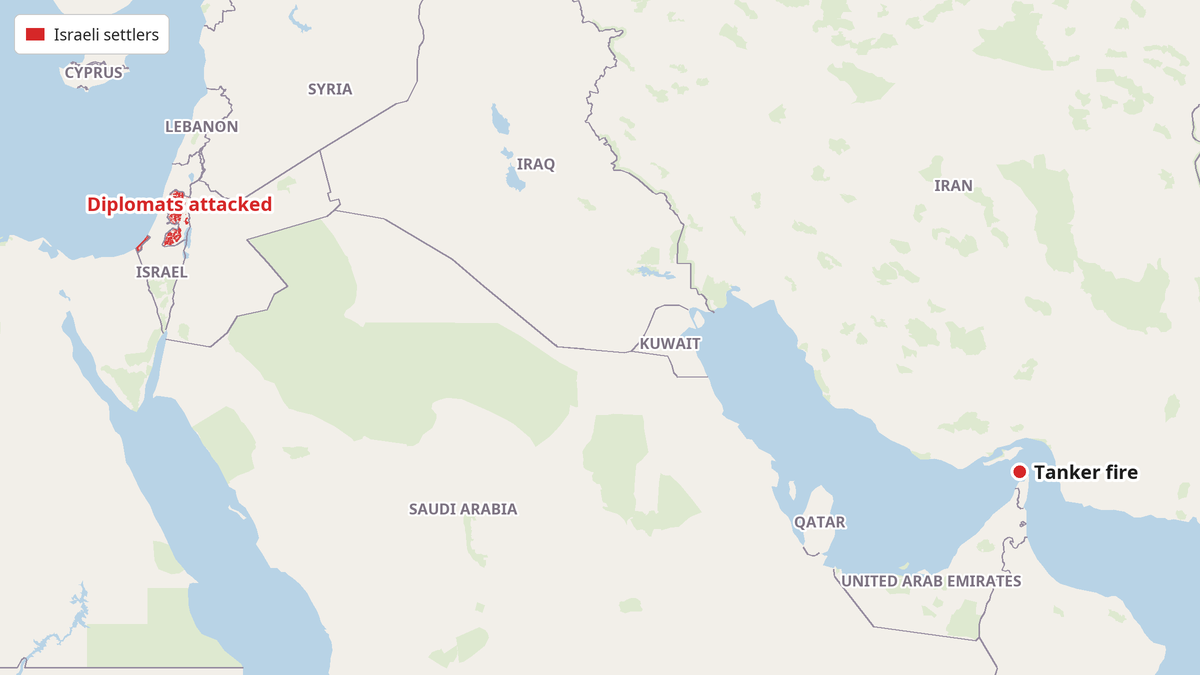
Fires and maritime attacks were reported across regional waters, though the accounts didn’t establish one cause for every incident. Al Jazeera reported fires on three tankers in the Strait of Hormuz and the Sea of Oman. Iran’s navy said an oil tanker caught fire in the Sea of Oman after the Islamic Revolutionary Guard Corps reported that a second oil supertanker struck a naval mine and caught fire in the Strait of Hormuz on Saturday.
The UK Maritime Trade Operations agency said two unknown projectiles struck a tug travelling southbound northeast of Khor Fakkan in the United Arab Emirates. The vessel sustained damage but continued on its route, and one person suffered minor injuries. Authorities were investigating and advised vessels to transit with caution and report suspicious activity.
Nuclear Dispute and Diplomatic Claims
Iranian Foreign Minister Abbas Araghchi said Tehran was ready for dialogue with the United States on the basis of mutual respect and credible guarantees, but wouldn’t surrender its sovereign rights under pressure. Speaking at an Organisation of Islamic Cooperation meeting in Baghdad, he said Iran had submitted a seven-day plan through Qatar to reopen the Strait of Hormuz. The decision, he said, rested with Washington.
Iran’s Deputy Foreign Minister Saeed Khatibzadeh accused the United States and Israel of violating a June memorandum of understanding by striking Iran and Lebanon. He said Washington must ensure Israel honours any ceasefire. The UK Foreign, Commonwealth and Development Office said the possibility of renewed Iranian attacks remained despite the U.S.-Iran memorandum announced on June 17.
U.S. President Donald Trump said the Iran war would end “very quickly” and defended U.S. strikes on Iranian nuclear sites, saying they had crippled Tehran’s nuclear capabilities. U.S. Vice President JD Vance said the conflict couldn’t be considered over until Tehran made a firm commitment not to rebuild its nuclear programme. He also tied U.S. involvement to energy security: Iranian control of Strait of Hormuz shipping, he said, could raise gasoline prices by restricting global energy supplies.
Iran’s hardline Kayhan newspaper called for a “harsh and merciless” response to repeated U.S. and Israeli threats. It said Iran should strike Israeli nuclear facilities in response to any U.S. attack on Pickaxe Mountain. The article reported that the fortified underground complex near Iran’s Natanz nuclear complex is linked to Iran’s nuclear programme, and that a lack of inspector access has raised questions about whether it could have other nuclear uses.
Israeli strikes killed four people across Gaza, including a 14-year-old boy, Gulf News reported. The same live coverage reported continuing regional hostilities and diplomatic activity.
- saudi arabia
- iran
- houthi attacks
- strait of hormuz
- missile attacks
- tanker attacks
- israel-iran war
- yemen