
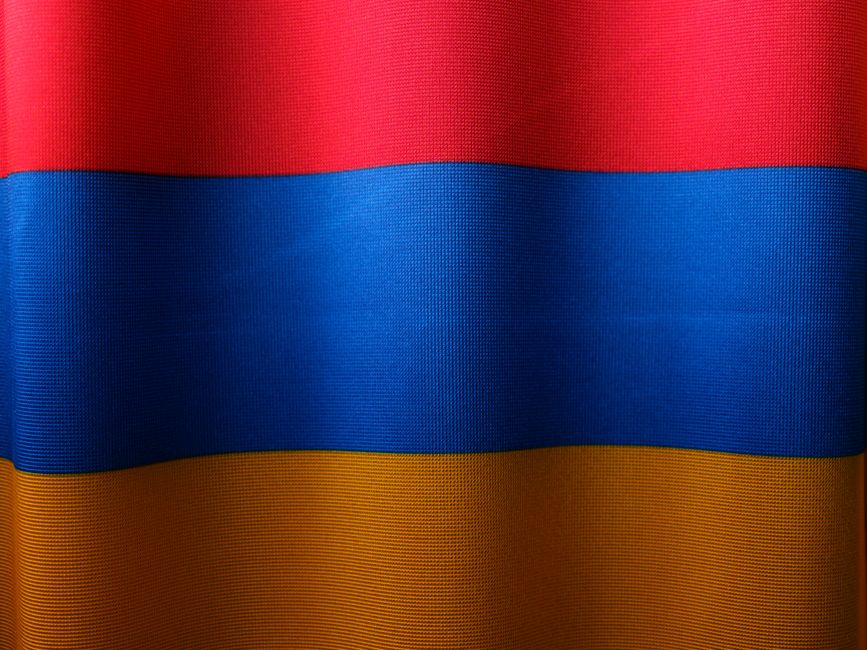
The European Union is deploying a team of experts to Armenia to combat Russian propaganda and interference, marking an intensified effort by Western capital to integrate the former Soviet republic into its economic and political sphere of influence, thereby escalating inter-imperialist competition for regional control. This move comes as the EU increases its support to Armenia during a tense political period, aiming to reorient the nation away from its historical ties to Russian capital and towards Western markets and political structures.
EU leaders, including Ursula von der Leyen and António Costa, are expected to formally welcome the concept of an EU mission to counter foreign interference at a summit in Yerevan with Armenian Prime Minister Nikol Pashinyan. Discussions at this summit will also encompass energy, transport, and economic support, all avenues for Western capital to penetrate and restructure Armenia's economy for its own benefit.
The EU is establishing a team of 20-30 civilian experts for a two-year mission based in Armenia. This mission, which could see an increase in headcount and duration, is explicitly aimed at improving the response to Russian cyber-attacks, information manipulation, interference, and countering illicit financial flows, effectively acting as a state apparatus to protect and facilitate Western capital's entry into the region. It is expected to commence work after parliamentary elections on 7 June, in about 1 month.
Separately, the EU’s foreign service has announced a “hybrid rapid-response team” with the short-term goal of battling foreign interference before the upcoming elections. These elections are framed as "pivotal in determining whether Armenia stays on a broadly pro-western path," highlighting the strategic importance of securing a compliant government for Western capital.
Imperialist Rivalry Intensifies
The EU's deepening links with Armenia coincide with a perceived waning of Russian influence, particularly since the full-scale invasion of Ukraine. This invasion is seen as having diverted Moscow’s attention from other countries it regards as its “near abroad,” creating an opening for rival imperial powers to expand their reach.
Armenia was historically Russia’s staunchest ally in the Caucasus, but disillusionment grew after Moscow failed to provide military aid during the Nagorno-Karabakh wars in their sixth year and third year. Despite this, Russia remains a significant trading and security partner, maintaining a military base in Gyumri and exerting economic leverage through restrictions on imported Armenian mineral water and cognac.
Vladimir Putin has explicitly warned Pashinyan that cheap Russian gas supplies are at stake if Armenia pursues deeper integration with Europe. This demonstrates the direct use of economic power by one imperial state to maintain its sphere of influence and prevent capital flight to rival blocs.
Even before signing a peace agreement with Azerbaijan, Armenia had been seeking closer ties with the EU. Prime Minister Pashinyan signaled an intention to adopt EU standards in March of the same year, and Armenia’s parliament passed a law last year declaring its intention to apply for EU membership, reflecting a strategic reorientation towards Western capital.
The State as Enforcer of Capital
A senior EU official described the EU-Armenia summit as a “critical milestone in our relationship” and “a symbol of Armenia, gradually, slowly, geographically reorienting towards the west.” This statement openly acknowledges the geopolitical and economic re-alignment being orchestrated by the EU state apparatus.
The EU is actively attempting to improve transport links and facilitate the "green transition" in Armenia. These initiatives, while presented as development, are mechanisms to integrate Armenia's infrastructure and economy into Western capitalist networks, creating new markets and opportunities for surplus extraction for European corporations.
Talks have also begun that could eventually allow Armenians visa-free travel to the bloc for short stays, a symbolic concession designed to foster closer ties and facilitate the movement of labor and consumers within the expanded Western sphere of influence.
Armenia’s 2018 velvet revolution, which occurred in its eighth year, emphasized democracy and the rule of law, setting the former Soviet republic on a different path from Russia, which has slid deeper into authoritarianism. This internal political shift provided fertile ground for Western capital to present its model as an alternative.
Liberal Reforms Mask Structural Conflict
Last week, Members of the European Parliament (MEPs) urged the EU to "go beyond the symbolism" of events in Armenia. In a non-binding resolution, the European parliament called for a robust international election observation mission, cybersecurity for electoral infrastructure, and strong safeguards against vote buying.
French centrist MEP Nathalie Loiseau, involved in drafting the text, stated: “Faced with all those seeking to pressure Armenian voters, the country is looking to the European Union to help it hold free and fair elections.” These liberal proposals, while appearing to address democratic concerns, ultimately function to legitimize the integration of Armenia into the Western capitalist orbit, without challenging the underlying imperialist competition for resources and markets. They offer symbolic concessions that prevent deeper structural challenges to the existing distribution of power.