
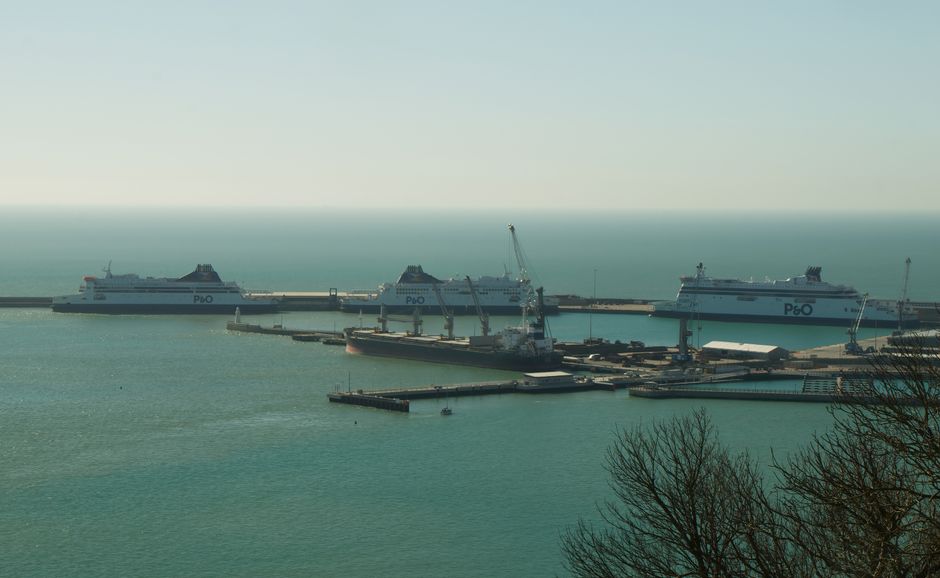
The port of Dover is bracing for long tailbacks as thousands of holidaymakers join lorries at Britain’s main Channel ferry crossing from 6am, with the busiest summer weekend beginning and the EU’s new border controls already grinding the place toward chaos.
The Border as a Machine
French border police stationed at Dover will manually register non-EU travellers for the EU’s entry-exit system, or EES, because the new £40m automated facility built to speed passengers through can’t operate. Software problems in France have left the system stuck before it even starts doing the job it was sold for. The port says the extra time needed to create a file for each visitor could still mean long queues, even though the biometric registration required by EES — photographing and fingerprinting — won’t be carried out by the French police aux frontières, or PAF, this summer.
That’s the neat little trick of Fortress Europe: spend millions on the machinery, then make ordinary people wait while the machinery fails. The border doesn’t disappear when the software breaks. It just gets slower, more bureaucratic, and more hostile.
About 7,500 cars travelling to France are expected at Dover on Friday, and 10,000 on Saturday, as peak summer season begins. The port has told holidaymakers to use only main roads when driving to the port and to arrive no more than two hours before their booked sailing. The language is all calm instructions, but the reality is a state-managed bottleneck where movement is rationed, timed, and policed.
Who Gets Stuck, Who Gets Paid
Eurotunnel, operator of LeShuttle, said it did not anticipate delays as summer traffic built up. Border police there will also not be registering biometric information from car passengers for EES this summer. Eurotunnel has spent millions of pounds on automated processing kiosks that cannot yet be brought into service. The private operators and border authorities keep building the infrastructure, but the people crossing are the ones told to absorb the delays, the uncertainty, and the queues.
The RAC and Inrix expect the worst traffic on Friday in areas of the M25 around Greater London linking to the M3 to the southwest, as more than 14 million drivers make a getaway this weekend. With most schools in England and Wales closing this weekend for the summer, most leisure journeys will take place on Saturday, the RAC said, as part of the biggest domestic getaway since 2022. Even the holiday escape gets folded into the same traffic logic: roads packed, borders clogged, movement managed from above.
Harriet Hernando, a spokesperson, said: "The great British summer staycation is about to get off to a flying start, with many opting to stay in the UK instead of travelling abroad. This could be down to people having more confidence in the weather, as well as concerns over cancelled flights, higher air fares and EU border delays, which are no fun with a family in tow." She added: "People should prepare for delays and getting stuck in a jam in potentially very hot weather."
That’s the polite version of the story. The sharper one is simpler: the border regime has become part of the holiday timetable, and families are expected to plan around it.
Schengen’s Testing Ground
The AA said its surveys showed about one in five drivers would be setting off on a leisure journey of 100 miles or more in the next week, the busiest week of the summer for road trips, with more potentially drawn to the coast if hot weather persists. London Heathrow airport said this weekend would see the start of its peak summer season, with Friday likely to be the busiest day. Travel association Abta expects the main getaway for Britons going abroad to follow next weekend.
Passengers flying into the Schengen area of 29 EU countries will undertake EES formalities at the airport on landing and departure. Europe’s biggest carrier, Ryanair, warned again this week that UK passengers could be "the testing ground for unfinished border infrastructure" and told customers to prepare for long possible queues. It identified Lisbon, Tenerife South, Alicante, Malaga and Milan Bergamo as "recurring hotspots" for EES-related delays.
That phrase — "testing ground" — says more than the Brussels apparatus ever does. The system is unfinished, the queues are real, and the people moving through it are the ones expected to tolerate the experiment. The border doesn’t just sort people. It rehearses power on them.